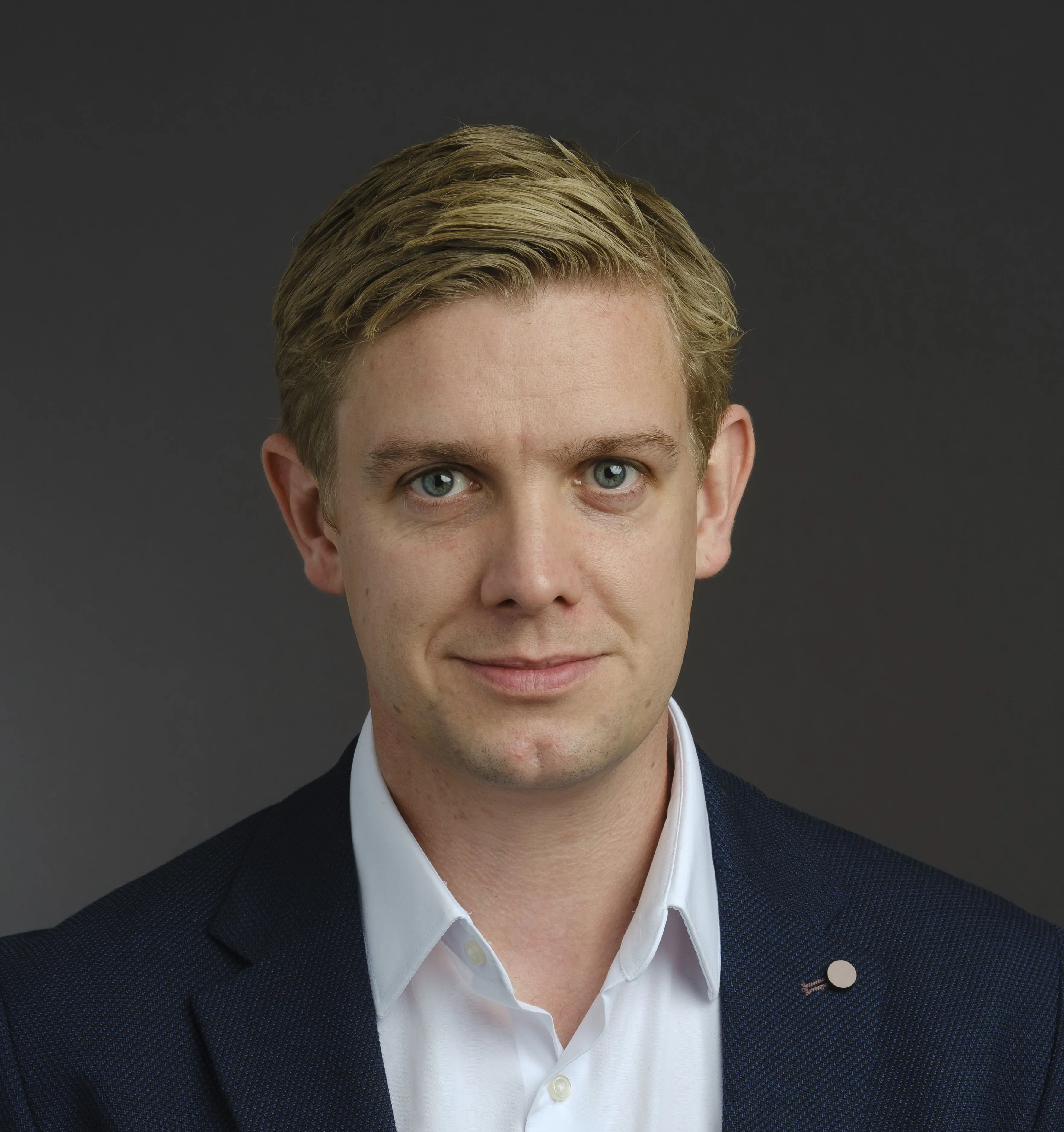
Image
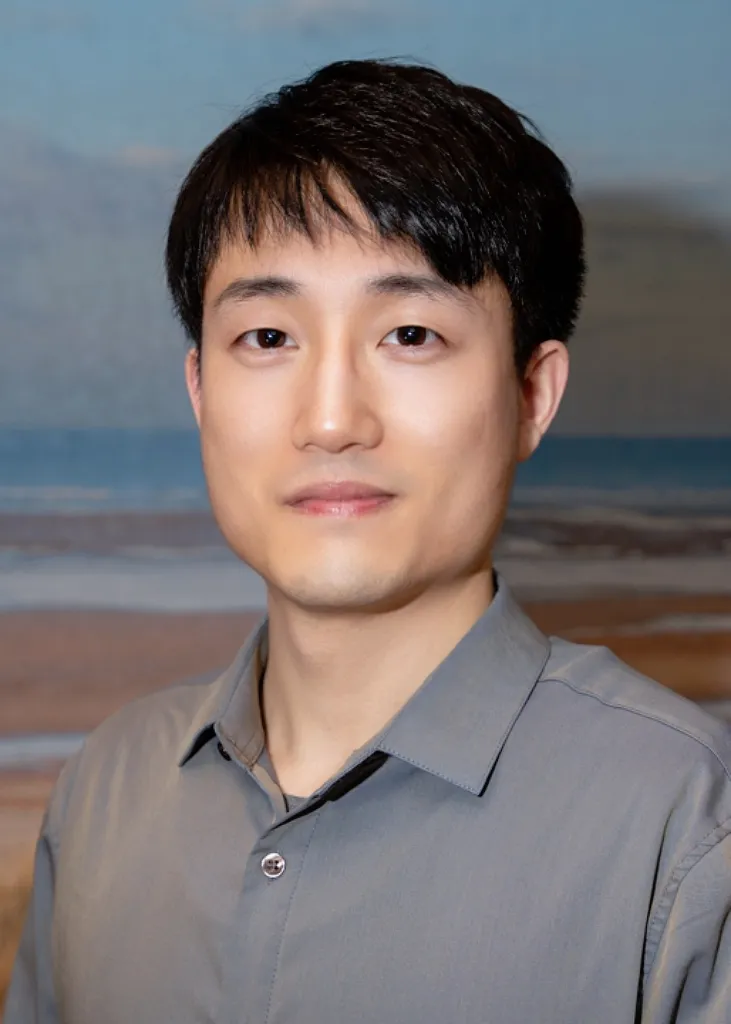
Hongye ZHANG (FHEA, MIEEE, MIET) received his BSc and MSc in Electrical Engineering from Xi’an Jiaotong University, Xi’an, China, in 2015 and 2018, respectively, a Diplôme d’ingénieur from École Centrale de Lyon, Lyon, France, in 2018, and his PhD degree in Applied Superconductivity from The University of Edinburgh, UK, in 2021.
In 2021, he was awarded one of the six IEEE Council on Superconductivity Graduate Study Fellowships. He has been working on the £54-million collaborative H2GEAR project as a Research Associate at The University of Manchester since May 2021.
He is currently a Lecturer (Assistant Professor) in Superconducting/Cryogenic Electric Machines at the University of Edinburgh and a Visiting Research Fellow at the University of Manchester.
His research encompasses Design & Analysis & Testing of Superconducting/Cryogenic Electric Machines, Numerical Modelling & Measurement of Superconductors, Hydrogen Energy, and Artificial Intelligence.
He is currently a Board Member of the European Society for Applied Superconductivity (ESAS), a Board Member of the HTS Modelling Workgroup, and an Early Career Editorial Board member & Associate Editor for the Elsevier journal Superconductivity, etc.
He is the Chairman of the international workshop HTS 2026.
Hongye ZHANG’s interdisciplinary research combines Electric Machines & Drives, Clean Energy Conversion, Superconductor Technology, Cryogenic Techniques, Hydrogen Energy, and Artificial Intelligence to contribute to low/zero emission technology.
His interests centre on Net Zero Transport and Hydrogen Energy with a focus on power-dense and highly efficient next-generation propulsion electric machines. His current research focuses on the design, analysis, build, and testing of cryogenic/superconducting motors for sub-regional electric aircraft exploiting hydrogen propulsion.
His long-term vision is to build a world-leading research group at the interface of academia and industry that will further advance the decarbonisation of future transport.
My research includes methodologies for approximate inference, particularly variational inference and Monte Carlo methods, as well as stochastic modelling for time series data. On the applied side, I primarily work on multi-object tracking, distributed sensor fusion, and intent inference.
I obtained my PhD in Information Engineering from the University of Cambridge, and previously held research associate positions at the Alan Turing Institute and the University of Cambridge.
I have served as a reviewer for international journals and conferences, including IEEE Transactions on Aerospace and Electronic Systems and IEEE Transactions on Signal Processing. I also organised a special session at the IEEE Statistical Signal Processing Workshop 2025.
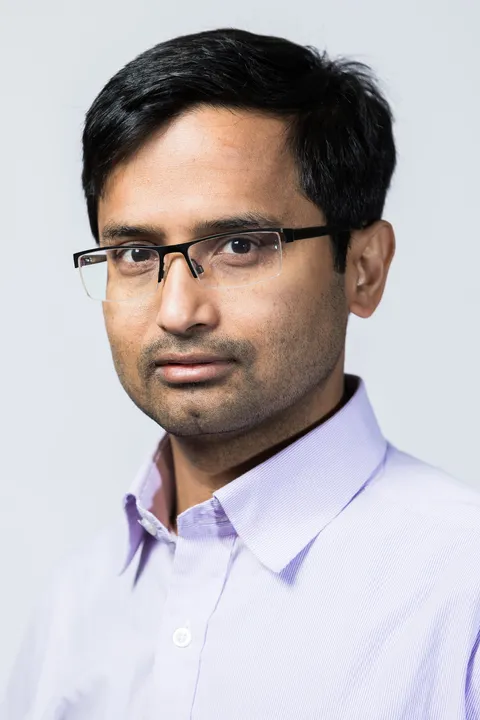
Srinjoy Mitra received his B.S. degree in physics and electronics from Calcutta, India and his M.Tech. degree from the Indian Institute of Technology, Bombay, India. After spending a short time in the electronics industry (in India and Japan), he received his Ph.D. from the Institute of Neuroinformatics, ETH Zurich in 2004. Between 2008 and 2010 he worked as a post-doctoral researcher at Johns Hopkins University, Baltimore, USA.
He then joined the medical electronics team at IMEC, Belgium and worked there as a senior scientist until early 2016. At IMEC, he took up leadership roles in various industrial and publicly funded projects primarily related to ambulatory medical devices (EEG, ECG etc.). He led multiple projects on neural implants for central and peripheral nervous systems. Prof Mitra returned to academia as a Lecturer at the University of Glasgow. In 2017 he moved to the Integrated Micro and Nano Systems, University of Edinburgh.
Prof Mitra has two parallel research tracks.
His technological research interests are in low-power sensor interfaces, medical/neural electronics, neuromorphic systems. Dr Mitra is the Program Director for the MSc in Sensors and Imaging System. He is also a founding member of Edinburgh Neuroprosthetics Lab.
He is also deeply interested in technological innovation, its global implications, and its pedagogy. This includes a critical analysis of the relentless growth of digital technologies and their impact on the planet and people, both historically and in the future. He was the convenor of the Decolonisation Working Group in the College of Science and Engineering. Read recent papers on these topics here [1],[2],[3],[4],[5],[6].
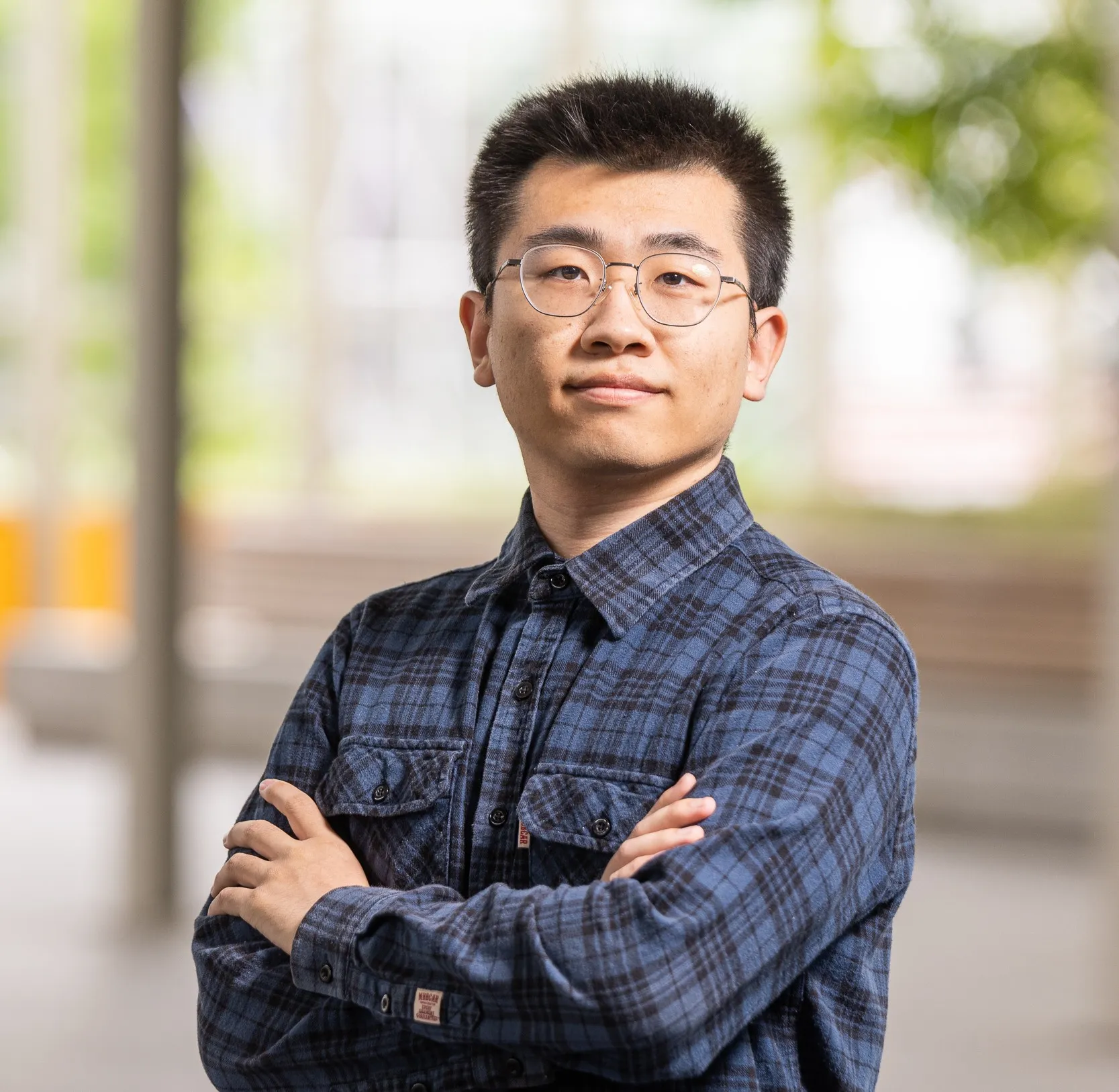
Bochen Ye is currently a first-year PhD student at the Centre for Electronics Frontiers, University of Edinburgh. Before that, he received his Master degree in Eletrical Engneering from Eindhoven University of Technology(TU/e), Netherlands in 2024 and Bachelor degree in Integrated Circuit Design and Integrated Systems from Hefei University of Technology(HFUT), China in 2022. He was a intern at NXP Semiconductor and Intrinsic ID(now part of Synopsys).
PhD student in Engineering - UoE, UK, Now
M.S.(ir.) in EE - TU/e, NL, 2024
B.Eng. in IC design - HFUT, China, 2022
Bochen's research focuses on designing digital hardware acceleration systems for large-scale AI models using novel architectures, aiming to overcome memory and computational bottlenecks. His work emphasizes efficient dataflow, high-performance accelerators, and energy-efficient AI systems on digital ASIC chips. His current focus is on advancing hardware accelerators for LLMs, VLMs, and generative AI to enable next-generation intelligent computing.