
Image
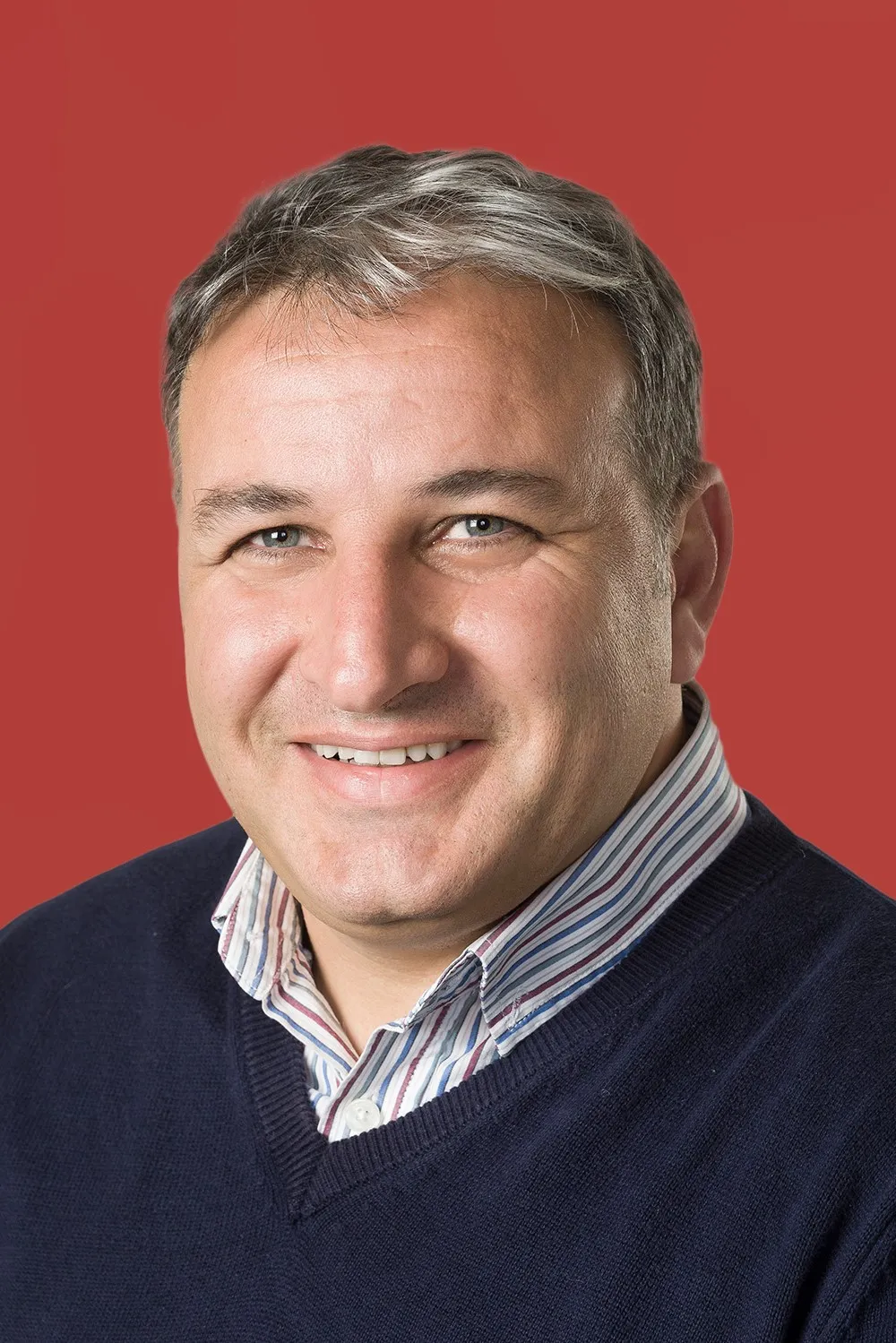
I am an academic and university teacher at the School of Engineering, University of Edinburgh. My expertise lies in structural engineering, sustainability, and advanced technologies with a strong focus on resilience and innovation in civil infrastructure. Throughout my academic career, I have contributed significantly to both teaching and research, leading projects that address contemporary engineering challenges using experimental and computational methodologies. My current research initiatives involve the integration of AI-driven methods for structural health monitoring, sustainable construction materials, and innovative structural solutions aimed at enhancing infrastructure sustainability and resilience.
PgCAP, Academic Practice, University of Edinburgh, UK (2025)
Associate Professorship (Docentlik) by the Interuniversity Council of Turkey (ÜAK) 2013
Associate Professorship by Ministry of Education, Albania (2013)
Ph.D. in Structural Engineering, University Putra Malaysia, Malaysia (2008)
M.Sc. in Structural Engineering, University Putra Malaysia, Malaysia (2002)
B.Sc. in Civil Engineering, University of Gaziantep, Turkey (1998)
Chartered Civil Engineer (CEng), Institution of Civil Engineers (ICE)
Member of the Union of Chambers of Engineers and Architects of Turkey, Chamber of Civil Engineers.
Conceptual Design and Sustainability for Civil Engineers (CDSCE3)
Engineering Principles 1
Behaviour and Design of Structures 2
Prior Academic Teaching Roles
Reinforced Concrete Fundamentals (5) Structural Analysis (5) Structural Mechanics (5) Reinforced Concrete Structures (5) Bridge Engineering (3) Structural Design II (3) Solid Mechanics (4)
Graduate Courses:
Behavior of RC Members and Structures (4)Bridge Assessment (3) Advanced Reinforced Concrete Design (4) Advanced Structural Design (4)
*Number in brackets indicates the number of times the course has been taught.
My research involves experimental and numerical investigations of reinforced concrete structures, earthquake-resistant buildings, and historical masonry structures. I have extensive expertise in the performance assessment of composite precast slab structures, unreinforced masonry buildings, and historical structures under static and dynamic loads. Additionally, I focus on developing innovative composite precast lightweight slabs, advanced assessment and repair techniques for reinforced concrete (RC) buildings and bridges, and masonry structures. My current projects include strengthening techniques for unreinforced masonry structures and studying the effects of anchorage on the axial strength of fiber-reinforced polymer confined rectangular columns. Additionally, my recent research involves bridge inspection using Retrieval-Augmented Generation (RAG) and knowledge graphs for structural health monitoring, as well as the development of sustainable low-carbon bricks utilizing water-based polymeric binders and recycled aggregates.

Dr Dias obtained his bachelor’s in physics at the State University of São Paulo, Brazil. Four years later, he commenced a MSc in theoretical physics from his alma mater. In 2012, he obtained his PhD degree from the University of Massachusetts, USA, where he researched on the mechanics of origami structures and growth mechanisms. Dr Dias has worked as a researcher on a broad range of topics in structural engineering and applied mathematics at Brown University School of Engineering (USA), Aalto University (Finland), and the Nordic Institute for Theoretical Physics at KTH (Sweden). Before joining the University of Edinburgh, Dr Dias was an Associate Professor of mechanical engineering at Aarhus University in Denmark, where he lead his research group 'Mechanical Metamaterials and Soft Matter’.
Mankind cannot survive without potable water. Despite this, our potable water resources are becoming more polluted due to human activity (e.g., mining, industry and agriculture), rendering them unfit for consumption. Additionally, water scarcity is becoming more common with over 1/3 of the world’s population living in water stressed countries. In order to guarantee our survival, processes that allow obtaining clean potable water are crucial.
Nanofiltration (NF) membrane processes are increasingly popular as they supply high quality water, including drinking water, from water resources of varied quality. This process is commonly used in Scotland and Scandinavian countries, treating freshwater from lakes and reservoirs in order to produce drinking water. Membranes are however known to foul due to an accumulation of contaminants on the membrane surface which reduce quality and flow of permeated water, increasing operational and energy costs and reducing membrane life. Current cleaning regimes, which are mostly chemical based, are inefficient and they require process downtime. They can also modify the properties of the membrane, ultimately reducing its life.
This project will build upon our work [1, 2] focused on assessing and identifying which foulants and parameters affected membrane lifetime in water treatment in Scotland. The aim is to further understand fouling formation on the membrane surface, namely looking at the interplay between different relevant foulants like Natural Organic Matter, soluble and particulate Fe and Mn, as well as biofouling, in order to inform the design of more efficient cleaning strategies to prolong membrane life.
The research is rewarding and challenging, so applicants should have (or be close to obtaining) a 1st class or 2:1 honours degree (or equivalent) in Chemistry, Chemical Engineering, Civil and Environmental Engineering, Mechanical Engineering, Geosciences, Microbiology or a related subject.
Further information on English language requirements for EU/Overseas applicants.
Applications are welcomed from self-funded students, or students who are applying for scholarships from the University of Edinburgh or elsewhere
Competition (EPSRC) funding may be available for an exceptional candidate. Link below for the further details.
Log jams - accumulations of floating wood in rivers - play a critical role in shaping fluvial landscapes, influencing flood dynamics, sediment transport, and aquatic ecosystems. Despite their ecological and hydraulic importance, we still lack a predictive, mechanistic understanding of how individual logs interact to form stable jams, how these structures resist or yield to flow, and how changes in geometry or hydrodynamic forcing drive transitions between clogging and release.
This project will address these questions using particle-based computational simulations of log jam formation and deformation under flow. You will develop and apply numerical tools to represent logs as interacting elongated particles within a fluid environment, capturing contact, friction, buoyancy, and hydrodynamic drag. By systematically varying log aspect ratio, size distribution, and flow conditions, you will identify the micro-mechanical origins of jam stability and quantify the conditions under which logs transition between mobile, jammed, and partially clogging states. Through this work, you will develop expertise in large-scale particle-based simulation, computational fluid dynamics, and the physics of granular and particulate systems.
You will learn to extract effective rheological and mechanical properties from microscale simulations, linking particle-scale processes to river-scale behaviour. The results will inform predictive models for log jam formation and stability, with implications for flood risk management, river restoration, and the design of nature-based engineering solutions.
This PhD project will be supervised by Dr Chris Ness (School of Engineering, University of Edinburgh) and will involve collaboration with academics from partner institutions.
Interested candidates are encouraged to contact the supervisor for more information (chris.ness@ed.ac.uk).
Website: https://christopherjness.github.io/
Contact: Dr Christopher John Ness(Chris.Ness@ed.ac.uk)
Minimum entry qualification- an Honours degree at 2:1 or above (or international equivalent) in a relevant science or engineering discipline, possibly supported by an MSc Degree
Further information on English language requirements for EU/Overseas applicants.
Applications are welcomed from self-funded students, or students who are applying for scholarships from the University of Edinburgh or elsewhere as well as self-funded students.
Funding may be available for an exceptional candidate. Link below for the further details.
Suspensions of particles in liquid are found throughout nature and industry, for instance slurries, mudslides, chocolate, toothpaste, and ceramics. Understanding their flow properties is crucial to characterising engineering processes and describing the natural world. We are just beginning to unravel the dramatic influence that stress-controlled particle-particle interactions have on the flow behaviour when the liquid is Newtonian and the particles are hard, spherical and roughly monosized [1].
In reality these conditions are rarely met: particles are usually irregular, being elongated and having a broad size distribution, while suspending liquids are often ‘viscoelastic’. A crucial scientific question is: how do the combined microphysics of these particle-level details control the resulting flow behaviour? For many scenarios in the natural world and in industry, answering this question is key to engineering design and natural hazard mitigation.
This computational project is supervised by Dr Chris Ness (School of Engineering, University of Edinburgh) and will involve regular interaction with experimentalists from academia and industry.
Interested candidates may contact the supervisor for further information (chris.ness@ed.ac.uk).
Website: https://christopherjness.github.io/
Contact: Dr Christopher John Ness(Chris.Ness@ed.ac.uk)
You can read more about the scientific work of my group here: https://christopherjness.github.io/papers
[1] Ness, Christopher, Ryohei Seto, and Romain Mari. The physics of dense suspensions, Annual Review of Condensed Matter Physics 2022, 13:97-117 (https://www.annualreviews.org/content/journals/10.1146/annurev-conmatphys-031620-105938)
Minimum entry qualification- an Honours degree at 2:1 or above (or international equivalent) in a relevant science or engineering discipline, possibly supported by an MSc Degree
Further information on English language requirements for EU/Overseas applicants.
Applications are welcomed from self-funded students, or students who are applying for scholarships from the University of Edinburgh or elsewhere as well as self-funded students.
Funding may be available for an exceptional candidate. Link below for the further details.