Civil and Environmental Engineering

Student Adviser
margaret.robertson@ed.ac.uk
+44(0)131 6505565
1.187 Fleeming Jenkin
Civil and Environmental Engineering
Reader and Director of Impact
A.Angeloudis@ed.ac.uk
+44(0)131 6513418
1.06 Alexander Graham Bell Building
Civil and Environmental Engineering
Infrastructure and Environment
Image
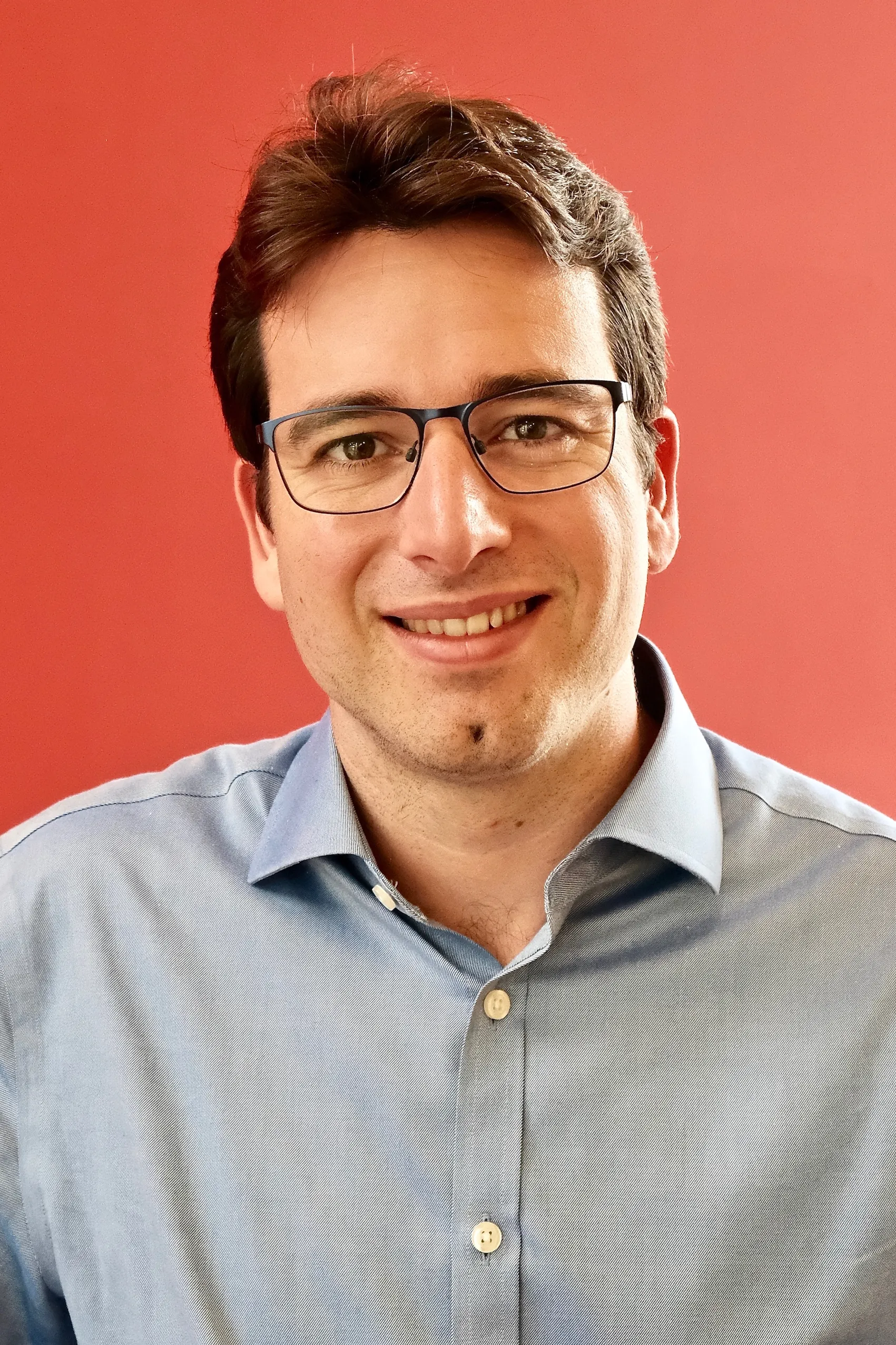
Dr Athanasios Angeloudis

Athanasios is working on engineering fluid mechanics, incorporated within the Institute for Infrastructure and the Environment and leading research on hydro-environmental applications. Aside from the role of lecturer in Civil Engineering hydraulics, as an Industrial Innovation Research Fellow of the UK’s Natural Environment Research Council (NERC) he coordinates research activities on computational methods for marine and offshore renewable energy, working closely with industry and other research groups.

He is Chartered with the Technical Chamber of Greece and a member of the Institution of Civil Engineers. In addition, he is a member of NERC’s Peer Review College and serve as the Coordinator of the Edinburgh Fluid Dynamics Group.

His research and expertise spans across
  • Environmental fluid mechanics
  • Offshore renewable energy
  • Coastal processes
  • Numerical methods in engineering
  • Data analytics and optimisation methods
  • PhD in Hydro-environmental engineering (2014). Hydro-environmental Research Centre, Cardiff University.
  • MEng in Civil Engineering (2010). School of Engineering, Cardiff University.

  • CIVE10006 Hydraulic Engineering 4, University of Edinburgh (2019 - Now) - Course Organiser and Lecturer
  • CIVE09035 Water Engineering Transport and Treatment 3, University of Edinburgh (2020-Now) - Course Organiser and Lecturer
  • Environmental fluid mechanics
  • Coastal ocean modelling
  • Computational fluid dynamics
  • Marine renewable energy
  • Fluorescence spectroscopy
</div>
Student Support Co-ordinator
mburgos@exseed.ed.ac.uk
1.002 Engineering Forum
Civil and Environmental Engineering
Mechanical Engineering
Infrastructure and Environment
Energy Systems
IIE - Uncertainty quantification in hydro-environmental systems models
s1764937@sms.ed.ac.uk
G.8 John Muir
Civil and Environmental Engineering
Infrastructure and Environment
Professor
Tim.Stratford@ed.ac.uk
+44(0)131 6505722
3.27 William Rankine Building
Civil and Environmental Engineering
Infrastructure and Environment
Image
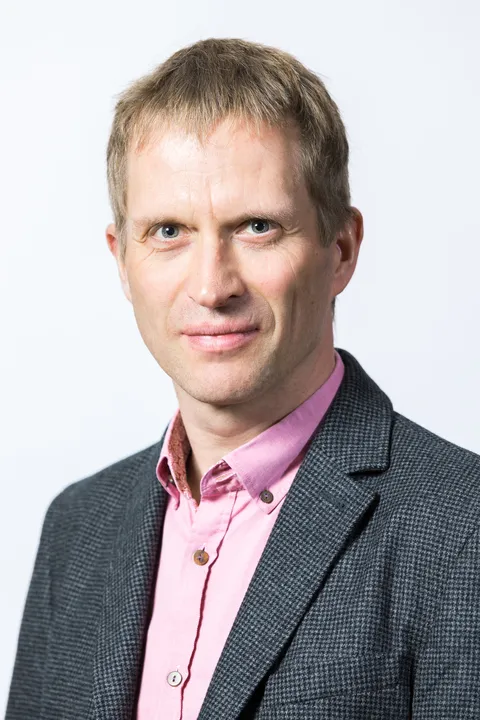
Prof Tim Stratford
  • PhD, The University of Cambridge, 2000
  • MEng, Jesus College, The University of Cambridge, 1996
  • MA(Cantab), Jesus College, The University of Cambridge

MIStructE, CEng

Advanced Composite Structures

Fibre Reinforced Polymers (FRPs) such as carbon, aramid and glass FRPs are being increasingly used in construction. These advanced composites can be used in combination with traditional construction materials, or to form structures in their own right. Of particular importance with FRP materials are the methods of forming joints.

Adhesively Bonded Joints

The structural use of FRPs usually involves adhesive joints. These might be between two pieces of FRP (eg: in an all-FRP bridge deck), or where the FRP is bonded to another material (eg: FRP strengthening of a metallic beam or FRP reinforcement inside concrete). These bonded connections require proper design, both mechanically and to ensure their durability.

Externally Bonded FRP Strengthening

Metallic, concrete and masonry structures can be strengthened by bonding FRP to their external surfaces. FRP can be used to strengthen a wide variety of structural elements (eg: bridge columns and decks and floor slabs). FRP is particularly beneficial where time or space constraints govern a strengthening scheme.

Concrete Reinforced using FRP

FRP materials can be used to reinforce structural concrete. They are most likely to be used for their corrosion restance (eg: marine environments) or near electromagnetically sensitive equipment. However, replacing ductile steel rebar with brittle FRP reinforcement requires traditional concrete design techniques to be revised.
Shear in Concrete with Brittle Reinforcement

Stability of Long Precast Concrete Beams

  • Experimental structures research
  • Structural response in fire
  • FRP composite materials for structural engineering
  • Externally bonded strengthening and repair using FRP
  • Shear in concrete with brittle (FRP) reinforcement
  • Structural Analysis and Design
Reader
f.bosche@ed.ac.uk
+44(0)131 6513525
3.18 William Rankine Building
Civil and Environmental Engineering
Infrastructure and Environment
Image
Dr Frederic Bosche

My name is Frédéric Bosché. Following a PhD in Civil Engineering at the University of Waterloo (Canada), I worked for 2 years as researcher in the Computer Vision Laboratory at ETH Zurich, before becoming Assistant Professor in Construction Informatics at Heriot-Watt University. In 2019, I joined the University of Edinburgh where I was first Senior Lecturer and now Reader in Construction Informatics. I teach on Engineering Project Management, Digital Construction and some Surveying. I also lead the CyberBuild Lab that delivers research and innovation in related areas.

  • Engineering Project Management
  • Digital Construction
  • Civil Engineering Construction and Surveying
  • Final Year Thesis Coordinator

My research interests are related to the development and application of new digital solutions to support project delivery and asset (including heritage) management (operation and maintenance), with current focus on: 

  • Acquisition and Processing of reality capture data to support construction and life cycle management (scan-to-BIM, scan-vs-BIM/DT)
  • XR technology, to support enhance on-site construction works.
  • OpenBIM, Linked Data and ICT for information management, principally in relation to the previous two areas.

Aside from our academic and industrial impact, our research projects in the CyberBuild Lab have also given my colleagues and I the opportunity and joy to engage in numerous public engagement activities from school career fairs to events at the Glasgow Science Museum and the Edinburgh International Science Festival.


Research Associate in Fire Safety Engineering
Cameron.MacLeod@ed.ac.uk
1.4 John Muir
Civil and Environmental Engineering
Infrastructure and Environment
Postgraduate
s1461956@sms.ed.ac.uk
Civil and Environmental Engineering
Infrastructure and Environment
Research Associate in Composite Design and Testing
J.Quinn@ed.ac.uk
1.131 Sanderson Building
Civil and Environmental Engineering
Infrastructure and Environment
Image
Profile photo of Dr James A Quinn

Dr James A Quinn is a Research Associate in Composite Design and Testing at The University of Edinburgh and a member of the MATTERS Group, where his role focuses on connecting innovative research to practical applications.

He is experienced in many aspects of composite testing, with current research interests in multifunctional composite materials and structures. Building on his background in asset maintenance of thick marine composite structures, he is also involved in:

  • electromagnetic interference (EMI) shielding performance in composite structures
  • multifunctional composite materials and structures
  • non-destructive testing (particularly of thick fibre-reinforced polymer structures)
  • mechanics of thick or large composites including sandwich structures
  • fracture mechanics of polymer composites
  • repair of polymers and polymer-composites.

Doctor of Philosophy (PhD), Asset Maintenance of Thick Section Fibre-Reinforced Composite Structures, University of Edinburgh, 2024

Master of Mechanical Engineering with Honours (MEng), University of Edinburgh, 2019

University Teacher/Research Fellow
yyardim@exseed.ed.ac.uk
3.19 William Rankine Building
Civil and Environmental Engineering
Infrastructure and Environment
Image
YavuzYARDIM

I am an academic and university teacher at the School of Engineering, University of Edinburgh. My expertise lies in structural engineering, sustainability, and advanced technologies with a strong focus on resilience and innovation in civil infrastructure. Throughout my academic career, I have contributed significantly to both teaching and research, leading projects that address contemporary engineering challenges using experimental and computational methodologies. My current research initiatives involve the integration of AI-driven methods for structural health monitoring, sustainable construction materials, and innovative structural solutions aimed at enhancing infrastructure sustainability and resilience.

PgCAP, Academic Practice, University of Edinburgh, UK (2025)

Associate Professorship (Docentlik) by the Interuniversity Council of Turkey (ÜAK) 2013

Associate Professorship by Ministry of Education, Albania (2013)

Ph.D. in Structural Engineering, University Putra Malaysia, Malaysia (2008)

M.Sc. in Structural Engineering, University Putra Malaysia, Malaysia (2002)

B.Sc. in Civil Engineering, University of Gaziantep, Turkey (1998)

Chartered Civil Engineer (CEng), Institution of Civil Engineers (ICE)

Member of the Union of Chambers of Engineers and Architects of Turkey, Chamber of Civil Engineers.

Conceptual Design and Sustainability for Civil Engineers (CDSCE3)

Engineering Principles 1

Behaviour and Design of Structures 2

Prior Academic Teaching Roles

Reinforced Concrete Fundamentals (5) Structural Analysis (5) Structural Mechanics (5) Reinforced Concrete Structures (5) Bridge Engineering (3) Structural Design II (3) Solid Mechanics (4)

Graduate Courses:

Behavior of RC Members and Structures (4)Bridge Assessment (3) Advanced Reinforced Concrete Design (4) Advanced Structural Design (4)

*Number in brackets indicates the number of times the course has been taught.

My research involves experimental and numerical investigations of reinforced concrete structures, earthquake-resistant buildings, and historical masonry structures. I have extensive expertise in the performance assessment of composite precast slab structures, unreinforced masonry buildings, and historical structures under static and dynamic loads. Additionally, I focus on developing innovative composite precast lightweight slabs, advanced assessment and repair techniques for reinforced concrete (RC) buildings and bridges, and masonry structures. My current projects include strengthening techniques for unreinforced masonry structures and studying the effects of anchorage on the axial strength of fiber-reinforced polymer confined rectangular columns. Additionally, my recent research involves bridge inspection using Retrieval-Augmented Generation (RAG) and knowledge graphs for structural health monitoring, as well as the development of sustainable low-carbon bricks utilizing water-based polymeric binders and recycled aggregates.

  • Structural performance assessment and AI-driven structural health monitoring
  • Earthquake-resistant design
  • Historical masonry structures
  • Sustainable and innovative construction materials.