Mechanical Engineering

Circulating tumour cells (CTCs) are cancer cells that detach from primary or metastatic tumours and enter the bloodstream, offering a rich source of information for early detection, monitoring of disease progression, and tailoring personalised treatments. However, isolating these cells remains extremely difficult. They are exceptionally rare, and their physical properties—such as size, shape, and deformability—vary widely across patients, cancer types and disease stages. Most existing microfluidic separation devices struggle because they are optimised for a narrow range of cell characteristics and cannot accommodate this biological variability. Inertial microfluidics is a rapidly growing technology that uses hydrodynamic forces to focus and separate cells at high throughput without the need for chemical labels. While powerful, current devices share one fundamental limitation: their internal flow environment is fixed once fabricated. As a result, they cannot be tuned or adapted to different sample conditions. A device that performs well for one patient or cancer type may perform poorly for another. This PhD project aims to address this challenge by developing adaptive inertial microfluidic systems—devices in which the internal flow behaviour can be modified or controlled after fabrication. Rather than relying on static geometries or single-purpose designs, the project will explore approaches that allow the microscale flow field to respond to changes in operating conditions, making it possible to tailor separation performance to unknown or variable CTC properties. This shift from static to adaptive design has the potential to yield more universal diagnostic platforms capable of handling diverse clinical samples without prior knowledge of cancer type or stage. The project will integrate advanced computational modelling with experimental microfluidics. Computationally, the student will use high-fidelity simulations to investigate how inertial flow structures change under adaptive conditions and how these changes influence particle and cell migration. Numerical modelling provides complete spatial and temporal datasets, enabling the exploration of underlying physical mechanisms that cannot be directly observed in the laboratory.

 Experimentally, the student will fabricate and test prototype devices, characterising flow behaviour and cell analog trajectories to validate and refine the computational findings. This combined approach ensures both deep physical insight and practical relevance. The supervisory team provides strong complementary expertise: Dr Sally Peyman (Heriot-Watt University) – experimental microfluidics, device development, biomedical applications Dr Benjamin Owen (University of Edinburgh) – computational modelling, multiphysics simulation, inertial microfluidic theory The project also benefits from collaboration with Prof. Ian Papautsky (University of Illinois Chicago), a world-leading figure in microfluidic cancer diagnostics and Director of CADMIM. His involvement provides industry-informed guidance on translation and real-world applicability. This PhD offers an exciting opportunity to work at the intersection of biomedical engineering, fluid dynamics, and microsystem design. The student will gain expertise in high-performance computing, fluid simulation, microfabrication, microscopy and diagnostic technology development. The outcomes of this project have the potential to significantly advance patient-specific liquid biopsy tools and contribute to the next generation of adaptive lab-on-chip systems.

Minimum entry qualification- an Honours degree at 2:1 or above (or international equivalent) in a relevant science or engineering discipline, possibly supported by an MSc Degree

Further information on English language requirements for EU/Overseas applicants.

Applications are welcomed from self-funded students, or students who are applying for scholarships from the University of Edinburgh or elsewhere.

Competition (EPSRC) funding may be available for an exceptional candidate but please note you must be a UK student or an EU student who has pre-settled/settled status and has lived in the UK for at least 3 years.
Further information and other funding options.

Off
Postgraduate
s2250494@sms.ed.ac.uk
1.183A Fleeming Jenkin
Mechanical Engineering
Energy Systems
Postgraduate
s2132488@sms.ed.ac.uk
G.8 John Muir
Mechanical Engineering
Energy Systems
Dean International - Students
Tom.Bruce@ed.ac.uk
+44(0)131 6508701
3.026 Engineering Forum
Mechanical Engineering
Energy Systems
Image
Professor Tom Bruce
  • Ph.D. "Violent wave action at seawalls and breakwaters", 2006
  • BSc (hons) Astrophysics, University of Edinburgh, 1987
  • MSc Astronomical Technology, University of Edinburgh, 1988
  • Co-Manager, EPSRC Coastal Structures Network
  • Full member, International Society of Offshore and Polar Engineers (ISOPE)
  • Wave - structure interaction
  • Wave hydrodynamics
  • Flow measurement - Particle Image Velocimetry (PIV)
  • Associate Schools Liaison Officer (with SRA)
Deputy Director of Mechanical Engineering and Professor
vasileios.koutsos@ed.ac.uk
+44(0)131 6508704
1.132 Sanderson Building
Mechanical Engineering
Materials and Processes
Image
Prof Vasileios Koutsos

Vasileios Koutsos, FInstP, FIMMM, CEng MIMechE, FHEA, is a Professor (Chair in Soft Materials and Surfaces) with the Institute for Materials and Processes, in the School of Engineering. Formerly a Marie Curie Post-Doctoral Research Fellow at the Laboratory of Condensed Matter Physics in Collège de France (Paris, France, 1998-2000), he holds a BSc in Physics (Physics Department, Aristotle University of Thessaloniki, Thessaloniki, Greece, 1992) and a PhD in Polymer Science (Chemistry Department & Materials Science Centre, University of Groningen, Groningen, The Netherlands, 1997). 

Since joining the University of Edinburgh in 2000, VK has transitioned from Lecturer to Professor, leading an interdisciplinary research group at the interface of materials science and mechanical engineering. With over two decades of academic and research leadership, he has secured £8M in funding and currently directs an advanced AFM facility. A defining feature of his career is a deep-seated, user-oriented approach that bridges the gap between fundamental research and industrial application. He has attracted over £1.5M in direct industrial funding from world-leading partners—including Michelin, SABIC, Ford, Jaguar Land Rover, WES, and Greencoat UK Wind—to tackle complex materials science and engineering challenges.
 
VK served as Head of the Research Institute for Materials and Processes for a full 5-year term (2014-2019) and as Deputy Head of the Research Institute from 2019 to Feb. 2026; he currently serves as Deputy Director of Mechanical Engineering (since 2024).
  • Ph.D. in Polymer Science, University of Groningen, The Netherlands, 1997
  • B.Sc. in Physics, Aristotle University of Thessaloniki, Greece, 1992
  • Chartered Engineer and Member, Institution of Mechanical Engineers, CEng MIMechE
  • Fellow, Institute of Physics, FInstP
  • Fellow, Institute of Materials, Minerals and Mining, FIMMM
  • Fellow, Higher Education Academy, FHEA

Current:

  • Course Organiser of Industrial/European Placement 4 (MEng)
  • Course Organiser of Professional Issues for Mechanical Engineers 3 (BEng/MEng)
  • Final Year Mechanical Engineering Individual Project Supervision (BEng/MEng)
  • Industrial/European Placement Supervision (MEng)
  • Digital Design and Manufacture (DDM) M.Sc. Project Supervision

Major Past Teaching:

  • Surface Engineering and Coatings 5
  • Polymers and Composite Materials 4
  • Polymer Science and Engineering 5
  • Dynamics 4
  • Advanced Materials 5
  • Nanotechnology 5
  • Thermodynamics 2
  • Mechanical Engineering 2nd Year Laboratory; 12 experiments in dynamics, thermodynamics, fluids, and structures


  • Materials Science and Engineering
  • Surfaces and Interfaces
  • Composites and Nanocomposites
  • Recycling and Sustainability
  • Adhesion and Tribology
  • Mechanics of Materials
  • Thin Films and Coatings
  • Materials for Biomedical Applications
  • Materials for Energy
  • Materials for sensors
  • Polymers and Nanoparticles on Surfaces and Interfaces
  • Self Assembly
  • Elastomers and gels
  • Soft Coatings
  • Micro/nanomechanics
  • Wettability of Surfaces, Wetting, Dewetting
  • Droplets, bubbles, and liquid foams
  • Additive manufacturing
  • Electrospinning and fibrous materials
  • Surface Metrology and Characterisation
  • Atomic Force Microscopy (AFM)
Emeritus Professor
W.Rampen@ed.ac.uk
+44(0)131 6505700
3.011 Engineering Forum
Mechanical Engineering
Energy Systems
Image
Professor Win Rampen

Professor Win Rampen was a founder and Managing Director of Artemis Intelligent Power which has pioneered the development of the ultra-efficient and controllable Digital Displacement ® hydraulic technology. Since its creation in 1994, Win has overseen the growth of Artemis to 50 employees.

Win grew up on a farm near Toronto before training as an engineer. After graduation, he came to the UK in 1978 to work with Professor Stephen Salter and his wave power team at the University of Edinburgh. It was there that he first encountered Robert Clerk and his radical hydraulic machines - which were intended for the Salter Duck's power take-off system.

After a few years working as a lecturer in Canada, during the 1980s, Win returned to the University to continue working on the advanced hydraulic machines needed not only for waves but, also, other forms of renewable energy. Win led the project at the University and developed the early prototypes. That work led to a doctorate in 1993 and the creation of Artemis in 1994. Artemis grew organically until it was acquired by Mitsubishi in 2010.

Win holds the Chair of Energy Storage at the University of Edinburgh and is a Fellow of the RSA, the IMechE and the Royal Academy of Engineering.
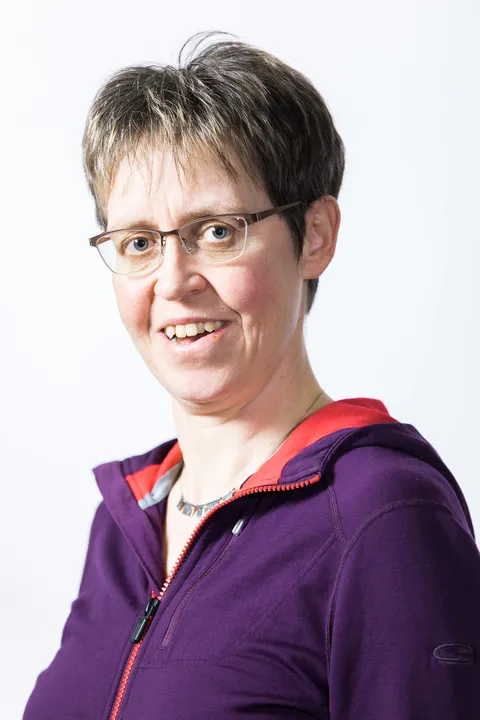
Senior Lecturer
Jane.Blackford@ed.ac.uk
+44(0)131 6505677
1.141 Sanderson Building
Mechanical Engineering
Materials and Processes
Image
Dr Jane R Blackford
  • PhD (Sheffield)
  • Ice and snow mechanics
  • Winter sports engineering (skiing, curling)
  • Casting, forming, heat treatment, HIPping
  • Avalanches, ice friction
  • Processing/microstructure/property relationships in metals
  • High temperature alloys, intermetallics and coatings, metal foams
Deputy Director of Learning & Teaching - Recruitment and Admissions
Anthony.Callanan@ed.ac.uk
+44(0)131 6507355
2.2005 James Clerk Maxwell Building
Mechanical Engineering
Bioengineering
Image
Dr Anthony Callanan
  • Diploma in Project Management - Dublin Business School, 2010
  • PhD Biomedical Engineering, University of Limerick, 2009
  • BEng Mechanical Engineering, University of Limerick, 2002
  • National Certificate Mechanical Engineering, Galway-Mayo Institute of Technology, 1999
  • Senior Lecture, August 2018 - Present
  • Lecture, January 2018 - July 2018
  • Chancellor's Fellow, January 2013 - December 2017
  • IRCSET/Marie-Curie Research Fellowship, (Phase 2) National University of Ireland Galway 2012 - 2013
  • IRCSET/Marie-Curie Research Fellowship, (Phase 1) Imperial College London 2010 - 2012
  • Postdoctoral Researcher - Department of Mechanical and Aeronautical Engineering, University of Limerick 2009 - 2010
  • International collaboration - University of Pittsburgh, USA (3 months) 2005
A.Aitzaz@sms.ed.ac.uk
Mechanical Engineering
Materials and Processes
Chair of Synthetic Biological Engineering
Alistair.Elfick@ed.ac.uk
+44(0)131 6507254
2.2007 James Clerk Maxwell Building
Mechanical Engineering
Bioengineering
  • PhD Biomedical Engineering, University of Durham, 1999
  • BSc Mechanical Engineering, University of Durham, 1993
  • MSc Bioengineering, University of Strathclyde, 1994
  • Member, Optical Society of America
  • Member, Society of Applied Spectroscopists
  • Fellow of the Society of Biology
  • Member, European Society for Biomaterials
  • Active member, Orthopaedic Research Society
  • Director of the BBSRC Synthetic Biology Network on Standardisation
  • US-UK Fulbright Commission, Distinguished Scholars Award, University of California Berkeley, 2003
  • EPSRC Advanced Research Fellowship, 2004-2009
  • Royal Academy of Engineering, Global Research Award, University of California Berkeley, 2003