Image
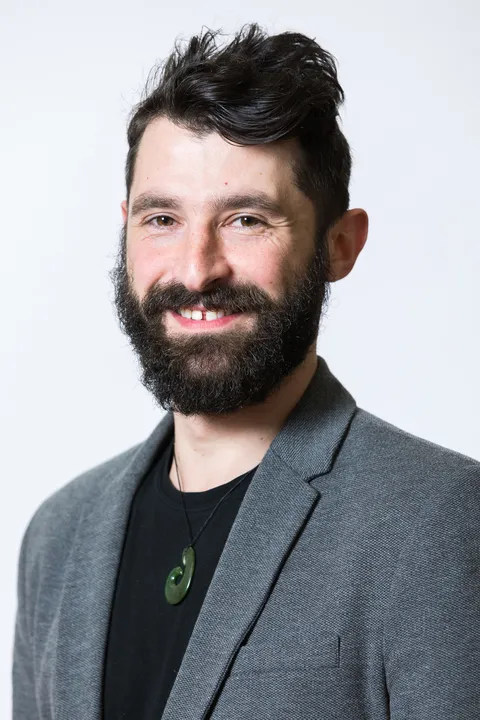
![[photo of Andy Downes]](/sites/default/files/styles/convert_to_webp/public/2024-12/Downes_0.jpg.webp?itok=Jb4CHPTL "Downes_0.jpg")
Andrew Downes - Google Scholar
Andrew studied at the University of Cambridge and was awarded a degree in Natural Sciences (Physics) in 1992. He continued in Cambridge for his PhD on nano-optical microscopy which was awarded in 1996. He remained in Cambridge as a Postdoc on the analysis of metallic nanowires until 1998, when he moved to Marseille to continue work on nano-optical microscopy and spectroscopy. He returned to Cambridge in 2001 to set up a nano-optical microscope, and in 2003-4 was at UCL working on nano-optical lithography.
In 2005 he moved to Edinburgh to work on nano-optical Raman microscopy. In 2006 he set up a Coherent anti-Stokes microscope for biological samples, and in 2007 was awarded an RCUK fellowship which converted into a lectureship in 2012. Research expanded to Raman spectroscopy, Atomic Force Microscopy mechanical measurements, and high-speed Raman imaging of biological samples. A common theme has been novel measurements, and pushing the limits of detection. In 2020 he was promoted to senior lecturer.
A recent focus has been the use of Raman spectroscopy in cancer and neurodegenerative diseases, investigating living cells and tissues and applying to accurate diagnosis.
PhD (Department of Engineering, University of Cambridge, 1996).
Senior Fellow of the Higher Education Academy (SFHEA) since 2017.