
Image
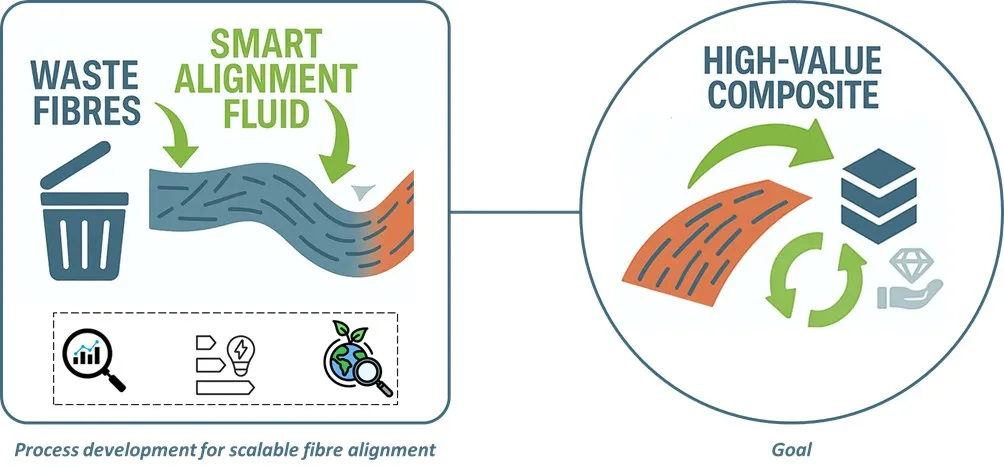
Are you interested in pursuing a PhD at the University of Edinburgh? We seek a highly motivated student to join an ongoing, industry-linked research programme on fibre-alignment technologies to produce truly circular composites. Complementing process-development efforts in the parent project, you will work within an interdisciplinary team to quantify process metrics and undertake parametric tuning and sustainability evaluation.
The circular fibre products emerging from the parent project are intended to integrate within the existing composites value chain and deliver strong fibre-matrix interfacial performance. Drawing on manufacturing, sustainability, materials science and process-engineering insights, your research will inform targeted process refinement efforts within the wider research programme towards addressing current industrial pain points (high energy footprint and low productivity).
Collaborative links with Gen 2 Carbon, Sigmatex and Teijin Europe in the parent project provide exciting opportunities for knowledge-exchange activities and technical site visits during the project.
Project Objectives
Early application is advised as the position will be filled once a suitable candidate is identified.
Training
As a PhD student, you will take part in a wide range of research activities, including collaboration with international researchers and participation in conferences, workshops and seminars. You will work closely with fellow researchers within the Institute for Materials and Processes (IMP) at the University of Edinburgh’s School of Engineering. Regular meetings and collaborative interactions across the group will provide valuable opportunities for technical exchange and peer learning.
You will have access to tailored professional development opportunities through the Institute for Academic Development, and technical training will be provided as needed to support your experimental and analytical work. Close alignment with the parent project and its industry partners will facilitate site visits and knowledge exchange activities, enhancing the real-world relevance of your research.
Note that only applications via the University’s online system will be considered. All applications should include the following documents:
• For any enquiries, please contact: Dr Winifred Obande (w.obande@ed.ac.uk)
• The University of Edinburgh is committed to equality of opportunity for all its staff and students and promotes a culture of inclusivity. Details: https://www.ed.ac.uk/equality-diversity
• Supervisor home page https://eng.ed.ac.uk/about/people/dr-wini-obande
Minimum entry qualification - an Honours degree at 2:1 or above (or International equivalent) in a relevant science or engineering discipline, possibly supported by an MSc Degree. Further information on English language requirements for EU/Overseas applicants.
We welcome applications from enthusiastic, self-driven and resourceful candidates with a first-class or upper 2:1 UK Honours degree (or international equivalent) in one of the following disciplines:
Other Essential Requirements:
Desirable Requirements:
Further information and other funding options.
There is no funding available for this project, and no additional financial support can be provided. Only self-funded applicants will be considered. If you have your own funding (including government sponsorships), we warmly encourage you to apply.
The composites industry is under increasing pressure to transition towards a truly circular economy. As growing demand continues to widen the supply gap, we must recover untapped value that would otherwise be lost to landfilling and incineration, which are resource-intensive and environmentally damaging end-of-life pathways. Where recycled fibres are used, they are often downcycled as fillers and low-value reinforcements in their short and randomly aligned form. A key challenge to the effective reintegration of recycled carbon and glass fibres into high-performance products lies in achieving scalable and energy-efficient fibre alignment from irregular, reclaimed feedstocks. Fibre surface attributes and suspension behaviour in alignment systems play vital roles in determining the alignment efficiency, process stability, and the downstream consolidation and performance of remanufactured composites.
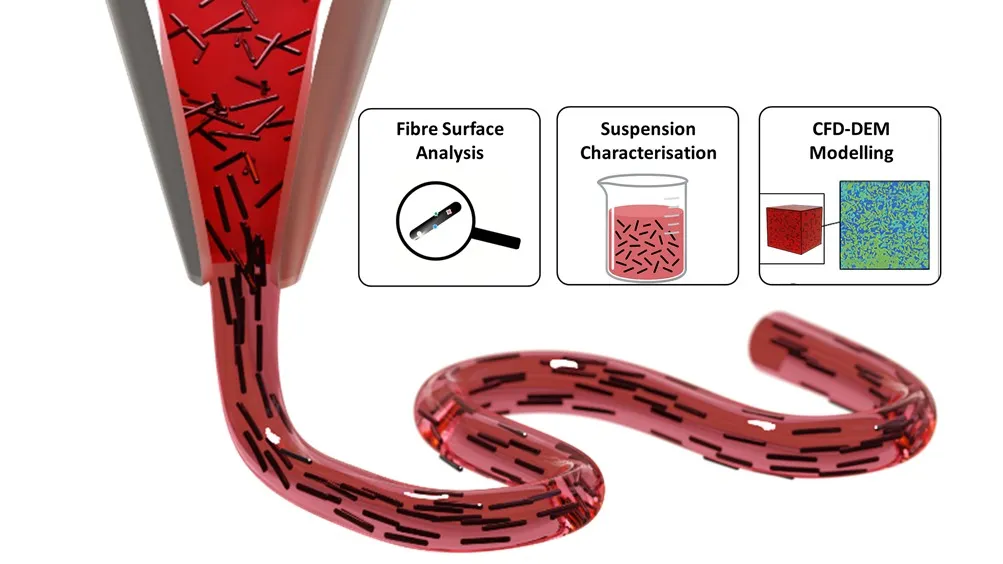
This fully-funded PhD project fits within a wider research programme with industrial partners and an interdisciplinary team working on the development of cross-platform alignment technologies that integrate material science, process engineering and sustainability analysis to deliver scalable solutions for circular composites manufacturing. The successful candidate will contribute to this broader vision by investigating the surface characteristics and suspension dynamics of recycled short fibres used in alignment processes.
Collaborative links with Gen 2 Carbon, Sigmatex and Teijin Europe in the parent project provide exciting opportunities for knowledge-exchange activities and technical site visits throughout the project.
Project Objectives
Early application is advised as the position will be filled once a suitable candidate is identified.
Training
As a PhD student, you will take part in a wide range of research activities, including collaboration with international researchers and participation in conferences, workshops and seminars. You will work closely with fellow researchers within the Institute for Materials and Processes (IMP) at the University of Edinburgh’s School of Engineering. Regular meetings and collaborative interactions across the group will provide valuable opportunities for technical exchange and peer learning.
You will have access to tailored professional development opportunities through the Institute for Academic Development, and technical training will be provided as needed to support your experimental and analytical work. Close alignment with the parent project and its industry partners will facilitate site visits and knowledge exchange activities, enhancing the real-world relevance of your research.
Note that only applications received via the University’s online system will be considered. All applications should include the following documents:
• For any enquiries, please contact: Dr Winifred Obande (w.obande@ed.ac.uk)
• The University of Edinburgh is committed to equality of opportunity for all its staff and students and promotes a culture of inclusivity. Details: https://www.ed.ac.uk/equality-diversity
• Supervisor home page https://eng.ed.ac.uk/about/people/dr-wini-obande
Minimum entry qualification - an Honours degree at 2:1 or above (or International equivalent) in a relevant science or engineering discipline, possibly supported by an MSc Degree. Further information on English language requirements for EU/Overseas applicants.
We welcome applications from motivated, curious, and technically capable individuals with a first-class or upper 2:1 UK Honours degree (or international equivalent) in one of the following disciplines:
Other Essential Requirements:
Desirable Requirements:
Further information and other funding options.
Tuition fees and stipend are available for Home and International students.
Applications are also welcome from self funded students, or students who are applying for scholarships from the University of Edinburgh or elsewhere.
Whether it is the substantial cooling requirements of future data centres or energy-dense batteries for next-generation electric vehicles, the need for energy-efficient electronics cooling systems is ubiquitous. This is because while recent developments have produced ever-smaller and ever-denser devices, heat fluxes comparable to the surface of the Sun can be generated at hot spots, producing high temperatures that adversely impact their performance and raise risk of catastrophic failure. In the last decade and a half, novel 2D nanomaterials have been developed with unique thermal properties (e.g. ultrahigh thermal conductivity). These nanomaterials can be used to form surface coatings to enhance heat transfer from the extremely hot surfaces of electronic devices into the adjacent coolant liquid.
However, our understanding of thermal transport at this nanomaterial/liquid interface is currently limited. For 2D nanocoatings, the nanomaterial can be either carbon-based (graphene nanoparticles or nanoflakes, nanopores, graphene oxide nanosheets etc), boron-based (boron nitride nanosheets, nanotubes, etc) or hybrid (e.g. boron carbon nitride). Similarly, while water is the most studied coolant liquid, realistic applications involve dielectric fluids (e.g. benzene, pentane). Molecular dynamics (MD) simulations represent a powerful tool to study such interfaces, but MD of nanomaterial/liquid interfaces require well-calibrated intermolecular potentials, which don’t currently exist. This project will rely on recent advances in neural networks to develop machine learning potentials (MLPs) for MD simulations of realistic nanomaterial/coolant-liquids and use these to gain fundamental insights into interfacial thermal transport. The goals are to:
1) run ab-initio molecular simulations to sample relevant nanomaterial/liquid interfaces.
2) construct new MLPs by using generated data from 1) and validate them.
3) use MLPs to run classical MD simulations and characterise thermal transport.
This PhD project will be based within the School of Engineering, University of Edinburgh. This PhD project will be supervised by Dr Rohit Pillai and Dr Eleonora Ricci, and the successful applicant will join an active, friendly, and collaborative research group (see https://multiscaleflowx.github.io/). Our group makes extensive use of ARCHER2 – the UK’s national supercomputer, which is based in Edinburgh. This PhD will give the successful applicant the skills and experience to become a future leader in either academia or industry. The supervisors will provide the successful applicant with exceptional research and training opportunities, including:
• regular weekly meetings to discuss the research progress.
• opportunities for travel to participate in workshops/summer schools dedicated to advanced computational methods, as well as present results in international conferences.
• training and experience in state-of-the-art engineering research.
• mentoring from other investigators and experienced postdoctoral researchers.
• exceptional career development opportunities with strong institutional support of early career researchers.
Minimum entry qualification - an Honours degree at 2:1 or above (or International equivalent) in a relevant science or engineering discipline, possibly supported by an MSc Degree. Further information on English language requirements for EU/Overseas applicants.
Tuition fees + stipend are available for Home/EU and International students
Asphalt recycling gained prominence since the 1970s, partly initiated by the oil crisis influencing the availability of bitumen as binder material. Since then, recycled and reclaimed asphalt continued to be part of the mix used in road and pavements providing a cost effective and environmentally friendly option with a potential to decarbonising the industry. Recent examples of roads using recycled asphalt include: 50% recycled asphalt was used in paving a section of M25 between junctions 25 and 26 and a section of A388 Bournemouth Spur Road, Dorset was paved using all the old road materials.
Rolled asphalt pavement comprises of different courses primarily the wearing, binder, base, subbase and capping layer. The degree of compaction determines the stiffness and strength of material along with its resistance to deformation and durability of the mixture. Compaction of the asphalt along with the binder results from the operation of the paving/construction equipment to impart systematic static, shearing and vibrational loads to achieve the required properties of each of the aforementioned course. The pavement is expected to withstand the design traffic load.
In the drive towards net zero carbon emission, there is an urgent need to significantly increase the use of the 100% recyclable Recycled Asphalt Pavement (RAP) in pavement construction. This poses significant challenges in the design and optimisation of the production and construction processes for which this current project seeks to address. For instance, is it possible to better characterise the RAP in terms of material properties to provide a more accurate initial assessment of its recycling readiness? Is it possible to match to assess, based on the RAP's material characteristics and the prevailing loading regimes, whether it would meet the required highway standards?
The aim of the project is to develop a deeper understanding of the RAP pavement construction and establish an experimentally calibrated numerical model to predict the compaction mechanics of recycled asphalt pavements during construction as well as operational period. The model will integrate the mechanics at different length scales. Experimental programme will include time-resolved (4D) X-ray tomography to capture the micromechanics of the granular assembly.
This PhD project is advertised as a part of the Edinburgh Research Partnership in Engineering, a joint partnership between the University of Edinburgh and Heriot-Watt University. The successful candidate will be supervised by a team consisting of academics from the University of Edinburgh and Heriot Watt University (HWU). The Heriot-Watt University supervisor for this project will be Dr Elma Charalampidou. Some of the experiments involving micro x-ray CT system will be undertaken at HWU.
The selection process is in two phases:
Stage 1: Interested candidates should contact Dr Amer Syed at Amer.Syed@ed.ac.uk by 7 February 2025 with their CV and a covering email. Potential candidates will be invited to an interview. Selected candidate will progress to Stage 2.
Stage 2: Selected candidate will complete a formal application to the University of Edinburgh by 12 February 2025. This application will be assessed by a panel for funding. Please note that this studentship attracts enhanced stipend, while the exact details yet to be finalised, for 2024, it was £21,400 per annum.
Home and overseas students are encouraged to apply.
The University of Edinburgh is committed to equality of opportunity for all its staff and students, and promotes a culture of inclusivity. Please see details here: https://www.ed.ac.uk/equality-diversity
Minimum entry qualification - an Honours degree at 2:1 or above (or International equivalent) in a relevant science or engineering discipline, possibly supported by an MSc Degree. Further information on English language requirements for EU/Overseas applicants.
Tuition fees + stipend are available for Home/EU and International students.
From sandcastles to powder metallurgy, granular materials are ubiquitous in engineering and natural environment. Understanding their behaviour under a range of loading conditions is essential in ensuring the structural integrity of the granular system e.g., landslides, chemical/pharmaceutical applications such as compacted tablets, food processing etc.
The mechanical response of a granular assembly depends on the interaction of the individual grains. In most of the natural and engineering systems, this interaction is further complicated by the presence of fluids and temperature gradient resulting in convective mass transport. The thermomechanical behaviour of the granular assembly depends on the temperature/concentration gradient, viscosity of the fluid, variation in fluid saturation, compressibility of the fluid etc. The presence of fluid would also influence the relative motion of the particles, especially in case of particles with varying size and shapes, and directly contribute to the nature of compaction and flow of the granular assembly.
The aim of the project is to develop a deeper understanding of the mechanics of granular assemblies subjected to convective mass transport and to formulate a multiscale multiphysics model to predict the thermomechanical behaviour of granular assemblies. The model will be developed and calibrated using high quality experimental data acquired at multiple length scales. Custom designed experiments will be conducted in an x-ray CT environment to study the micromechanics of the underlying processes using time resolved x-ray tomography (in 4D).
There are four application areas for this project and the successful candidate would be able to select one of these areas.
Geological/geophysical application: Geothermal systems, particularly Enhanced Geothermal Systems where the energy from underground hot rock/fractured rock is used to generate electricity.
Steel production: Porous coke in the granular assembly of the blast furnace charge provides energy, heat and gas required to reduce the iron ore. Improved design of the granular assembly has potential to minimise the CO2 emission in the steel making process.
Recycled Asphalt Pavements: Reclaimed and recycled asphalt are used in road pavements providing a cost effective and environmentally friendly option with a potential in decarbonising the industry.
Powder bed fusion, a metal additive manufacturing technique: The nature of granular assembly of metal powder bed informs the quality of the finished product.
This PhD project is advertised as a part of the Edinburgh Research Partnership in Engineering, a joint partnership between the University of Edinburgh and Heriot-Watt University. The successful candidate will be supervised by a team consisting of academics from the University of Edinburgh and Heriot Watt University (HWU). The Heriot-Watt University supervisor for this project will be Dr Elma Charalampidou. Some of the experiments involving micro x-ray CT system will be undertaken at HWU.
The selection process is in two phases:
Stage 1: Interested candidates should contact Dr Amer Syed at Amer.Syed@ed.ac.uk by 7 February 2025 with their CV and a covering email. Potential candidates will be invited to an interview. Selected candidate will progress to Stage 2.
Stage 2: Selected candidate will complete a formal application to the University of Edinburgh by 12 February 2025. This application will be assessed by a panel for funding. Please note that this studentship attracts enhanced stipend, while the exact details are yet to be finalised, for 2024, it was £21,400 per annum.
Home and overseas students are encouraged to apply.
The University of Edinburgh is committed to equality of opportunity for all its staff and students, and promotes a culture of inclusivity. Please see details here: https://www.ed.ac.uk/equality-diversity
Minimum entry qualification - an Honours degree at 2:1 or above (or International equivalent) in a relevant science or engineering discipline, possibly supported by an MSc Degree. Further information on English language requirements for EU/Overseas applicants.
Tuition fees + stipend are available for Home/EU and International students.
The importance of clustering, or microphase separation, is increasingly recognized, with applications in many technologies including nanomaterials and pharmaceutical crystallization. It is also important in nature; for example the membraneless organelles within biological cells. However, the mechanisms leading to such clusters are not completely understood.
This project aims to improve understanding of microphase separation in complex coacervates. These particular clusters, or microphases, are formed by, for example, mixtures of oppositely charged polyelectrolytes and might also describe some membraneless organelles.
To this end, the successful candidate will develop thermodynamic models of equilibrium clustering in binary mixtures with competing short-range and long-range interactions. The aim is to model and understand the link between particle interactions and microphase separation in complex coacervates.
It is expected that the applicant will have a good degree in Engineering, Physics, Chemistry, Mathematics, or any other related subject. We are particularly keen to hear from applicants who want to develop expertise in molecular theories of fluids. Prior experience in this area is useful but not a requirement.
The successful student, depending on eligibility, will have opportunities for teaching and further training with in the university, as well as participation in the intellectual community provided by the School of Engineering’s Institute for Materials and Processes, in which they will be based.
The University of Edinburgh is committed to equality of opportunity for all its staff and students, and promotes a culture of inclusivity: https://www.ed.ac.uk/equality-diversity
Minimum entry qualification - an Honours degree at 2:1 or above (or International equivalent) in Engineering, Physics, Chemistry, Mathematics, or any other related subject possibly supported by an MSc Degree. Prior experience in molecular theories of fluids is useful but not a requirement.
Further information on English language requirements for EU/Overseas applicants.
Applications are welcomed from self-funded students, or students who are applying for scholarships from the University of Edinburgh or elsewhere.