Electronics and Electrical Engineering
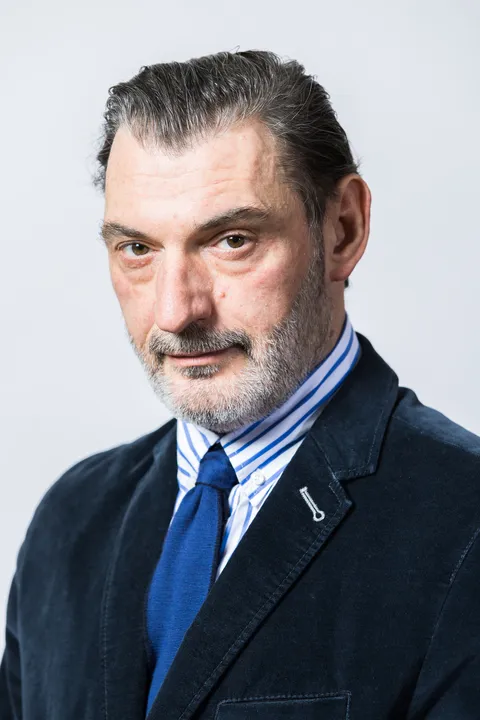
Dr Jonathan G. Terry is the Deputy Head of the Engineering Graduate School at the University of Edinburgh. He joined the School of Engineering in early 1999 as a Post-doctoral Research Associate and later became a Chancellor’s Fellow. He currently lectures in the Electrical and Electronic Engineering Discipline teaching undergraduate students in the 1st, 3rd, and 4th year, as well as those within the MSc Electronics programme.
He is based in the Institute for Integrated Micro and Nano Systems, where his current research activities are in the production of smart sensor systems, exploiting the extensive toolset in place at the fabrication facilities of the Scottish Microelectronics Centre. These involve the development and use of novel fabrication processes and materials, and their integration with post-processed foundry CMOS circuitry. To date, his research has included the development of sensing systems for physical, biological, chemical, medical, astronomical and harsh environment applications.He is a named inventor on three patents and has authored over a hundred journal and conference publications.
Recent and current funded research projects include:
- IMPACT: Implantable Microsystems for Personalised Anti-Cancer Therapy
- New Engineering Concepts from Phase Transitions: A Leidenfrost Engine
- EMBOSS: Enhanced Multiscale Boiling Surfaces - From Fundamentals to Design
- 1993 BEng(hons) Electronic Engineering (UMIST)
- 1994 MSc Microelectronic Materials and Device Technology (UMIST)
- 1998 PhD Solid State Electronics (UMIST)
- Senior Member of the Institute of Electrical and Electronic Engineers (IEEE)
- Member of the Technical Committee of IEE International Conference on Microelectronic Test Structures
- Officer of the Scottish Chapter of the IEEE Electron Devices Society (EDS)
- Regional Editor of the IEEE EDS Newsletter (UK, Middle East & Africa)
- Counsellor to the University of Edinburgh IEEE Student Branch
- Course Director: ELEE09021 Microelectronics 3
- Course Director: ELEE10017 Professional Issues for Engineers 4
- Course Director: PGEE11038 Microfabrication Techniques
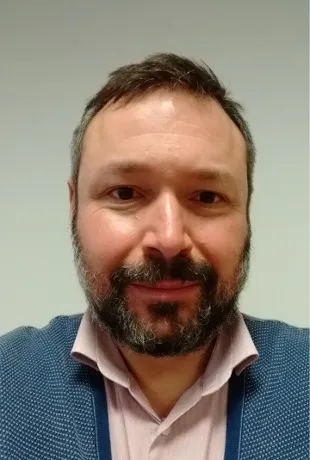
Istvan Gyongy received the M.Eng. and Ph.D. degrees from the University of Oxford, UK, in 2003 and 2008, respectively. Following a period in industry, where he worked on processors for smartphones and a cloud-connected activity tracking system for dairy farms, he joined the University of Edinburgh. His initial research at the University was on hydrodynamic modelling relating to the development of FloWave, the combined wave and current test facility. His research is now focused on the development of single-photon avalanche diode (SPAD) cameras and their application in a range of domains including LIDAR and the life sciences.
Recruiting: Now accepting PhD and visiting researcher applications.
Focus: Energy & AI data centers, large-scale energy system modelling (PyPSA-GB), and IBR smart grids.
Chancellor's Fellow in Energy Systems Integration
Dr Wei Sun is a Chancellor's Fellow in Energy Systems Integration within the School of Engineering. His research focuses on the planning and operation of low-carbon energy systems with high renewable penetration, utilising applied data science and advanced optimisation techniques. Dr Sun holds a Visiting Research Fellowship at UCL.
Dr Sun has extensive experience in energy modelling at different scales. He previously worked on building a multi-scale energy system integration architecture for the National Centre for Energy Systems Integration (CESI) and served as a lead researcher on the Hydrogen’s Value in the Energy System (HYVE) project. He has also contributed to the RESTLESS and ARIES energy resilience projects.
Current Focus 1: Decarbonising AI & Data Centres
Dr Sun’s recent work addresses the critical energy challenges posed by the rapid growth of Artificial Intelligence. He focuses on quantifying the flexibility of data centres and optimising their integration into the power grid to support net-zero targets.
- Spatial Flexibility: Scheduling computing loads across geographically distributed centres.
- Temporal Flexibility: Optimising job timing to match renewable generation.
- Supply Configuration: Integrating on-site storage and renewables.
Dr Sun recently organised the International Workshop on Managing Global Energy Demand of AI Data Centres (Imperial College London, 2025).
Invited talks for IEEE PES International Meeting (PESIM) 2026, Assessing Data Center Flexibility in Low-carbon Power System: Current Capabilities and Future Prospects
Selected Recent Publications
- Grid Frequency Stability Support Potential of Data Center: A Quantitative Assessment of Flexibility in IEEE Transactions on Industry Applications (In press, 2026)
- Multi-Objective Low-Carbon Scheduling Method for Data Centers Based on Ensemble Reinforcement Learning in IEEE Transactions on Smart Grid (2025) link
Open PhD Opportunity
Topic: Improve the Energy Sustainability of AI Data Centers in Future Energy System
Current Focus 2: Open Energy Modelling & PyPSA-GB
Teaming up with Dr Andrew Lyden, Dr Sun works on PyPSA-GB, an open-source model of the Great Britain power system. Moving away from "black box" commercial tools, the team advocates for transparent, reproducible energy modelling. Their research utilises high-fidelity simulations to stress-test grid resilience against extreme weather, analyse security of supply risks in Scotland, and optimise flexibility assets to minimise renewable curtailment.
Key Output
- PyPSA-GB GitHub Repository – Open-source code for the GB transmission network model.
- Electricity System Security of Supply in Scotland (Report for ClimateXChange/Scottish Government, 2023)
- PyPSA-GB: An Open-Source Model of Great Britain’s Power System (Foundational Paper)
- PhD Electrical Power Engineering, University of Edinburgh, 2015
- Chartered Engineer (CEng)
- Member of the Institution of Engineering & Technology (IET)
- Member of the Institute of Electrical and Electronic Engineers (IEEE)
- Hydropower Interdisciplinary Group Design Project [MEng]
- Electrical Engineering Fundamentals of Renewable Energy [MSc]
- MSc Sustainable Energy Systems - Dissertation supervision
- MSc Advanced Power Engineering - Dissertation supervision
- Network Integration of DER
- Electricity Network Modelling
- Gas/Hydrogen Network Modelling
- Climate Change Impacts on Renewable Energy
- Optimisation Modelling
- Statistic analysis
- Data Science applications in Power Systems