Mechanical Engineering
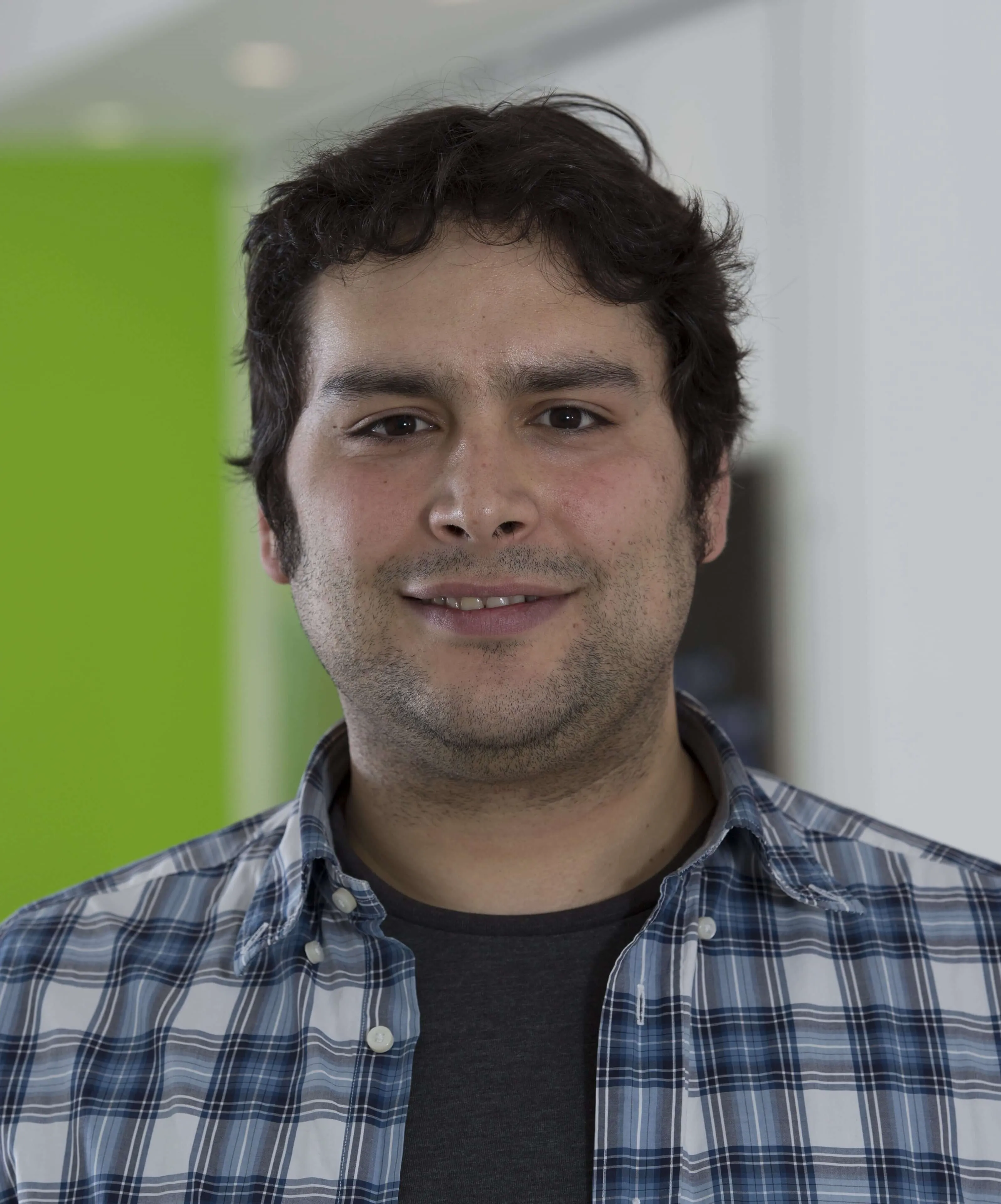
Dr. Giorgio-Serchi is a Senior Lecturer (Associate Professor) within the School of Engineering, Institute of Integrated Micro and Nano System, and teaches within the Mechanical Engineering discipline; he is affiliated with the Edinburgh Centre for Robotics. His research focueses on soft-bodied underwater vehicle design and control, soft manipulator control, model-predictive control of unmanned underwater vehicles and soft robot sensing.
Dr Giorgio-Serchi holds a Laurea Degree (MSc equivalent) in Marine Science & Technology from the University of Pisa. He was a Marie-Curie Early Stage Training (EST) Fellowship and PhD in Computational Fluid Dynamics at the University of Leeds under the supervision of Prof. Jeff Peakall. In 2011 he was awarded a Marie-Curie European Reintegration Grant (ERG) to undertake a Research Fellowship in bioinspired aquatic propulsion at the Centre for Sea Technologies and Marine Robotics of the Biorobotics Institute, as part of the CFD-OctoProp project and the project PoseiDrone, under the supervision of Prof. Cecilia Laschi. In 2015, sponsored by the Lloyd's Register Foundation, he moved to the Fluid Structure Interaction Group of the University of Southampton to work on the development of bioinspired soft-bodied underwater vehicles and the study of aquatic propulsion aided by body-shape variations under the supervision of Prof. Gabriel Weymouth.
In 2018 Dr Giorgio-Serchi moved to the University of Edinburgh as Chancellor 's Fellow in Robotics and Autonomous Systems (Tenure Track Assistant Professor), as part of the Data Driven Innovation initiative, joined the Soft Systems Group and started work within the OrcaHub in collaboration with Dr. Kiprakis (Institute of Energy Systems), Prof. Mistry (School of Informatics) and Dr. Stokes (Scottish Microelectronics Institute).
Dr Giorgio-Serchi currently maintains collaboration with Dr. Weymouth at the DelftTU, Dr. Calisti at the Scuola Superiore Sant'Anna and Dr. Renda at Kahlifa University. I also maintain very active collaborations with Prof. Suzumori's Endorobotics Lab at Tokyo Tech, Prof. Mochiyama's Flexible Robotics Lab at Tsukuba University, Prof. Tadokoro's Human-Robot Informatics Lab at Tohoku-Sendai University and Hosoya's Mechanical Dynamics Lab at Shibaura Institute of Technology.
- PhD in Computational Fluid Dynamics from the University of Leeds, CFD Centre, 2011
- Laurea (MSc equivalent) in Marine Science and Technologies, University of Pisa, 2006
- IEEE
- IEEE Robotics and Automation Society
- Lecturer for Control and Instrumentation Engineering 3 (SCEE09002)
- Course Organiser and Lecturer for O&M Robotics and Sensors (Postgraduate Course: IDCORE- PGEE11235)
- Course Organiser and Lecturer for Industrial Robotics (Postgraduate Course: MSc DDM - PGEE11212)
- Course Organiser for Professional Issues for Mechanical Engineers (SCEE09001)
- Lecturer for Applications of Sensor and Imaging Systems (Postgraduate Course: MSc SIS - PGEE11136)
Latest Research Output
- Dashty Samal Rashid, Francesco Giorgio-Serchi, Naoki Hosoya, David Garcia Cava, "Energy localization and eigenvalue veering induced by local constraints in bolted structures", Proceedings of the Royal Society A: Mathematical, Physical and Engineering Sciences, 2025, https://doi.org/10.1098/rspa.2025.0501
- Delin Hu, Huazhi Dong, Francesco Giorgio-Serchi, Yunjie Yang, "A self-supervised learning framework for soft robot proprioception", IEEE Transactions on Neural Networks and Learning Systems, 2025, DOI: 10.1109/TNNLS.2025.3610759
- Kyle L Walker, Laura-Beth Jordan, Francesco Giorgio-Serchi, "Nonlinear model predictive dynamic positioning of a remotely operated vehicle with wave disturbance preview", The International Journal of Robotics Research, 2025, https://doi.org/10.1177/02783649241286909
- Delin Hu, Francesco Giorgio-Serchi, Shiming Zhang, Yunjie Yang, "Stretchable e-skin and transformer enable high-resolution morphological reconstruction for soft robots", Nature Machine Intelligence, 2023, https://doi.org/10.1038/s42256-023-00622-8
- PhD (Nottingham)
- BEng (Nottingham), 1st Class Honours
I am a Senior Lecturer in Mechanical Engineering at the University of Edinburgh. I am a computational engineering scientist exploring nanoscale interfacial phenomena using simulation, with a particular focus on phase change, droplet dynamics, and heat transfer at solid–liquid interfaces. My research combines molecular dynamics (including machine-learning interatomic potentials) with continuum modelling and multiscale coupling methods to connect atomistic physics to engineering-scale behaviour. A recurring theme is understanding how nanoscale mechanisms govern macroscopic outcomes: how droplets move (and sometimes jump), how surfaces clean themselves, how ice nucleates, and how heat is transported across interfaces. 
I lead an £1.3M UKRI/ERC-funded research grant (NANO-COOL) investigating nanoscale mechanisms of phase change and their implications for thermal control, and I am a group leader within the multiscale flow (mfX) research group (with Duncan and Livio), where we develop multiscale methods and high-performance computing software for complex flow and transport problems.
I am actively involved in academic service and research leadership within the School and the wider University. I currently serve as Postdoctoral Researcher (PDRA) Champion for the School of Engineering, a role focused on improving postdoctoral support, career development, and research culture. In this capacity, I have contributed to the design and implementation of postdoctoral induction and professional development initiatives aligned with the Concordat to Support the Career Development of Researchers.
PhD, University of Melbourne (2017)
MSc, University of California, Davis (2012)
- College Member, EPSRC Peer Review College (2024–present)
- Expert Evaluator, European Research Council (2024–present)
- Member, Scotland Beyond Net Zero (2025–present)
- Member, UK Fluids Network Special Interest Group on Non-Equilibrium Molecular Dynamics (NEMD) (2019–present)
- Member, Society for Industrial and Applied Mathematics (SIAM) (2014–present)
My research sits at the interface of molecular simulation, multiscale modelling, and thermal-fluid engineering, including:
- Molecular dynamics of phase change and interfacial transport, including ML potentials for more accurate/transferable simulations
- Boiling/evaporation and vapour bubble nucleation at nanoscale surfaces; wettability/roughness effects.
- Ice nucleation and design principles for icephobic / de-icing surfaces, including vibration effects 
- Spectral / mode-resolved mechanisms of heat transfer across solid–liquid interfaces (including meniscus physics) 
- Multiscale coupling (atomistic ↔ continuum) and HPC-enabled simulation workflows (ARCHER2/CIRRUS) 
Selected public coverage:
- Self-cleaning surfaces inspired by cicadas (The Conversation) 
- Nanobubbles for ultrasonic cleaning (EurekAlert) 
- Ultra-fast vibration heating / “boiling by shaking” (BBC, press clippings: 1, 2, 3, 4) 
Further information on my research and publications can be found on mypersonal website, as well as the mfX group website.
Working with me / joining the group.I welcome enquiries from prospective PhD students, postdoctoral researchers, and visitors who are excited by multiscale simulation and want to work across molecular dynamics, continuum modelling, and HPC. If you contact me, the most helpful first email includes (i) a short CV, (ii) a paragraph on your interests and relevant technical skills (e.g., MD/CFD/programming), and (iii) a note on funding status/timelines. See group website on details on existing opportunities.
Collaboration.I’m always happy to discuss collaborations that need careful physics at interfaces (phase change, nucleation, interfacial heat transfer) and/or robust simulation workflows. For broader group work and joint opportunities, mfX is a good entry point