Imaging, Data and Communications

Postgraduate
T.Haloubi@sms.ed.ac.uk
2.11 Alexander Graham Bell Building
Imaging, Data and Communications
Image
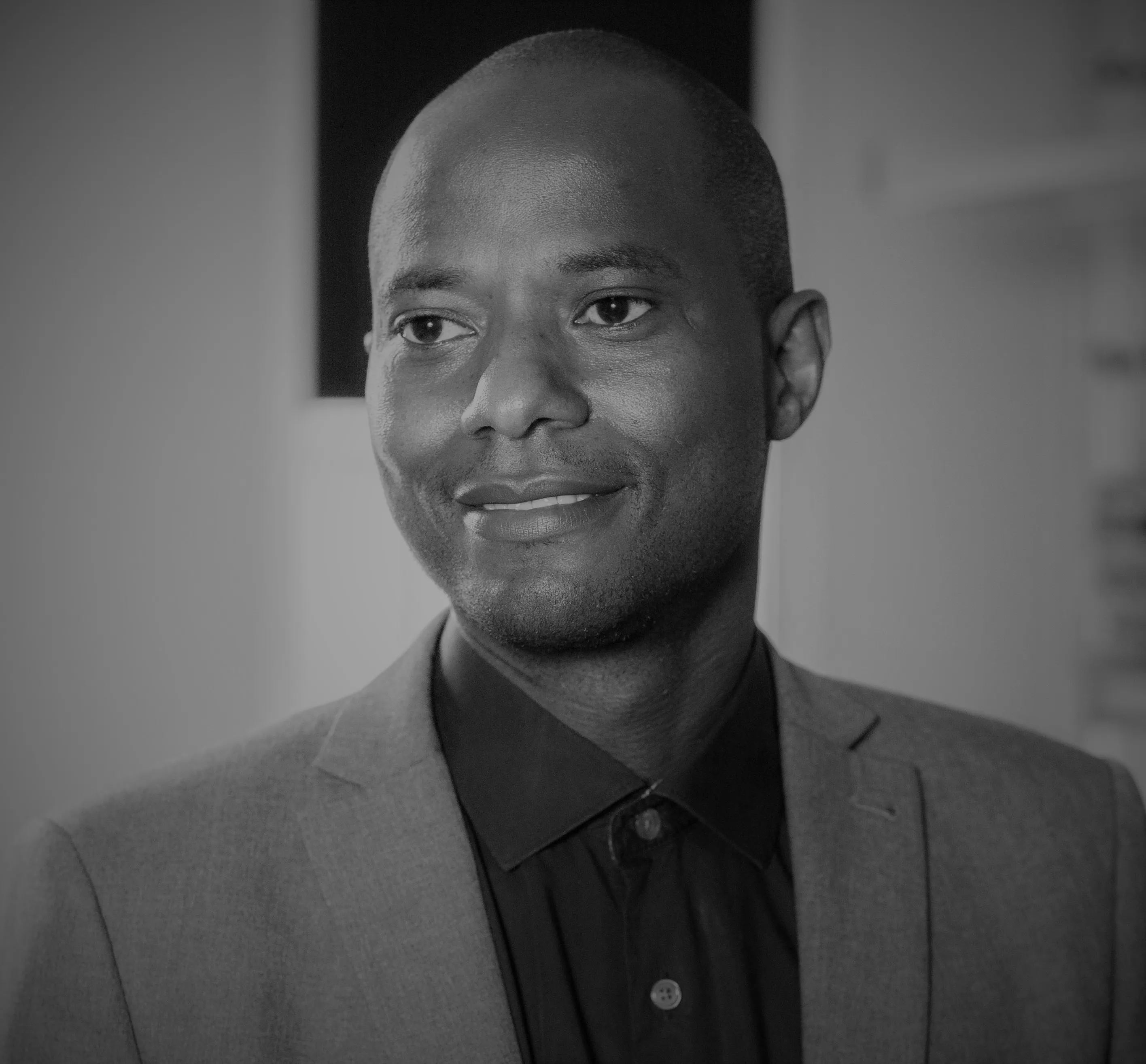
Mr Tarek Haloubi

Tarek is a medical engineer, a final-year PhD researcher, and an Engineering Teaching Assistant at the School of Engineering. He joined Edinburgh in January 2020, completing a joint MSc in Sensor and Imaging Systems between the University of Glasgow and the University of Edinburgh.

His research project is undertaken in partnership with GlaxoSmithKline (GSK) and National Physical Laboratory (NPL) and will focus on developing image processing and machine learning techniques for evaluating disease and drug effectiveness in fibre-bundle endomicroscopy systems.

Tarek is also an Academic Engagement Coordinator at the Postgraduate Institute for Measurement Science (PGI). He is actively involved in creating several PGI publications and in organising and chairing the seventh annual PGI conference 2023. (For more information email: tarek.haloubi@npl.co.uk)

Research Theme

Sensor Signal Processing

Aim

Develop new computationally efficient algorithms for large multi-dimensional array processing.

Objectives

  1. Develop new fast beamforming algorithms and adaptive array processing techniques using advances in fast Fourier integral operators and randomized algorithms
  2. Build applications using these techniques for high-dimensional wideband sensor array processing problems, e.g. requiring the simultaneous processing of range, doppler, azimuth, elevation and frequency, in challenging acoustic and/or radar domains.
  3. Explore the performance trade-off between accuracy and computational efficiency.

Description

Large scale, multi-dimensional array processing problems, e.g. simultaneously processing range, doppler, azimuth, elevation and frequency, are ubiquitous in radar and sonar sensing, and it is essential to keep the computation to a minimum in order to process the outputs in a timely manner. For narrowband uniformly spaced linear arrays fast transforms such as the FFT can be exploited. However, dealing with large wideband non-uniform arrays remains a major challenge.

This project will develop novel fast array processing algorithms for statistical estimation and beamforming based on two recent developments in signal processing and related mathematics. The first is the construction of fast Fourier integral operator approximations [1,2,3,4], that can provably approximate the Fourier integral to a given level of accuracy in O(n.log(n)) while accommodating different sampling/physical geometries. The second is efficient fast randomized algorithms for solving large least square problems [5,6] that offer the potential for novel beamforming solutions [7]. The project will explore how these ideas can be integrated to develop novel efficient array processing solutions to tackle challenging sonar and RF array processing problems and to assess their performance trade-off between accuracy and computation.

[1] E. Candes, L. Demanet, & L. Ying, 2007, Fast Computation of Fourier Integral Operators. SIAM Journal on Scientific Computing, Vol. 29, Iss. 6, pp. 2464-2493. 

[2] L. Demanet, M. Ferrara, N. Maxwell, J. Poulson, and L. Ying, 2012, A butterfly algorithm for synthetic aperture radar imaging. SIAM J. Imag. Sci., vol. 5, no. 1, pp. 203–243.

[3] S. I. Kelly and M. E. Davies, 2014, A fast decimation-in-image back-projection algorithm for SAR. 2014 IEEE Radar Conference, pp. 1046-1051.

[4] S. I. Kelly, M. E. Davies, J. S. Thompson, 2014, Parallel Processing of the Fast Decimation-in-image Back-projection Algorithm for SAR. 2014 Sensor Signal Procesing for Defence (SSPD),  pp. 1-5.

[5] V. Rokhlin and M. Tygert, 2008, A fast randomized algorithm for overdetermined linear least-squares regression. Proceedings of the National Academy of Sciences, 105(36), pp 13212–13217.

[6] P.-G. Martinsson and J. A. Tropp, 2020, Randomized numerical linear algebra: Foundations and algorithms. Acta Numerica, 29, 403–572.

[7] R. S. Srinivasa, M. A. Davenport and J. Romberg, 2019, Trading Beams for Bandwidth: Imaging with Randomized Beamforming. SIAM J. Imag. Sci., vol. 13, no. 1, pp. 317-350.

Industry Partner

This project is co-funded by Thales UK.

Minimum entry qualification - an Honours degree at 2:1 or above (or International equivalent) in a relevant science or engineering discipline, possibly supported by an MSc Degree. 

This project requires a student with a high level of mathematics or numeracy.

Further information on English language requirements for EU/Overseas applicants.

Full funding is available for this position.

On

Research Theme

Sensor Signal Processing

Aim

To develop machine learning algorithms for the robust detection and classification of natural and man-made objects in the ocean environment.

Objectives

  1. Leverage unsupervised learning to understand the background ocean environment as a reference for detecting objects.
  2. Develop a few-shot learning approach to classify the acoustic signals emitted by marine mammals and vessels travelling on the surface of the sea.
  3. Explore strategies for improving the robustness of underwater acoustic models to distribution shifts.

Description

Passive sonar is a key sensing modality for achieving understanding of the ocean environment, to help protect naval platforms. This technology can be applied in a range of systems, from hull-mounted or towed hydrophone arrays to sonobuoys or uncrewed underwater vehicles. Sonar contact classification is a challenge, due to the need to detect, label, and track multiple targets. Much of this work is currently carried out manually by sonar operators. The growing risk from increasingly stealthy targets, complex environments, and a data deluge from more capable sensors with more channels, necessitates new automatic approaches to marine object detection and localization.

Recent developments in the fields of artificial intelligence (AI) and machine learning (ML) offer promise for improvements in the analysis of acoustic signals, in terms of speed, accuracy, and robustness. This project will investigate novel approaches to analyzing the data and provide an increased understanding of the maritime arena.

In later years of the PhD, QinetiQ would like to investigate the possibility of an internship for the student for up to 6 months.

QinetiQ has developed an algorithm for detecting the time stamps of sound cuts of short mammal calls in the master tapes of the Watkins Marine Mammal Sound Database. This enables the development and assessment of object detection algorithms as opposed to just classification of sound cuts, which is what the database is usually used for. The algorithm can be made available to the student to use and improve on.

QinetiQ has access to unclassified recordings of surface vessels. Subject to permission of the data owner, these could be made available to the student to support the research.

QinetiQ: https://www.qinetiq.com

Watkins: https://whoicf2.whoi.edu/science/B/whalesounds/index.cfm

Minimum entry qualification - an Honours degree at 2:1 or above (or International equivalent) in a relevant science or engineering discipline, possibly supported by an MSc Degree. 

Further information on English language requirements for EU/Overseas applicants.

Full funding is available for this position.

On

Research Theme

Sensor Signal Processing

Aim

To develop a framework for training adversarially robust machine learning models that addresses the uncertainty of adversaries’ capabilities and the difficulties of data collection in defence contexts.

Objectives

  • Develop a learning algorithm for training adversarially robust Bayesian deep neural networks in the case where we have a pre-specified threat model.
  • Show how to infer a threat model by analysing the distribution shift caused by deploying a system based on Bayesian neural networks.
  • Use techniques from active learning and experimental design to minimise the amount of data required to accurately infer a threat model.

Description

Conventional machine learning methods are not designed to deal with the fog of war. Concerns from security and defence researchers have therefore lead to the development of adversarial machine learning methods. However, most prior work in this area focuses on very naïve threat models and make the assumption that the model trainer has perfect knowledge of the adversary’s capabilities. These naïve threat models often assume the adversary is only capable of manipulating some small number of pixels in an image, or that they can only add interference with small magnitude.

This project will develop general-purpose Bayesian machine learning algorithms for training robust models. The focus will be scenarios where the model trainer has minimal information about an adversary’s ability to manipulate sensor observations. We will show how analysing sequences or sets of distribution shifts induced by model deployments enables one to infer these unknown capabilities.  This will enable the deployment of adversarially robust models across a wide array of defence-relevant prediction problems (e.g., classification, detection, tracking) and data modalities (e.g., natural images, EO, SAR, acoustic, RF).


Minimum entry qualification - an Honours degree at 2:1 or above (or International equivalent) in a relevant science or engineering discipline, possibly supported by an MSc Degree. 

Prior knowledge of algorithmic game theory and probability theory would be advantageous.

Further information on English language requirements for EU/Overseas applicants.

Full funding is available for this position.

On

Research Theme

Multi Agent Systems and Data Intelligence

Aim

To develop a principled framework for representing, communicating, and aggregating uncertainty in large language model (LLM)–based agent systems, thus improving coordination, calibration and safety in multi-agent reasoning.

Objectives

  1. Elicit Uncertainty: Develop and compare methods for extracting calibrated uncertainty estimates from individual LLMs.
  2. Represent & Communicate: Design message formats that carry uncertainty information between agents (e.g., probabilistic statements, confidence intervals, prediction sets).
  3. Propagate & Aggregate: Establish mathematically sound rules for combining and updating uncertainty as messages pass between agents.
  4. Evaluate Impact: Create benchmarks and metrics to quantify how uncertainty-aware communication affects accuracy, calibration, and robustness of multi-agent systems.

Description

State of the art solutions in many complex problem domains are often now “Agentic” systems in which collaborations of specialist LLM-based agents collectively solve problems. For example, in cyber-security, surveillance agents may monitor logs to detect potential exploits, and cooperate with patching agents that fix vulnerabilities, and testing agents that validate the results. In such systems agents communicate through natural-language messages that reflect single “best guesses.” In probabilistic terms, these are point estimates of a model’s belief. As messages are exchanged, uncertainty information is lost, leading to over-confidence, error cascades, and poor coordination under ambiguity.

This project investigates how to restore and maintain epistemic and aleatoric uncertainty throughout an agentic pipeline. The first stage will focus on discovering the most reliable way to elicit and perceive uncertainty estimates with single LLMs. The second stage will formalize uncertainty-aware message formats—for example, by attaching confidence scores, probabilistic distributions, or prediction sets to text outputs. The third stage will develop algorithms for propagating and aggregating uncertainties across agents (eg Bayesian, Dempster-Shafer, conformal fusion). Finally, we will build benchmarks that measure team-level uncertainty calibration. Expected outcomes include (i) theoretical understanding of uncertainty composition in LLM collectives, (ii) practical mechanisms for safer, more transparent AI collaboration, and (iii) open-source tools for uncertainty calibration and propagation in agentic frameworks.

Minimum entry qualification - an Honours degree at 2:1 or above (or International equivalent) in a relevant science or engineering discipline, possibly supported by an MSc Degree. Further information on English language requirements for EU/Overseas applicants.

Full funding is available for this position.

On

Research Theme

Sensor Signal Processing

Aim

This project aims to significantly reduce the manual labelling of underwater data (images or acoustics) using other available data sources via transfer learning, while understanding the uncertainty of both the learned transfer functions and the uncertainty in the resulting predictions by adapting a Bayesian framework.

Objectives

  1. Literature review on Bayesian transfer learning (BTL)
  2. Develop underwater BTL framework, incorporating known physical effects (such as wave distortion by water); data source can be e.g. imagery or acoustics, depending on the student’s and project partner’s interest
  3. Analyse existing underwater data set and test methodology
  4. Develop online BTL algorithm that can process data in real time 

Description

Modern machine learning methods require large amounts of training data for reliable predictions, and can degrade significantly in performance when the test data differs from the training data distribution. In transfer learning, one has access to a source data set (e.g. vessel sounds in UK coastal waters) as well as a small amount of data from a target data set for which data collection is costly or difficult (e.g. acoustic signature of unknown foreign vessels in remote waters). The goal of this project is to develop an underwater Bayesian transfer learning framework, which allows for rigorous uncertainty quantification of both the transfer function and the resulting predictions – i.e. we can understand both how well we can expect to perform on our target data in general, as well as how certain we are about predictions for specific observations. 

Minimum entry qualification - an Honours degree at 2:1 or above (or International equivalent) in a relevant science or engineering discipline, possibly supported by an MSc Degree. 

A solid background in statistics or a related quantitative discipline is of benefit. The student will be expected to work in the intersection of statistics, machine learning, and marine science, and should thus be interested in interdisciplinary work.

Further information on English language requirements for EU/Overseas applicants.

Full funding is available for this position.

On

Research Themes:

Autonomous Sensing Platforms

Sensor Signal Processing

Aim

We will develop fast hardware to deploy real-time Bayesian experiment design to optimise the performance of quantum sensors

Objectives

  1. Integrate a GPU with a programmable real0time arbitrary waveform generator (QuantumMAchines OPX+) to create a real-time control system capable of fast Bayesian inference and experiment design, with millisecond-scale latency
  2. Integration of hybrid “grey-box” models (combining an analytical model with data-driven inclusion of imperfections) with Bayesian experiment design and deployment on the hardware system in (1)
  3. Benchmarking of the system of different quantum sensing modalities

Description

Quantum sensors represent the generation-after-the-next technology for sensing, exploiting the properties of quantum particles (such as the spin of a single electron) to achieve atomic-scale spatial resolution and/or unprecedented sensitivities.

Despite the demonstrated advantages of quantum sensors in applications ranging from defense to healthcare, they are often limited by weak signal (resulting in slow data acquisition and low bandwidth), fragile operation in well-controlled laboratory environment and difficulty of use by non-experts.

This project will develop world-first adaptive quantum control hardware, enabling the generation of microwave quantum control sequences with microsecond latency based on GPU-accelerated Bayesian inference and experiment design. The system will deploy real-time Bayesian experiment design to optimize the performance of a spin-based quantum sensor in terms of speed and accuracy, and integrating hybrid analytical/data-driven (grey-box) approaches to improve robustness in hostile and changing environment. Our work will enable the deployment of quantum sensors in real-world applications, such as defense, and could be further extended to different types of “classical” sensors.


Minimum entry qualification - an Honours degree at 2:1 or above (or International equivalent) in a relevant science or engineering discipline, possibly supported by an MSc Degree. 

Further information on English language requirements for EU/Overseas applicants.

Home rate fees and stipend are available for this position.

Off

Research Theme

Multi-agent Systems and Data Intelligence

UK Nationals Only

Aim

To research adaptive multiagent decision-making in complex multi-sensor (land and naval) platforms for practical applications.

Objectives

  1. Understand requirements of decision making in complex, multi-sensor (land and naval) platforms.
  2. Design hierarchical multiagent reasoning and learning framework for adaptive decision-making in multi-sensor platforms.
  3. Implement and evaluate the framework and algorithms with simulated and real-world data and platforms.

Description

This thesis research project seeks to develop an AI framework that will enable reliable and efficient decision making by humans operating complex, multi-sensor (land and naval) platforms. This framework will support hierarchical multiagent reasoning and reinforcement learning at different levels of abstraction and over long time horizons, under open-world uncertainty and resource limitations. It will automatically identify and use relevant sensor streams (e.g., camera, LIDAR, GPS, acoustic, meteorological) and commonsense domain knowledge from human experts, presenting information such that it reduces the cognitive burden on the human crew. We will illustrate and evaluate our framework in simulation and on physical data streams from multi-sensor platforms of interest to our project partner.

Industry Partner

This project is co-funded by Thales UK.

Placements possible at Thales Glasgow to understand more about the work of the Digital Crew team, subject to appropriate clearances being in place.

www.thalesgroup.com 

Degree 2(i) or better in a computing discipline such as Computer Science, Engineering, Mathematics, or Physics.

UK national


Full funding is available for this position.

On

Research Theme

Sensor Signal Processing

Aim

Develop new particle filter solutions for tracking of interacting multiple targets.

Objectives

  1. Develop new interacting particle filters that can tackle multi-target tracking in a scalable manner
  2. Understand the hidden low dimensional structures within multi-target systems to enable high dimensional scalable Monte Carlo filtering
  3. Explore how these models can further be used to predict intent for groups of cooperating and/or adversarial targets.

Description

High-dimensional multi-target tracking poses severe computational challenges for sequential inference. Although particle filters provide a principled Monte Carlo framework, their efficiency collapses with dimension. This project aims to identify and exploit hidden low-dimensional structures within multi-target systems, enabling adaptive filtering methods that retain Monte Carlo flexibility while mitigating the curse of dimensionality. We will develop local particle filters, block-based filtering, and topology discovery methods to automatically detect weakly interacting groups of targets. We may consider scenarios involving tens to a few hundred targets. At this stage, we will primarily use simulated data, with the flexibility to incorporate real data from partners in later stages. The outcome will be scalable algorithms for structured high-dimensional tracking, combining statistical efficiency with real-time feasibility in sensing and defence applications.

Minimum entry qualification - an Honours degree at 2:1 or above (or International equivalent) in a relevant science or engineering discipline, possibly supported by an MSc Degree. 

This project requires a student with a high level of mathematics or numeracy.

Further information on English language requirements for EU/Overseas applicants.

Full funding is available for this project.

On