Imaging, Data and Communications
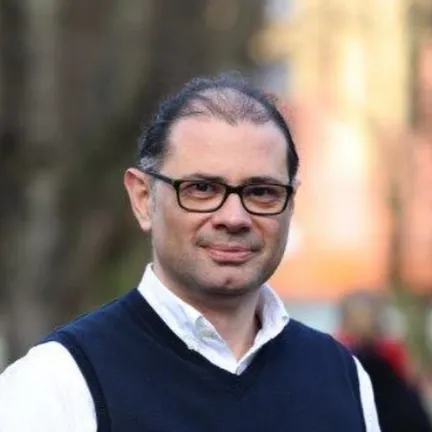
Prof. Mulgrew received his B.Sc. degree in 1979 from Queen's University Belfast. After graduation, he worked for 4 years as a Development Engineer in the Radar Systems Department at Ferranti, Edinburgh.
From 1983-1986 he was a research associate in the Department of Electrical Engineering at the University of Edinburgh.
He was appointed to lectureship in 1986, received his Ph.D. in 1987, promoted to senior lecturer in 1994 and became a reader in 1996.
The University of Edinburgh appointed him to a Personal Chair in October 1999 (Professor of Signals and Systems).
He currently holds the Royal Academy of Engineering Chair in Signal Processing.
His research interests are in adaptive signal processing and estimation theory and in their application to radar and audio systems.
Prof. Mulgrew is a co-author of three books on signal processing.
- 1987 Ph.D. University of Edinburgh
- 1979 BSc Queen's University Belfast
- 2012 Fellow of the Institute of Electrical and Electronics Engineers, FIEEE
- 2007 Fellow of the Royal Academy of Engineering, FREng
- 2002 Fellow of the Royal Society of Edinburgh, FRSE
Junqi is currently a PhD student in the University of Edinburgh and is supervised by Prof. Mike Davies. His research focuses on the design of efficient large-scale optimization algorithms via actively exploiting the solution’s intrinsic low-dimensional structure such as low-rank and sparsity, for machine learning and signal processing applications. His research is funded by EU H2020 project.
Before starting his research in large-scale optimization, he had 4 wonderful years in Sichuan University, China as a undergrad majoring in Electrical Engineering from 2010 to 2014. Then he undertook a MSc in Signal Processing and Communication at the University of Edinburgh with Prof. Mike Davies from 2014 to 2015, worked on the Non-uniform FFT based 3D image reconstruction algorithms for cone-beam CT.
Accepting PhD Students
PhD projects
I am currently looking for PhD students under the following themes listed below. There is the opportunity to get university funding. As these are highly competitive, you are recommended to complete a formal application as soon as possible in order to be considered for any university funding opportunities.
Current Research Themes
Machine Imaging
Computational imaging relies on the acquisition of sensor measurements that indirectly inform about the imaged object and has a broad range of applications, from computational microscopy, medical imaging (CT, MRI, ultrasound), to sonar, radar, and seismic imaging. Current state-of-the-art methods are leveraging sophisticated machine learning (ML) solutions based on deep neural networks. However, supervised ML solutions necessitate unrealistic access to a large quantity of ground truth images.
One of the aims of this theme is to develop a foundational theoretical framework and algorithmic toolbox for learning to image with limited or no ground truth data. It will lay the foundations for a new wave of unsupervised ML-based computational imaging, with potential applications across a range of settings and imaging modalities from advanced medical imaging to robotics and autonomous systems. Unleashing the ML from ground truth data will enable the algorithms to exploit the larger quantities of unsupervised measurement data available to learn more complex and effective models leading to practical benefits of accelerated acquisitions and reduced imaging artifacts, as well as totally new imaging opportunities.
Data-Driven Computational Sensing and Imaging
Today's state-of-the-art imaging and sensing rely as much on computation as they do on sensor hardware. Furthermore, computational sensing and imaging is increasingly exploiting data-driven and machine learning solutions to enhance performance and develop novel hardware/software co-designed sensing systems. However, in critical scenarios such as medicine or defence and security it is vital that verifiable algorithmic solutions are used, which places restrictions on which machine learning approaches are admissible. Importantly, fully black box machine learning solutions should be avoided. This theme will therefore focus on the development of novel algorithmic and mathematical frameworks to exploit data and machine learning for imaging and sensing within a controlled explainable and verifiable manner. There will be a specific focus on RF and electro-optic/IR sensor modalities.
Sensor and Information Fusion
Sensor networks, sensor fusion and management techniques address key challenges in intelligence, surveillance, target acquisition, and reconnaissance (ISTAR). Opportunities in adaptive data-driven sensor tasking and resource management include adaptive sensor placement, adaptive waveform design to reflect the target reflection characteristics and channel environments, and adaptive sensor selection. Although these problems have solutions in specific use cases, this theme will consider scenarios with broader applications involving multiple heterogeneous sensors on single or multiple cooperative autonomous airborne platforms.
The solutions developed in this should be robust to dynamic and congested environments, adverse weather conditions, and mutual sensor interference. A range of algorithmic and signal processing or machine learning technologies will be considered, as well as specific technical challenges. For example, projects in this theme will consider aspects related to wide area motion imaging (WAMI), position, navigation, and timing issues (PNT); robustness to adversarial attack; sensor fusion and tracking applications; use of kernel and Monte Carlo methods; outlier-robust (and other metrics) messages in belief propagation algorithms; and scheduling in large dynamic networks. Probabilistic and Bayesian frameworks will be preferred to enable uncertainty quantification and management.
orcid.org/0000-0002-8082-2818