
Image
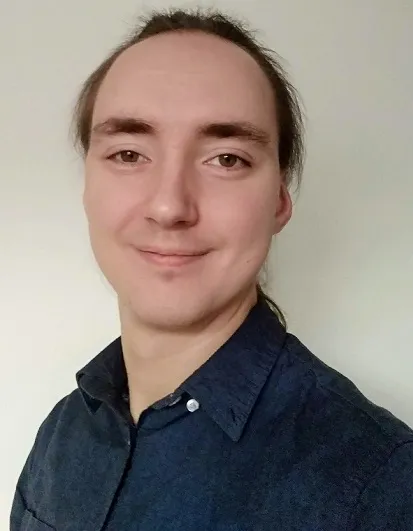
My research includes methodologies for approximate inference, particularly variational inference and Monte Carlo methods, as well as stochastic modelling for time series data. On the applied side, I primarily work on multi-object tracking, distributed sensor fusion, and intent inference.
I obtained my PhD in Information Engineering from the University of Cambridge, and previously held research associate positions at the Alan Turing Institute and the University of Cambridge.
I have served as a reviewer for international journals and conferences, including IEEE Transactions on Aerospace and Electronic Systems and IEEE Transactions on Signal Processing. I also organised a special session at the IEEE Statistical Signal Processing Workshop 2025.
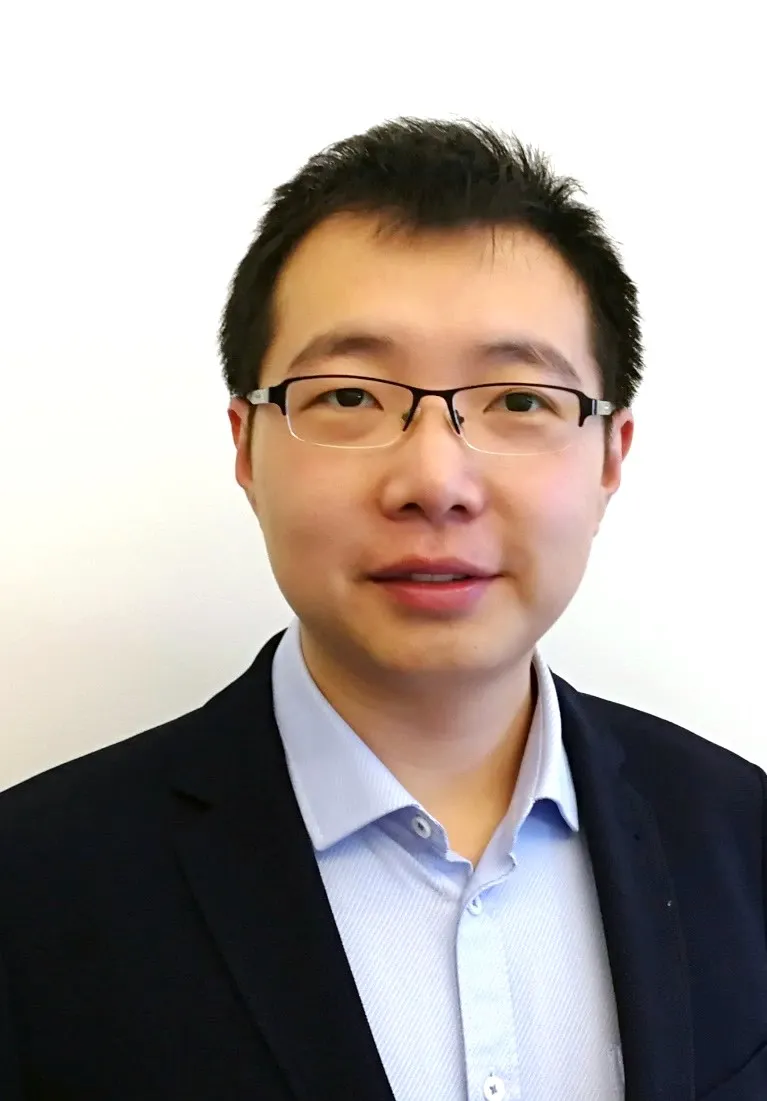
Dr Chang Liu received the B.Sc. degree in automation from Tianjin University, China, in 2010, and the Ph.D. degree in testing, measurement technology and instrument in Beihang University, China, in 2016. From April 2016 to January 2018, he was a postdoctoral researcher in the department of air pollution and environmental technology, Empa-Swiss Federal Laboratories for Materials Science and Technology (ETH Domain), Dübendorf, Switzerland. He is now a Senior Lecturer in the Agile Tomography Group at the School of Engineering, University of Edinburgh.
Dr Liu’s current research interests include laser spectroscopy, laser imaging, data-driven imaging techniques and their applications to reacting flow-fields diagnostics and environmental monitoring. His expertise is in design of near/mid infrared LAS sensing systems, and development of high-sensitivity and data-driven laser imaging methodologies. It covers fundamental spectroscopic modeling, inverse problem solving, machine learning, hardware acceleration, signal processing and embedded system. In collaboration with worldwide industrial and academic partners, Dr Liu and his team focus on providing cutting-edge laser-based sensing solutions for various challenging problems in both the industry and academia.
Ph.D. scholarships
Information on funding opportunities and tuition fees can be found here.
Postdoctoral Research Associate (PDRA)
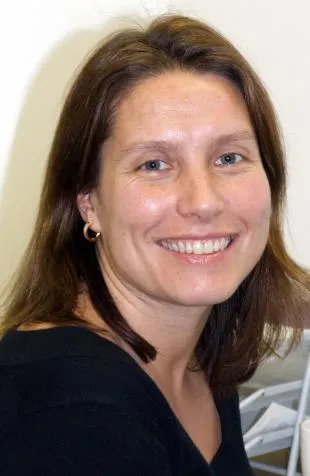
Janet Forbes is a Prince2 qualified Project Manager. Since 2013 she has managed the University Defence Research Collaboration (UDRC); an academia led partnership between industry and defence. Funded by Dstl and EPSRC for the development of research in signal processing within the defence industry. Janet has promoted and developed the management of the communications strategy, technology transfer and reporting between academia, industry and defence. Janet’s project remit further comprises overall project coordination and includes managing the annual Sensor Signal Processing for Defence conference; organising UDRC themed meetings and implementing the annual UDRC Summer School for signal processing for defence. Other important accomplishments include an excellent record in technology transfer from the academic to application for the defence sector; development of effective working relationships and collaborations between industrial and academic partners; financial auditing and budget management and finally governs all non-technical aspects of the research programme.
Previously she managed a range of scientific projects within academia, industry and government and has an MSc in Marine Science from Heriot-Watt University (1997) and a BSc (hons) in Biological Sciences from the University of Plymouth (1992).
MSc in Marine Science from Heriot-Watt University (1997)
BSc (hons) in Biological Sciences from the University of Plymouth (1992)