
Image
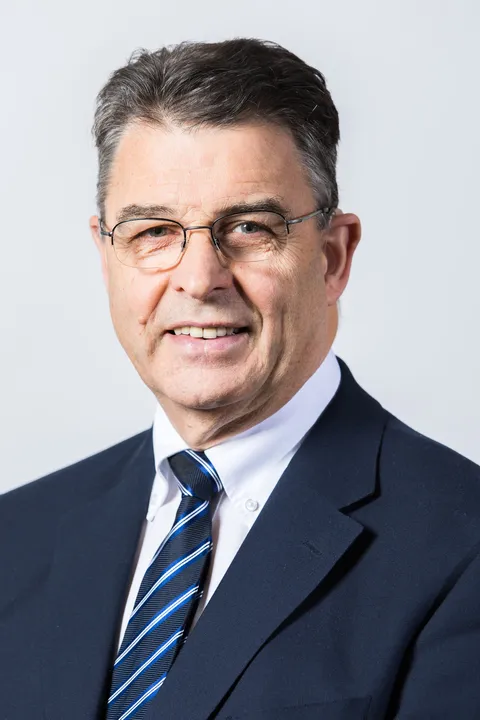
I am an Electrical Engineer interested in the fitting electromagnetic data to their respective models in the context of tomographic image reconstruction and model parameter estimation. I was educated in the UK and held research positions at School of Maths at the Univeristy of Manchester, the Lab for Information and Decision Systems at MIT and the Energy, Environment and Water Research Centre of the Cyprus Institute. In Edinburgh I lead the Agile Tomography Group that specialises in low-frequency electromagnetic simulation and tomographic image reconstruction, as well as chemical species tomography from spectroscopic measurements of light in the near infrared regime.
My research is in the realm of applied inverse problems and this usually entails, in some proportion: mathematical modelling, signal processing, statistical estimation and optimisation algorithms. As of 2016 I am also a faculty fellow at newly established Alan Turing Institute, which perhaps also qualifies me as a data scientist. My research is relevant to applications of electromagnetic imaging in geophysical exploration, industrial process tomography, biomedical imaging and non-destructive testing of materials and structures. In particular, I am interested in computational approaches suitable for large-scale pde models for static and low-frequency electromagnetic fields and algorithms that process these models along with measurements in the quest to image the electromagnetic properties of a domain of interest.
Nick Polydorides
(Office: 2.10 Alexander Graham Bell)
I am a member of IEEE Signal Processing and SIAM Imaging societies.
I am involved at the teaching of Engineering Mathematics 2A which involves mostly Laplace and Fourier series solutions of ordinary differential equations, which are essential elements of signal processing and understanding physical phenomena such as the propagation of sound, heat diffusion etc. I also take great pleasure from teaching the vector calculus and integration course in Engineering Mathematics 2B as it provides a good deal of insight to may of the physical phenomena us engineers need to understand. As for a teaching philosophy, I see myself standing in between the knowledge and the students, and although I cannot take the one to the other, I see my role as trying to make the distance look smaller.
Other than electromagnetics I have developed an interest in fluid-structure interaction models. This typically leads to a cluster of mechnical inverse problems relevant to the offshore energy exploration with towed arrays.
I am constantly looking to hire talented students who want to pursue a PhD because they want to make an impact to a certain application. If you have a numerate background and an appropriate course average from your BEng, BSc or MSc then I would like to hear from you at the email address above. Opportunities may also arise in the context of the Alan Turing Institute if your proposed theme falls within the so-called 'data-centric engineering'.
Grzegorz Jacenków is a PhD student at The University of Edinburgh. The core of his research is focused on integrating medical imaging and non-imaging data to improve decision support systems. His advisors are Prof. Sotirios A. Tsaftaris and Dr Alison O'Neil. His research is funded by EPSRC and Canon Medical Research Europe.
I was appointed as Head of the School of Engineering, and Professor of Tomographic Imaging, at the University of Edinburgh in 2013.
Having studied Physics as an undergraduate and PhD student at the University of Glasgow, I spent six and a half years working as a post-doctoral researcher in High Energy Particle Physics at Glasgow, Manchester, CERN (Geneva) and DESY (Hamburg).
In my ten years in R&D at the Royal Dutch/Shell Group, I worked in combustion and explosion hazards and lubricant formulation, and was the founding Group Leader of the specialist Engine Measurement group.
I was appointed Professor of Industrial Tomography at UMIST (later to become the University of Manchester) in 1996, becoming Head of Electrical & Electronic Engineering (1999-2002).
I chaired the UK Professors & Heads of Electrical Engineering (2003-2005).
For 3 years (2010-2013), I was Associate Dean (Research) in the Faculty of Engineering and Physical Sciences at Manchester.
I was elected a Fellow of the Royal Academy of Engineering in 2009.
I have taught most undergraduate year-groups, in measurements, errors, instrumentation electronics and a.c. circuit theory.
My research since 1996 has extended industrial tomography to provide specific chemical contrast in operating engineering plant, and developed electrical impedance tomography for medical applications, collaborating intensively with users in both academia and industry. Today, these topics continue to be my main research interests in Edinburgh, as part of the Agile Tomography research group within the Institute for Digital Communications.