
Image
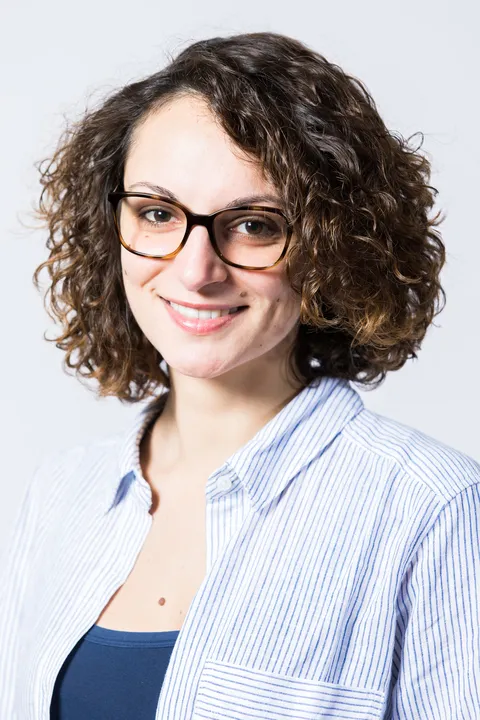
I am a Chancellor’s Fellow in Engineering Biology. My research focuses on the development and use of cybergenetic platforms to model and control complex biological phenomena, with applications in engineering biology and precision medicine. In particular, I am interested in using data-driven approaches to understand and stear the behaviour of biological networks in dynamic environments. I hold a PhD in Bioengineering. I am an Associate Fellow of the Higher Education Academy (FHEA).
I started my studies in biomedical engineering at the University of Bologna (Italy), in 2007. Having developed an interest in cellular and molecular engineering, in 2010 I joined the MSc programme in biomedical engineering offered by the same university. In 2013 I pursued my PhD in Bioengineering, where I undertook mathematical modelling and in vivo-studies of bacterial genetic programmes operating through transcriptional or post-transcriptional control.
To improve my skills in quantitative, single-cell assays, in 2015 I visited Prof. Peter Swain's laboratory at the Centre for Synthetic and Systems Biology, University of Edinburgh. One year later, I joined the lab as a PDRA to investigate phenotypic variability in the budding yeast’s galactose metabolic network and consolidate my expertise in quantitative microscopy and microfluidics.
Having being awarded an EPSRC Postdoctoral Fellowship, in 2017 I joined the School of Engineering, University of Edinburgh. In the following three years, I researched technologies to automate the development and use of mathematical models of synthetic gene networks.
In 2021, I received a tenure track fellowship to establish my research independence.
I am the Deputy Head of Graduate School (Postgraduate Experience) (2024 -).
I am the Deputy Biological Safety Officer and the Genetic Modification Biological Safety Officer (2021 -).
I was the Postgraduate Academic Adviser for Institute for Bioengineering in the School Postgraduate Progression Committee (SPPC) and the School Postgraduate Experience Committee (SPEC) (2021 - 2024).
I was the organiser of the seminar series for the Institute for Bioengineering (2021-2024).
Associate Fellow of the Higher Education Academy (AFHEA), 2020
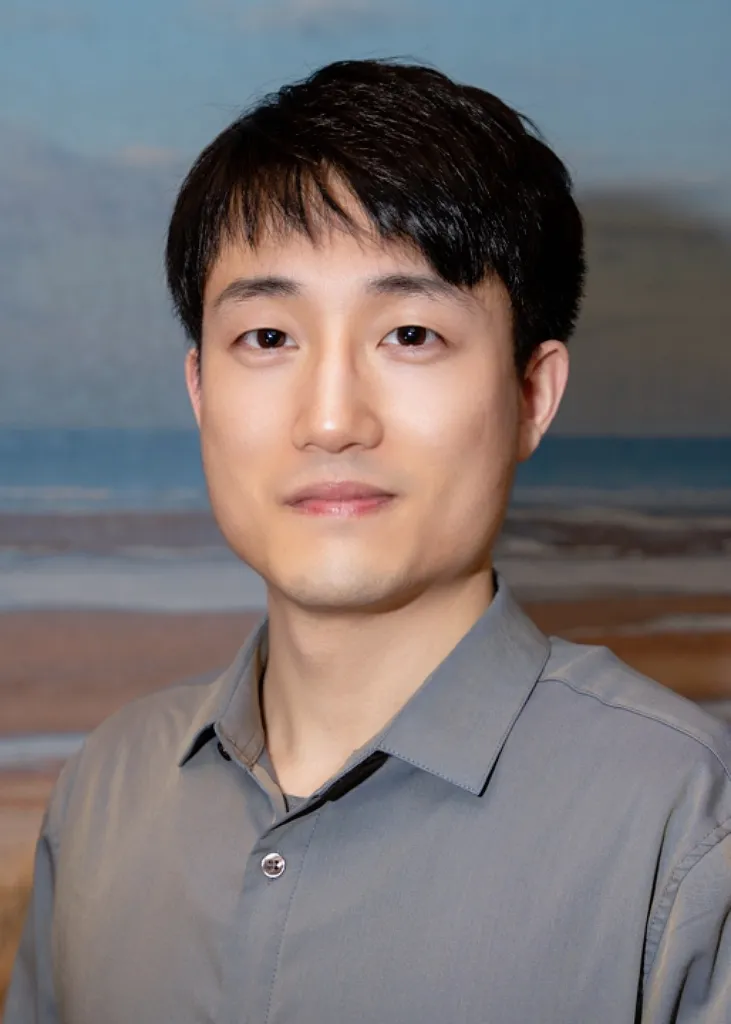
Dr Hongye ZHANG (FHEA, SMIEEE) is a Lecturer (tenured Assistant Professor) in Superconducting and Cryogenic Electric Machines at the University of Edinburgh. He received his BSc and MSc degrees in Electrical Engineering from Xi’an Jiaotong University, China, in 2015 and 2018, respectively, and the Diplôme d’Ingénieur from École Centrale de Lyon, France, in 2018. He completed his PhD in Applied Superconductivity at the University of Edinburgh in 2021.
He is the consortium lead of the €5-million HYPERWIN project, funded by the Clean Aviation Joint Undertaking and the European Union. From 2021 to 2026, he worked on the £54-million H2GEAR collaborative project as a Research Associate and Visiting Research Fellow at the University of Manchester. His research interests include the design and analysis of superconducting and hyperconducting electric machines, numerical modelling of high-temperature superconductors, HTS fusion magnets, and artificial intelligence.
He received an IEEE CSC Graduate Study Fellowship in Applied Superconductivity in 2021 and the inaugural OYSS Outstanding Young Scholar Award in 2024. He chaired HTS 2026 and serves as a Board Member of the European Society for Applied Superconductivity (ESAS) and the HTS Modelling Workgroup.