
Image
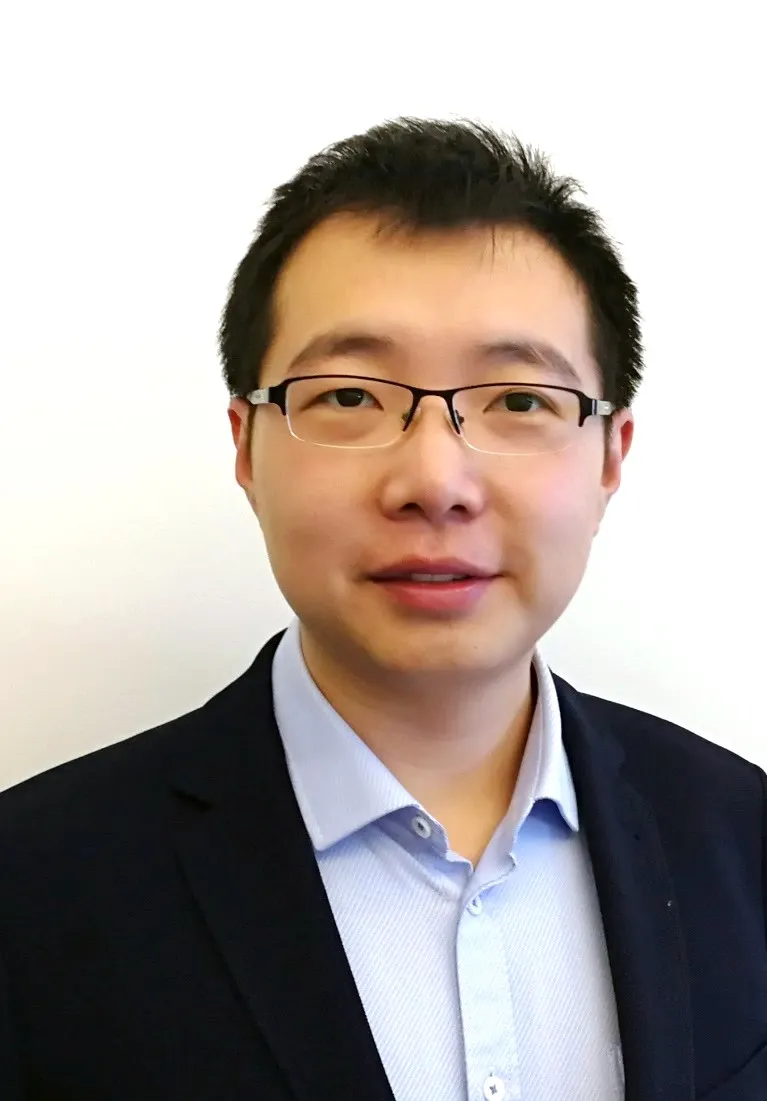
Dr Chang Liu is a Senior Lecturer (Associate Professor) in Optical Sensing and Imaging at the School of Engineering, University of Edinburgh. He received his PhD in Instrumentation and Optoelectronic Engineering from Beihang University, China, in 2016. Before joining the University of Edinburgh as a Lecturer in 2018, he was a Postdoctoral Research Fellow at the Swiss Federal Laboratories for Materials Science and Technology (Empa), part of the ETH Domain, Switzerland. He was promoted to Senior Lecturer in August 2023.
His research focuses on optoelectronic sensing and imaging, with particular interests in laser spectroscopy, AI-enhanced tomographic imaging, smart sensing systems, and physics-informed inverse problems. His work combines advanced optical instrumentation, high-speed data acquisition, and computational imaging techniques to enable non-intrusive, quantitative measurements in complex and harsh environments. A major focus of his research is the development of laser spectroscopic imaging technologies for combustion diagnostics, particularly for gas turbines, aero-engines, and emerging zero-carbon fuels.
Dr Liu has secured over £2 million in research funding as Principal Investigator and Co-Investigator at Edinburgh, alongside substantial industrial contributions. His research has been supported by the EPSRC, Scottish Funding Council, the Royal Society, Innovate UK, and industrial partners. His recent work focuses on translating high-speed laser tomography technologies towards practical industrial applications, including aircraft-engine health monitoring and the diagnosis of hydrogen and ammonia combustion.
He has authored or co-authored approximately 80 peer-reviewed publications in leading journals covering optical sensing, instrumentation, computational imaging, and combustion diagnostics (Google Scholar). His research contributions have been recognised through the Applied Optics Best Paper Award (2022) and the Excellent PhD Thesis Award Nomination from the Chinese Instrument and Control Society (2017).
He is a Senior Member of IEEE (SMIEEE), a Fellow of the Higher Education Academy (FHEA), and a Data-Driven Innovation Fellow. He serves as an Associate Editor of Measurement and has contributed to the organisation of international conferences, including the IEEE International Instrumentation and Measurement Technology Conference (I2MTC). He is selected to perform as IEEE Distinguished Lecturer for Instrumentation and Measurement Society in 2027-2029.
Alongside his research, Dr Liu contributes to undergraduate and postgraduate teaching in electronic engineering, particularly analogue circuits and digital system design. He currently serves as Deputy Degree Programme Manager for Electrical and Electronic Engineering at the University of Edinburgh.
We welcome undergraduates, graduates, and postdocs who are interested in joining our group. Please feel free to contact me.
I am an Electrical Engineer interested in the fitting electromagnetic data to their respective models in the context of tomographic image reconstruction and model parameter estimation. I was educated in the UK and held research positions at School of Maths at the Univeristy of Manchester, the Lab for Information and Decision Systems at MIT and the Energy, Environment and Water Research Centre of the Cyprus Institute. In Edinburgh I lead the Agile Tomography Group that specialises in low-frequency electromagnetic simulation and tomographic image reconstruction, as well as chemical species tomography from spectroscopic measurements of light in the near infrared regime.
My research is in the realm of applied inverse problems and this usually entails, in some proportion: mathematical modelling, signal processing, statistical estimation and optimisation algorithms. As of 2016 I am also a faculty fellow at newly established Alan Turing Institute, which perhaps also qualifies me as a data scientist. My research is relevant to applications of electromagnetic imaging in geophysical exploration, industrial process tomography, biomedical imaging and non-destructive testing of materials and structures. In particular, I am interested in computational approaches suitable for large-scale pde models for static and low-frequency electromagnetic fields and algorithms that process these models along with measurements in the quest to image the electromagnetic properties of a domain of interest.
Nick Polydorides
(Office: 2.10 Alexander Graham Bell)
I am a member of IEEE Signal Processing and SIAM Imaging societies.
I am involved at the teaching of Engineering Mathematics 2A which involves mostly Laplace and Fourier series solutions of ordinary differential equations, which are essential elements of signal processing and understanding physical phenomena such as the propagation of sound, heat diffusion etc. I also take great pleasure from teaching the vector calculus and integration course in Engineering Mathematics 2B as it provides a good deal of insight to may of the physical phenomena us engineers need to understand. As for a teaching philosophy, I see myself standing in between the knowledge and the students, and although I cannot take the one to the other, I see my role as trying to make the distance look smaller.
Other than electromagnetics I have developed an interest in fluid-structure interaction models. This typically leads to a cluster of mechnical inverse problems relevant to the offshore energy exploration with towed arrays.
I am constantly looking to hire talented students who want to pursue a PhD because they want to make an impact to a certain application. If you have a numerate background and an appropriate course average from your BEng, BSc or MSc then I would like to hear from you at the email address above. Opportunities may also arise in the context of the Alan Turing Institute if your proposed theme falls within the so-called 'data-centric engineering'.
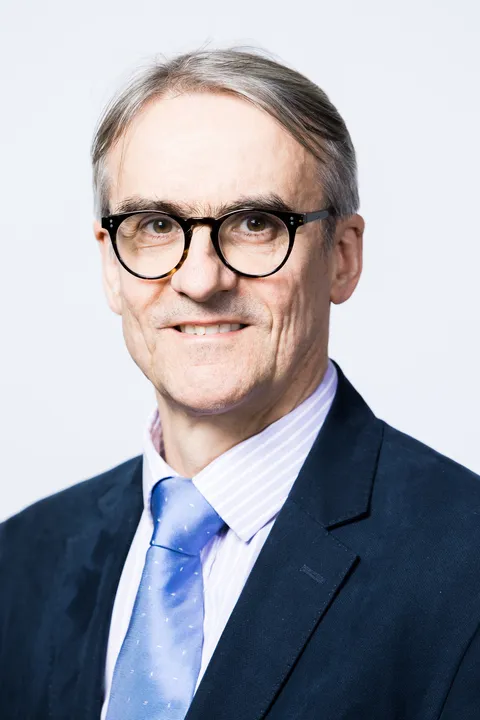
Since 2012, I have held a Personal Chair in Electrical Generation Systems at the University of Edinburgh, having been appointed as a lecturer in 2004. In 2023 I was awarded a Royal Academy of Engineering Chair in Emerging Technologies to investigate new high power density high temperature superconducting machines for net-zero energy and transport applications. From 2014 to 2018, I led a group of 26 academics as Head of the Institute for Energy Systems, and I am now co-leading Energy@Edinburgh, a cross university community of 200+ academics and researchers focussing on energy systems. I have supported 25 PhD students to successful graduation as principal supervisor, and supervised 18 PDRAs. My PhDs and PDRAs continue to work in electrical power engineering in both academia and industry.
My research focusses on electrical generators for renewable energy converters, and the development of hybrid energy systems integrating renewables and energy storage for on and off-grid use. Since 1997 I have been awarded £13m in grant funding, 75% as PI, from various sources: Royal Academy of Engineering, EPSRC, Innovate UK, The Carbon Trust, Scottish Enterprise, Wave Energy Scotland, Scottish Government, EU FP6, FP7, H2020 and ERDF, as well as direct industrial funding. As well as being part of consortia in EU grants working with eg. TU Delft, NTNU, Cork University, RWTH Aachen, Tecnalia, Fraunhofer Wind, I have also led consortia – eg. EPSRC EDRIVE (£1m)– 2 universities and 4 industrial partners; Wave Energy Scotland Project Neptune (£2.5m) – 2 universities and 7 industrial partners. Between 2010 and 2016 I led a Scottish Knowledge Exchange network, RENEW-NET, with 5 academic partners securing £1m of funding from Scottish Enterprise, Scottish Gov and ERDF, providing technical support in electrical machines and power electronics to over 100 SMEs, with 30 receiving detailed support securing jobs, new contracts and further grant funding based on our support.
I work very closely with industry, and in some cases my team has designed and built C-GEN generators for use in pre-commercial devices: eg. Mocean Energy – 10kW generator installed in their Blue-X wave device tested at sea in 2021/22; Swift Energy – 16kW generator for vertical axis wind turbine; Ladco – 6 kW generator for wind turbine tested at Arbroath; Hydrokinetic Power Generation – 25 kW generator for a tidal device to be tested in Bordeaux in 2023
My research has been widely published in top ranked journals such as IEEE, IET, IMechE and IoP. To date I have 258 journal and conference publications, and my h-index is 38 with 6294 citations, 2887 since 2017 (Google Scholar). As well as papers I co-edited the book “Electrical Drives for Direct Drive Renewable Energy Systems” (Woodhead Publishing with Prof Henk Polinder at TU Delft, and have been awarded 3 patents. Most of my articles are in top ranked journals published by IEEE, IMechE, IET and IoP. In 2006 I was awarded the Donald Julius Groen Prize by the IMechE with my former PhD student Dr. Nick Baker, now a Reader at Newcastle University. My PhD student’s work was recognised with best conference paper prizes at the IEEE IEMDC Conference in 2010. In 2017 I was co-author on a paper awarded the Thomas L Fagan Jr RAMS award for the best paper at the Reliability & Maintainability Symposium held in Florida. I was part of team of 7 partners in an EU FP7 project led by NaREC (now the Offshore Renewable Energy Catapult) entitled SNAPPER involving the design and system modelling of a novel linear generator for wave energy won the Engineer Magazine Innovation Award Marine Category in 2012, and was a finalist in the IET Innovation Awards in 2012.
In 2009 I spun out NGenTec Ltd to commercialise the C-GEN technology for offshore wind, originally funded by Scottish Enterprise with £0.5m. NGenTec raised £7m from private and public sources leading to employment of 20 staff. In 2013 the university re-purchased the IP to enable me to develop C-GEN for a wider range of renewable energy applications. Since then we have sold pre-commercial demonstrators to Mocean Energy, Swift Energy, HydroKinetic Power Generation, and are undertaking design studies for other companies in, USA, Australia, Ireland, Sweden and Norway. More details on the C-GEN technology can be found at www.cgen.eng.ed.ac.uk.

Dr Robin Wallace graduated in 1976 and has been involved in power generation and renewable energy throughout his career.
Until 1984 he worked in the Project Engineering Group of Parsons Peebles Motors and Generators, where ultimately he was an Assistant Chief Project Engineer responsible for turnkey power generation and discrete speed drive projects up to 25MVA in capacity, primarily hydro power plants.
Robin moved to University in 1986, where his research interests include: network integration of distributed renewable energy generation and marine energy. He is Principal Investigator and Finance Lead of the EPSRC SuperGen Marine Energy Consortium.
Robin is a Chartered Engineer, a Member of the IEE and a board member of the Scottish Energy and Environment Foundation.
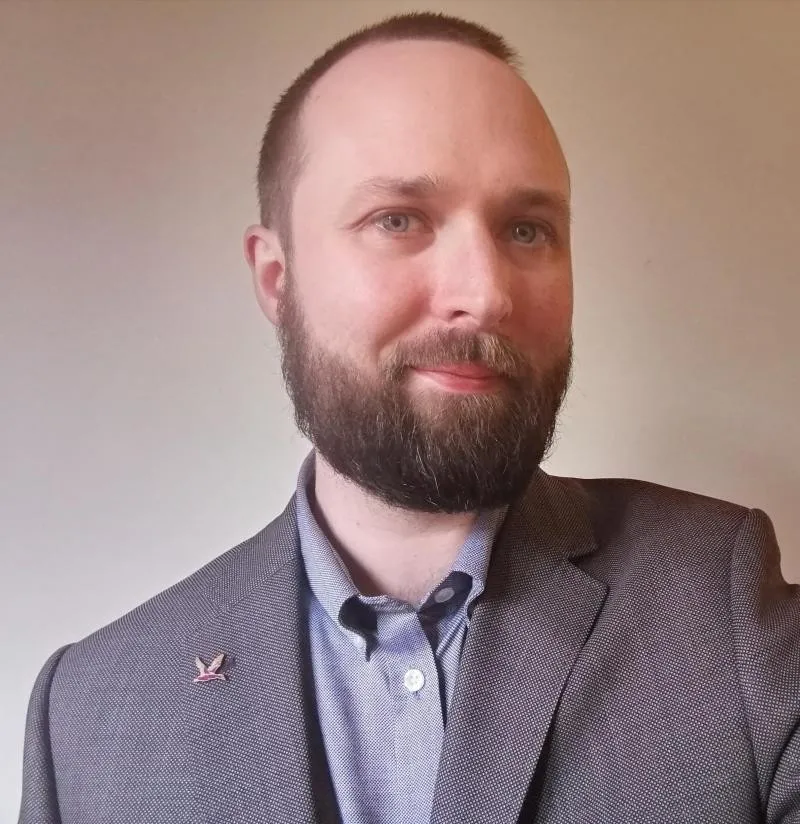
I completed my PhD in 2016 under the supervision of Prof. Tim Green in the Control & Power research group, Imperial College London, with a thesis titled 'Power Converter Design for HVDC Applications', for which I was awarded the departmental Eryl Cadwaladr Davies Prize for best doctoral thesis submitted in the academic year.
I have 28 published research papers (12 of which in IEEE Journals, 1 in an IET Journal, and three of which are co-authored with industry partners) on various topics relating to HVDC converters, such as optimised design of modular converter topologies, design of modular converters to enable short-term dynamic overload capabilities, power-loss and thermal modelling of semiconductor devices, hybrid converter topologies using mixed semiconductor technologies (IGBT and thyristor), and the design of converters with integrated energy storage. My paper to the 2018 IEEE Transactions on Power Delivery HVDC special issue was awarded the best paper award for the issue and also included as one of three papers on the journals 'papers received favourable reviews' list that year.
PhD - Electrical Engineering - Imperial College London - 2016
BEng (Hons) First Class - Electrical Engineering - University College Dublin - 2012
Member of IEEE and CIGRE