Image
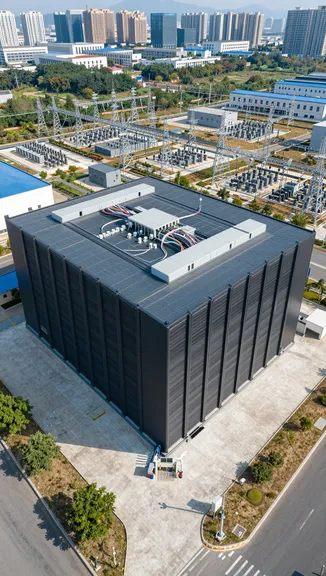
Datacentre surrounded by energy systems and the built environment.
Autonomous vehicles (AVs) are positioned to transform future transportation, yet their safe deployment remains a critical unsolved challenge. Despite intensive research since 2017, today’s AVs still rely on human supervision, largely due to the difficulty of validating the safety of systems built on complex AI components for perception, prediction, and control. These models struggle with diverse and previously unseen scenarios and provide limited guarantees under out-of-distribution inputs or uncertain training data. The rise of End-to-End learning and Vision-Language-Action further complicates assurance, as traditional interpretable module interfaces are replaced by latent representations that hinder modular testing. Addressing this gap requires new knowledge and methodologies that deliver quantitative, real-time safety guarantees and accountability for AI-driven decisions. By integrating safety gatekeepers that evaluate driving risk and intervening proactively, this research advances a timely and urgent frontier: safeguarded AI for autonomous driving.
The successful candidate will be supervised by Dr. Pavlos Tafidis and Dr. Cheng Wang from both partner institutions resulting in a joint PhD degree from Heriot-Watt University and the University of Edinburgh. This allows gaining access to cutting-edge facilities and expertise in robotics, AI and autonomous systems in a collaborative research environment across University of Edinburgh and Heriot-Watt University. In addition, the candidate will work closely with industry partners who will provide datasets and a real autonomous driving platform.
• Open to UK home status candidates only (EU applicants must have settled/pre-settled status or indefinite leave to remain and meet residency requirements.) a 2:1 undergraduate degree (or equivalent).
Candidate Profile: We seek a highly motivated individual with:
• A strong background in intelligent transportation, smart mobility, robotics, machine learning or autonomous systems.
• Excellent programming skills (Python, C++, or MATLAB).
• Ability to work independently and collaboratively in a multidisciplinary team. How to Apply: Please send the following to Dr Pavlos Tafidis (pavlos.tafidis@ed.ac.uk) or Dr Cheng Wang (cheng.wang@hw.ac.uk) no later than 16th January 2026 (5 PM UK time):
• CV
• Cover letter outlining your motivation and relevant experience
Applications are welcomed from self-funded students, or students who are applying for scholarships from the University of Edinburgh or elsewhere
Competition (EPSRC) funding may be available for an exceptional candidate. Link below for the further details.
Further information and other funding options.
Funding Details:
• Duration: 3.5 years (42 months)
• Start Date: Flexible, but no later than May 2027
• Stipend: 10% above UKRI standard rate
• Research & Training Grant: £3,500 total
The Discrete Element Method (DEM) enables detailed modelling of granular materials, including industrial bulk solids, by modelling interactions between discrete particles. Limits in available computational power initially restricted this approach to discs, and then spheres and multi-sphere clumps. More recently, non-spherical particle descriptors have been introduced such as cylinders, spherocylinders, superquadrics, potential particles, and polyhedral particles. In all these cases, contact detection and overlap calculation incur significant computational cost compared to sphere-to-sphere contacts.
While it is always possible to locally approximate the contacting particles as spheres of appropriate curvature, the accuracy of such an approximation is unknown, and potentially low. Increasing geometric accuracy without a corresponding accuracy improvement in modelling the mechanical behaviour at the contact therefore leads to unnecessary computational cost.
This PhD project will develop new, adaptive contact physics models that will allow a seamless transition between low and high accuracy/cost modelling, while maintaining an optimal balance between geometric and mechanical detail. These models will be verified using continuum mechanics (finite-element) simulations, and validated through their implementation in a discrete element code.
Minimum entry qualification - an Honours degree at 2:1 or above (or International equivalent) in a relevant science or engineering discipline, possibly supported by an MSc Degree. Applicants must demonstrate an appropriate background in numerical analysis, programming, mechanics of materials and/or computational mathematics.
Further information on English language requirements for EU/Overseas applicants.
Applications are welcomed from self-funded students, or students who are applying for scholarships from the University of Edinburgh or elsewhere as well as self-funded students.
Competition (EPSRC) funding may be available for an exceptional candidate. Link below for the further details.
The Finite Element Method (FEM) is widely used for numerical simulation in Engineering, for example in modelling deformable solids. While significant advances have been made in many aspects of the method, most FEM implementations rely on standard polynomial interpolations and Gaussian numerical integration. Recent results in numerical integration for higher order polynomial FEM interpolations show that significant improvements in computational efficiency can be obtained by developing customised formulations. The effort involved in developing such customised formulations, however, currently limits the applicability of this approach. This PhD project will focus on developing an automated framework for developing, testing, and selecting non-standard interpolation and integration methods leading to highly efficient FEM formulations, adapted to the characteristics of the input problem. Established heuristic optimisation approaches will be complemented by novel AI/agentic techniques to locate optimal formulations across a wide search space. The research in this project will be based on existing preliminary work and proof-of-concept tools using both computer algebra software for symbolic calculations (Maple) and numerical computation software (Matlab, Python or Julia). Specific new results obtained through the automated framework will be implemented and tested within commercial computational mechanics codes, such as the Abaqus FEM software.
Minimum entry qualification - an Honours degree at 2:1 or above (or International equivalent) in a relevant science or engineering discipline, possibly supported by an MSc Degree. Applicants must demonstrate an appropriate background in numerical analysis, programming, mechanics of materials and/or computational mathematics.
Further information on English language requirements for EU/Overseas applicants.
Applications are welcomed from self-funded students, or students who are applying for scholarships from the University of Edinburgh or elsewhere as well as self-funded students.
Competition (EPSRC) funding may be available for an exceptional candidate. Link below for the further details.
We are inviting applications for a PhD position dedicated to the design and efficient operation of datacentres systems from the point of view of building services engineering and impact on energy networks. This project seeks to optimise datacentre’s geographical locations and implementing innovative strategies to manage and recover energy effectively.
Candidates will engage in research that combines building services engineering, environmental data analysis, urban analytics, and sustainability principles. This includes exploring efficient HVAC systems tailored for the unique demands of datacentres and the integration in wider energy networks.
The research will critically evaluate the impact of geographic and climatic factors in datacentre designs to harness maximum renewable energy usage and optimum cooling strategies. It will also explore the impacts from the datacentre to the nearby microclimate conditions and methods for waste heat recovery and its reutilisation within building systems.
This interdisciplinary project is ideal for candidates motivated to innovate in the field of sustainable technologies and with a background in building services engineering, environmental engineering, urban climate, or geographical information systems and urban analytics. As such, it will be supervised by an interdisciplinary team, with Dr Daniel Fosas and Dr Desen Kirli from the School of Engineering at The University of Edinburgh, and Professor Qunshan Zhao from the University of Glasgow.
A comprehensive training programme will be provided comprising both specialist scientific training and generic transferable and professional skills. The PhD candidate will be introduced to comprehensive training options. The candidate will have the opportunity to become a teaching assistant following formal training, as well as opportunities to contribute to wider training and outreach activities. Further training in both academic and interdisciplinary skills will be available as part of Edinburgh’s Institute for Academic Development.
Prepare documentation required for conditional admission in the PhD programme.
Please note that this requires a formal 2-page research proposal.
We welcome applications from all qualified candidates, and we wish to particularly encourage applications from groups underrepresented at this level. To apply to this opportunity, you will need to:
1. Meet entry requirements. Note this mainly relates to
(a) have a degree classification of at least 2:1 or equivalent,
(b) have funding (deadline end of January) or plans to apply to our scholarship programme (deadline January 12th 2026),
(c) meet English requirements. Further information on English language requirements for EU/Overseas applicants.
Applications are welcomed from self-funded students, or students who are applying for scholarships from the University of Edinburgh or elsewhere.
Dr. Jasotharan Sriharan is a Research Associate in Composite Design and Testing at The University of Edinburgh and a member of the MATTERS Group. His research focuses on developing advanced design tools to accelerate material and structural innovation.
He is experienced in the design, manufacturing, and testing of architected materials structures. His current research interests include: