
Image
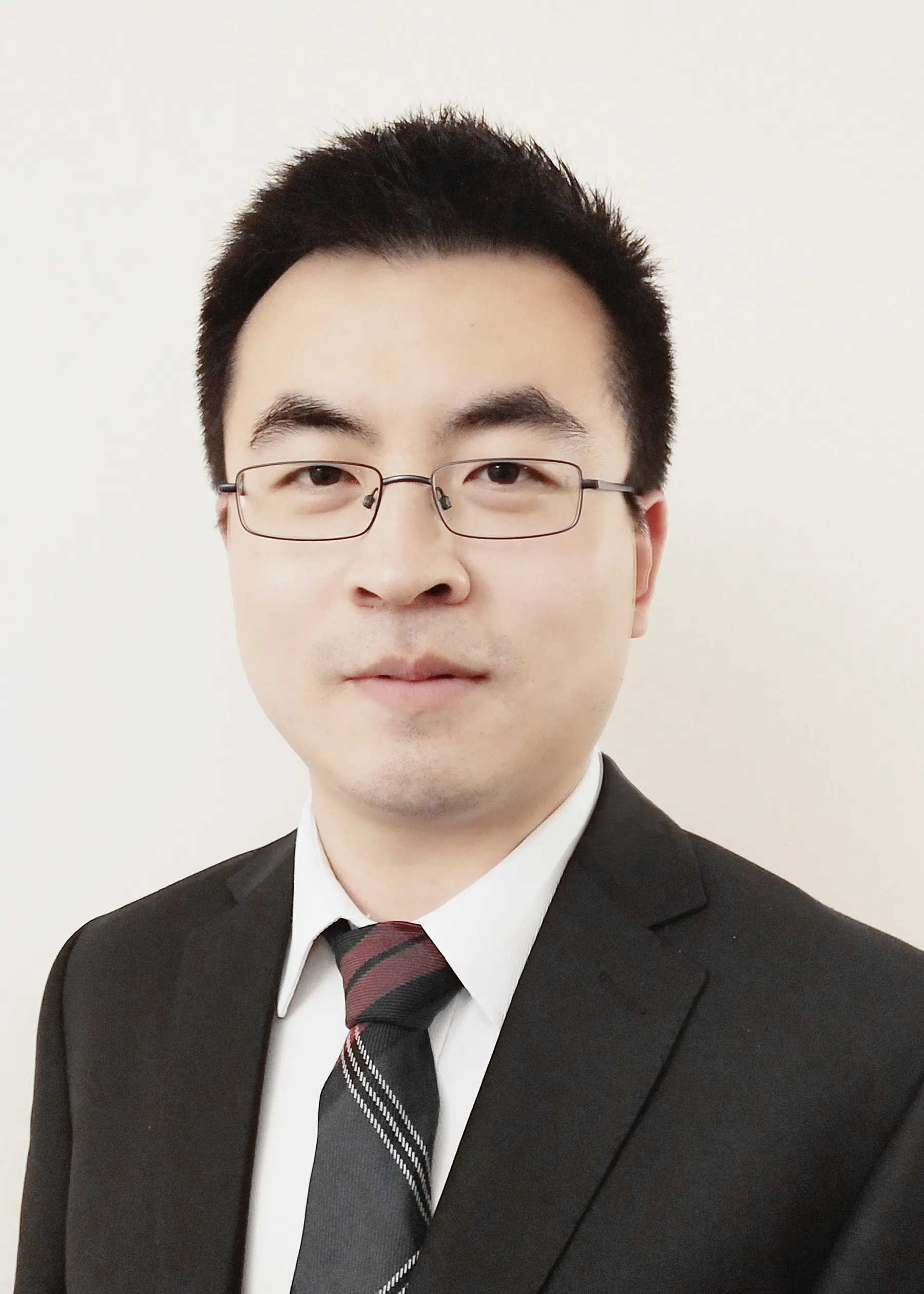
Dr. Yunjie Yang is a Senior Lecturer (Associate Professor) and Deputy Director of Research at the School of Engineering, The University of Edinburgh. He is also an affiliate of the Edinburgh Futures Institute (EFI), the Edinburgh Generative AI Laboratory (GAIL) fellow, and part of the Edinburgh Centre for Robotics. He was the Chancellor’s Fellow in Data Driven Innovation (2018-2023) and Bayes Innovation Fellow (2023-2024). He received his PhD in Engineering Electronics from The University of Edinburgh, MSc in Control Science & Engineering from Tsinghua University, and BEng in Measurement & Control Engineering from Anhui University. In 2018, he briefly worked as a Postdoctoral Research Associate in Chemical Species Tomography at the University of Edinburgh before securing the lectureship.
His research interests focus on AI-powered sensing and imaging, soft sensors & electronics, robotics, and embodied/physical AI. His research takes a highly interdisciplinary approach, integrating Sensors, Materials, AI, Tomography, and Robotics (SMART) to advance autonomous physical intelligence. It has led to over 150 peer-reviewed journal and international conference publications, many of which were published in high-impact journals such as Nature/Cell portfolio journals (e.g., Nature Machine Intelligence), IEEE TNNLS, TMI, TIE, and TII. His research has been licensed to overseas research institutes and industry partners and received wide media coverage, including BBC, EFE, USA Today and STV. He is the awardee of the prestigious European Research Council (ERC) Starting Grant (2024-2029) and ERC Proof of Concept Grant (2026-2027).
Dr. Yang serves as the Associate Editor of IEEE Transactions on Instrumentation and Measurement, IEEE Sensors Reviews, the Editorial Board Member of Scientific Reports, and a regular reviewer for over 70 high-impact international journals (including Nature, Nature Machine Intelligence, Nature Communications, PNAS, TRO, TMI, TIE, TII, TPAMI, AM). He served as the track/session chair of several international conferences and was frequently invited for keynotes/seminars. He is the recipient of the 2024 IEEE J. Barry Oakes Advancement Award (For demonstrated exceptional expertise, innovation and leadership in the field of Instrumentation and Measurement
), the IEEE I&M Society Distinguished Lecturer (2027-2029), 2015 IEEE I&M Society Graduate Fellowship Award, and multiple Best Paper/Poster Awards. He is a Senior Member of IEEE, a Fellow of the Young Academy of Europe (FYAE), a Fellow of the International Society for Industrial Process Tomography (FISIPT), and a Fellow of the Higher Education Academy (FHEA).
More information about the Yang Research Group: UoE SMART Group www.yangresearchgroup.com
Press coverage:
(Office: 1.13 Alexander Graham Bell (AGB) Building)
We welcome undergraduates, graduates, and postdocs who are interested in joining our group. Please feel free to contact me.