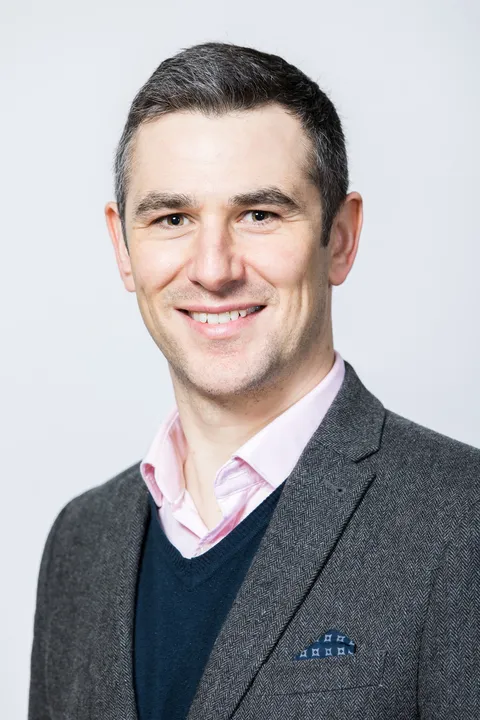
Image
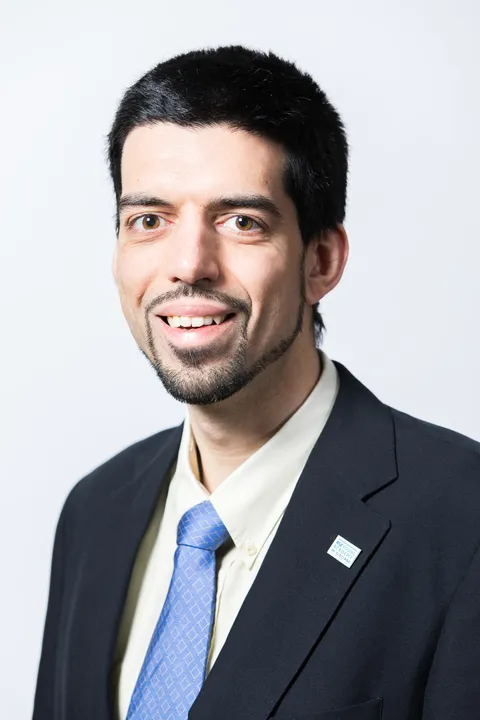
I lead a research group focused on developing and applying signal processing algorithms to biomedical data. Our main aim is to reveal the subtle changes that major diseases (e.g., Alzheimer's and epilepsy) cause in the brain activity and how this changes in different conditions and mental states.
In October 2013, I joined the Institute for Digital Communications, School of Engineering, as a Chancellor's Fellow in biomedical signal processing. I was tenured in August 2016 and promoted to Senior Lecturer in August 2020.
Previously, I held a post-doctoral position at the School of Computing and Mathematics of Plymouth University.
My training includes an MEng in telecommunications engineering from the University of Valladolid (Spain) in 2005 and a PhD in biomedical signal processing from the same university in 2010.
Dr. Serb is a reader in Unconventional AI Hardware Technologies at the University of Edinburgh.
He is a MIET and SMIEEE.
He has led a grant portfolio of ~£2M worth of projects, including a DSTL contract for studying the feasibility of adiabatic capacitive neural networks and the UKRI New Investigator Award "ANAGRAM".
He has further been a co-investigator in UKRI MINDS CDT.
He has supervised 20+ PhD students and 6× postdocs. His research interests span across circuit and system design and AI, with particular focus on emerging technologies such as memimpedance elements.
He has published 50+ journal articles and 50+ conference papers, and filed 5× patents.
Furthermore, he is co-founder and CTO of ArC instruments ltd., a company that manufactures instrumentation for memimpedance device characterisation and testing (https://www.arc-instruments.co.uk/).
PhD degree in EEE - Imperial college, London, 2014.
MEng degree in BioMedical engineering - Imperial college, London, 2009
MIET - Member of the IET
SMIEEE - Senior member of the IEEE
ELEE08015 - Digital System Design 2
PGEE11136 - Applications of Sensor and Imaging Systems (component module leader)
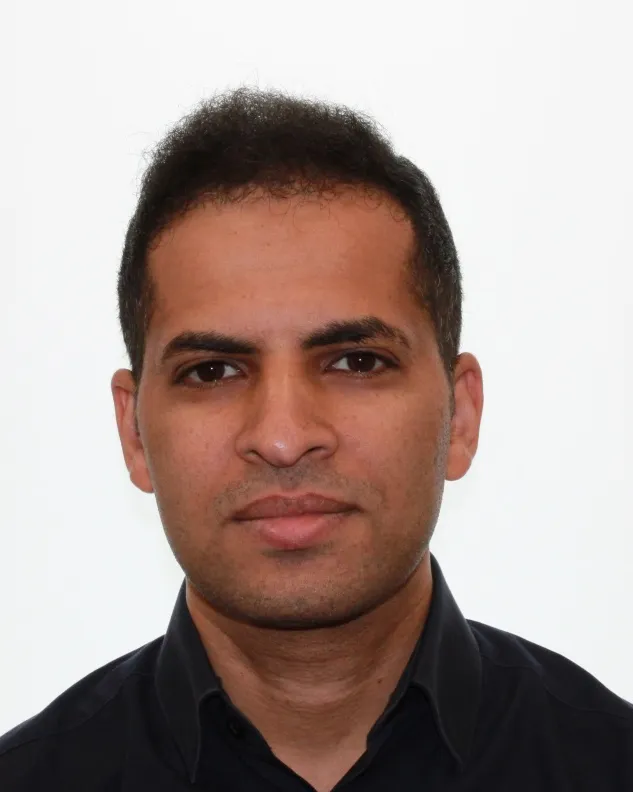
Shady Agwa is a Research Fellow at the Centre for Electronics Frontiers CEF, The University of Edinburgh (UK). He received his BSc and MSc degree from Assiut University (Egypt), both in Electrical Engineering. He got his PhD in Electronics Engineering from The American University in Cairo (Egypt) in 2018. Following his PhD, he joined the Computer Systems Laboratory at Cornell University (USA) as a Postdoctoral Associate for two years. In 2021, Shady joined the Centre for Electronics Frontiers at the University of Southampton (UK) as a Senior Research Fellow and then as a Research Fellow at the University of Edinburgh (UK). His research interests span across VLSI and Computer Architecture for AI using conventional and emerging technologies. His work focuses on AI-Specific Integrated Circuits \& Systems (AISICS) with extensive expertise in In-Memory Computing, Stochastic/Bitstream Computing, Systolic Arrays, Beyond Von Neumann Architectures, Memories, and Energy-Efficient Digital ASIC Design.
IEEE Member.
My research focuses on novel AI Computing Architectures with extensive exploration of: In-Memory Computing (IMC), Stochastic Computing (SC), Spatial Dataflows & Systolic Arrays, Non-Binary Computing Domains, Beyond Von Neumann Architectures, Emerging Technologies, Memories, and Energy-Efficient Digital ASIC Design. My research philosophy adopts two themes: 1) AI Computing Systems using Today’s technologies, including spatial dataflows, maximum data utilization, and hardware specialization, and 2) Unconventional AI Computing Systems using Tomorrow’s technologies, like in-memory computing, emerging devices, and unconventional AI Computing Paradigms.
Digital VLSI, Domain-Specific Computer Architecture, AI/ML, Hardware Acceleration, Digital ASIC Design, Dataflow Architectures & Systolic Arrays, In-Memory Computing, Stochastic Computing, Memory Design, Analogue Content-Addressable Memories, Convolutional Neural Networks CNNs, Large Language Models LLMs.
In 2021, I joined the Centre for Electronics Frontiers (CEF) at the University of Edinburgh (UK) as a Research Fellow (previously at the University of Southampton). I work on bridging the gap between emerging technologies and the ever-increasing performance demands of AI models, especially Convolutional Neural Networks (CNNs) and Large Language Models (LLMs). Since I joined CEF, I have been leading three research projects and have had 17 publications (Aug. 2025) (including 4 IEEE TCAS-I, 1 IEEE-TCASAI, 1 IEEE OJCAS, 1 Frontiers Nanoelectronics, 5 IEEE ISCAS, and 2 IEEE NEWCAS). I also filed 5 patents and contributed significantly to 6 AI Chips. Moreover, I am a Researcher Co-PI of a successful grant “Prosensing” with a budget of 1.45 million GBP (UKRI EPSRC NSS).
@pjwhands