
Image
The bottom-up approach to synthetic biology aims to create life-like artificial cells from non-living components. Our group specialises in creating synthetic cells that contain multiple sub-compartments (analogous to eukaryotic cell organelles). To do this, we use droplet microfluidics and giant lipid vesicles (or GUVs). Once created, we can setup multi-step enzymatic reaction cascades between the compartments.These synthetic cells can shed light on natural biological cell functions but can also be used for industrial applications like biofuel production or in biomedical applications for drug delivery.
Cell membranes need to be structurally complex in order to perform a multitude of cellular functions. Studying individual components, like biomembranes, is typically performed using real cells. However, isolating biomembranes from the rest of the cell can be difficult or impossible. Therefore, as an alternative, our lab uses model membranes. Here, different aspects of the membrane, such as lipid composition, permeability, and membrane proteins can be studied in isolated under controlled conditions, free from other cellular influences. Different types of lipid membranes serve as our models including GUVs on the micron-scale, and nano-sized lipid vesicles down to 100 nm. In addition, we also use these model membranes systems to study membrane fusion as well as ligand-membrane interactions. Key to our success is the development of our cutting-edge lipid vesicle formation methods including microfluidics and bulk emulsions.
Microfluidic technology is used throughout the different research topics in the Robinson lab. We current focus on using microfluidics for the following applications:
Designing, fabricating, and testing novel microfluidic systems for new applications also makes up its own unique line of research.
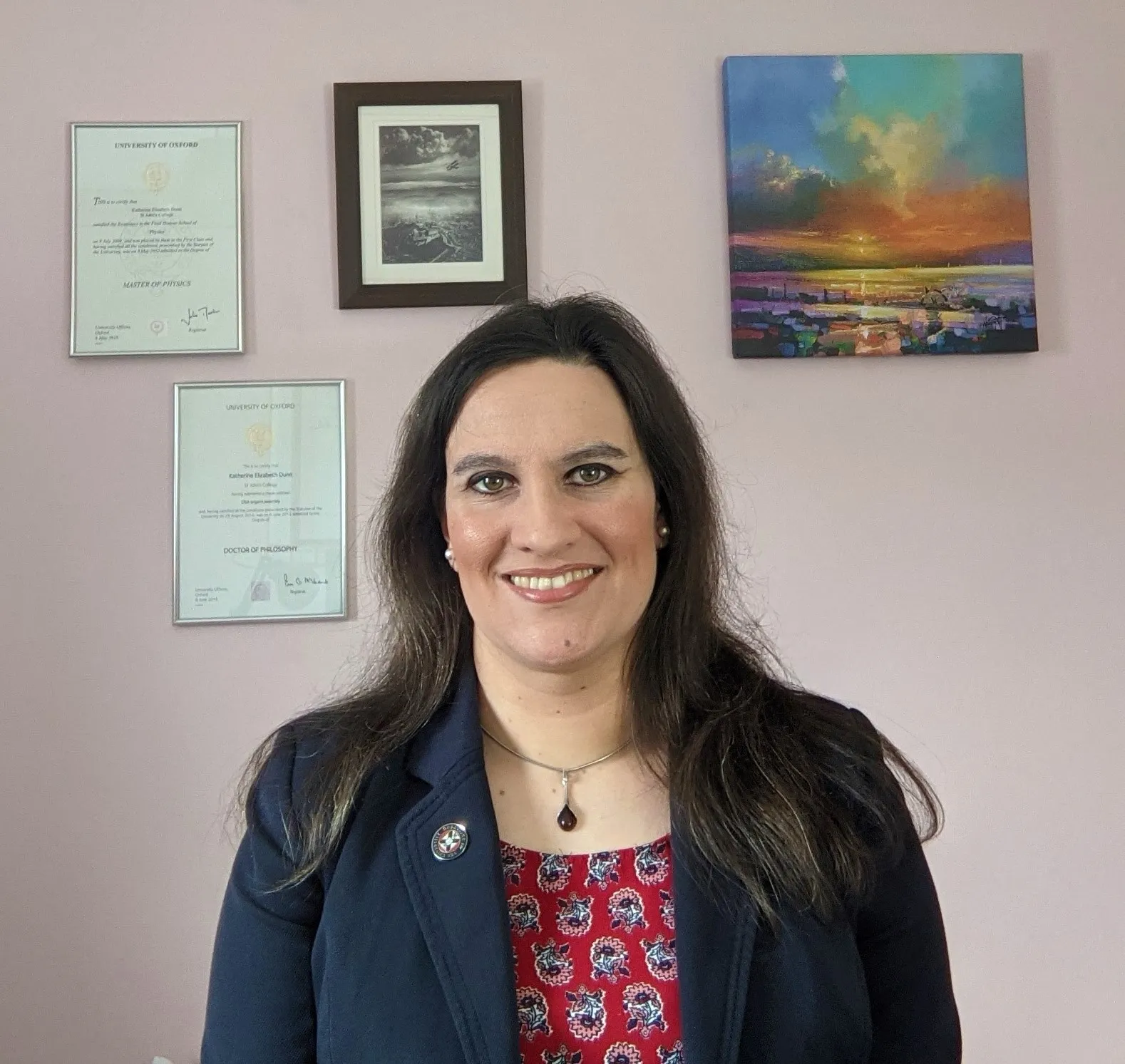
After completing the four year MPhys course at Oxford and achieving a First, I stayed on to carry out research for my DPhil, initially in the field of Terahertz Spectroscopy. After 18 months I changed direction and started a new DPhil in Biological Physics, submitting my thesis entitled ‘DNA Origami Assembly’ a little under three years later. In 2014, I went to York to take up an appointment as a Research Associate in the Department of Electronic Engineering, working primarily on synthetic DNA nanomachines in the context of bioelectronic computing.
I joined the School of Engineering at Edinburgh as a Lecturer in 2017 and became a Senior Lecturer in 2022. I am affiliated with the discipline of Mechanical Engineering and I am a member of the Institute for Bioengineering, where I carry out research in the area of Synthetic Biology.
I was named as one of the Top 50 Women in Engineering 2021 by the Women's Engineering Society. Shortly thereafter, I was elected a Fellow of the Institute of Physics and I took up the role of Degree Programme Manager for Mechanical Engineering in February 2022. In March 2024, I was promoted to the role of Director of Mechanical Engineering, which means I am responsible for leading Mech Eng, providing strategy and line managing the academics (over 40 people).
Fellow of the Institute of Physics
Fellow of The Durham Institute of Research, Development, and Invention
Current teaching (2026):
Previous teaching activities (highlights):
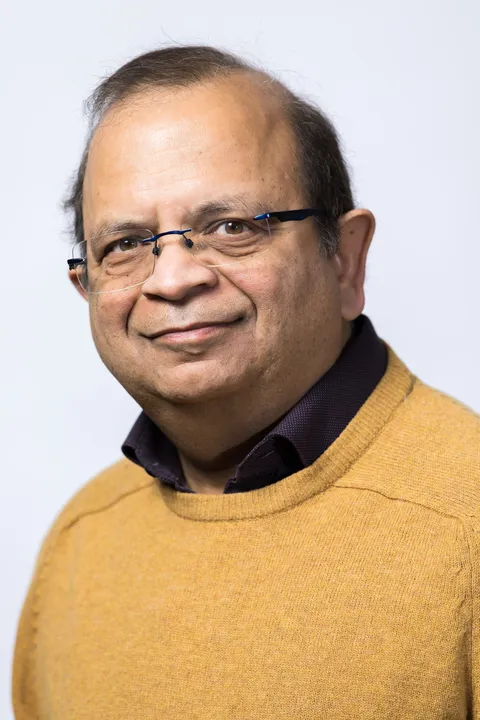
Professor Pankaj obtained his undergraduate degree in Civil Engineering from Indian Institute of Technology, Delhi, masters from Indian Institute of Technology, Roorkee and PhD from University of Wales Swansea. He is the Deputy Head of the Institute for Bioengineering at Edinburgh University. He established and leads the Edinburgh Computational Biomechanics research group. He has research collaborations with universities around the globe and his research has been supported by international organisations, the industry and UK funding councils.
In his role as International Dean for South Asia he provides leadership in the development of a strategy to shape activities, partnerships and priorities to enhance the University’s engagement with the region.
Research supervised by him has received a number of awards:
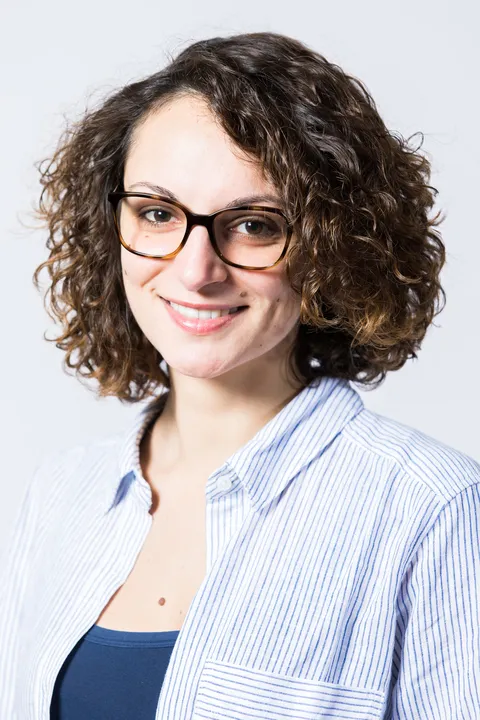
I am a Chancellor’s Fellow in Engineering Biology. My research focuses on the development and use of cybergenetic platforms to model and control complex biological phenomena, with applications in engineering biology and precision medicine. In particular, I am interested in using data-driven approaches to understand and stear the behaviour of biological networks in dynamic environments. I hold a PhD in Bioengineering. I am an Associate Fellow of the Higher Education Academy (FHEA).
I started my studies in biomedical engineering at the University of Bologna (Italy), in 2007. Having developed an interest in cellular and molecular engineering, in 2010 I joined the MSc programme in biomedical engineering offered by the same university. In 2013 I pursued my PhD in Bioengineering, where I undertook mathematical modelling and in vivo-studies of bacterial genetic programmes operating through transcriptional or post-transcriptional control.
To improve my skills in quantitative, single-cell assays, in 2015 I visited Prof. Peter Swain's laboratory at the Centre for Synthetic and Systems Biology, University of Edinburgh. One year later, I joined the lab as a PDRA to investigate phenotypic variability in the budding yeast’s galactose metabolic network and consolidate my expertise in quantitative microscopy and microfluidics.
Having being awarded an EPSRC Postdoctoral Fellowship, in 2017 I joined the School of Engineering, University of Edinburgh. In the following three years, I researched technologies to automate the development and use of mathematical models of synthetic gene networks.
In 2021, I received a tenure track fellowship to establish my research independence.
I am the Deputy Head of Graduate School (Postgraduate Experience) (2024 -).
I am the Deputy Biological Safety Officer and the Genetic Modification Biological Safety Officer (2021 -).
I was the Postgraduate Academic Adviser for Institute for Bioengineering in the School Postgraduate Progression Committee (SPPC) and the School Postgraduate Experience Committee (SPEC) (2021 - 2024).
I was the organiser of the seminar series for the Institute for Bioengineering (2021-2024).
Associate Fellow of the Higher Education Academy (AFHEA), 2020
Head of the School of Engineering | Chair Professor of Materials Engineering
Professor Guangzhao Mao is a leading innovator in nanotechnology and materials engineering, shaping the future of nanomedicine and advanced sensor systems. As Head of the School of Engineering at the University of Edinburgh, she spearheads cutting-edge research that bridges engineering and medicine, unlocking groundbreaking possibilities in drug delivery and nanoscale material applications.
Her pioneering research focuses on two transformative areas:
Electrocrystallization & Nanosensors. Her research unravels the fundamental processes of nucleation and crystal growth in electrodeposition, applying these insights to develop next-generation gas sensors. Her work enhances sensor scalability, with impactful applications in medical diagnostics, environmental monitoring, and industrial automation. Her breakthroughs in integrating nanosensors into larger systems are redefining their real-world potential.
Nanotechnology & Neuroscience. Merging nanotechnology with neuroscience, Mao’s team is developing revolutionary drug delivery systems targeting the central nervous system. Her protein-drug nanoconjugates offer a novel way to bypass the blood-brain barrier (BBB), a long-standing challenge in treating neurological disorders. This innovative approach has already shown promising results in enhancing respiratory function for spinal cord injury, with significant implications for neurodegenerative disease treatments. Her latest advancements include a microfluidic cell-based assay that accelerates drug screening and preclinical evaluations.
Before joining the University of Edinburgh, Professor Mao led as Head of the School of Chemical Engineering at UNSW Sydney, where she continues as an Adjunct Professor. Her global influence is reflected in prestigious accolades, including:✔ Fulbright Senior Scholarship✔ Visiting Professorship at the Max Planck Institute of Colloids and Interfaces✔ Fellow of the American Institute of Chemical Engineers (AIChE)✔ Career Award from the U.S. National Science Foundation
With an impressive track record of driving scientific innovation, Professor Mao continues to push the boundaries of chemical & materials engineering, shaping the next generation of engineering solutions with real-world impact.
B.Sc., Ph.D.
Alan Murray is Professor of Neural Electronics and Assistant Principal, Academic Support. He introduced the Pulse Stream method for analogue neural VLSI in 1985. Alan’s interests are now primarily in implanted silicon chips for biomedical applications.
He led the £5.2M IMPACT (Implantable Microsystems for Personalised And-Cancer Treatment) project, funded by an EPSRC Programme Grant and enjoys teaching first year engineering/electronics and third year Electromagnetics courses. IMPACT produced proof-of-concept results that will be taken forward in two areas – cancer and wound-healing, as "OPTIMIST" (Optimised, Personalised Treatment & Intervention: Microsystems, Implanted Sensors & Therapeutics).
Alan is a Fellow of IET, IEEE and the Royal Society of Edinburgh, Principal Fellow of the HEA and has published over 360 academic papers. Alan’s degrees are in Physics (BSc and PhD – both from the University of Edinburgh). Subsequently, he has done this...