Multiscale Thermofluids
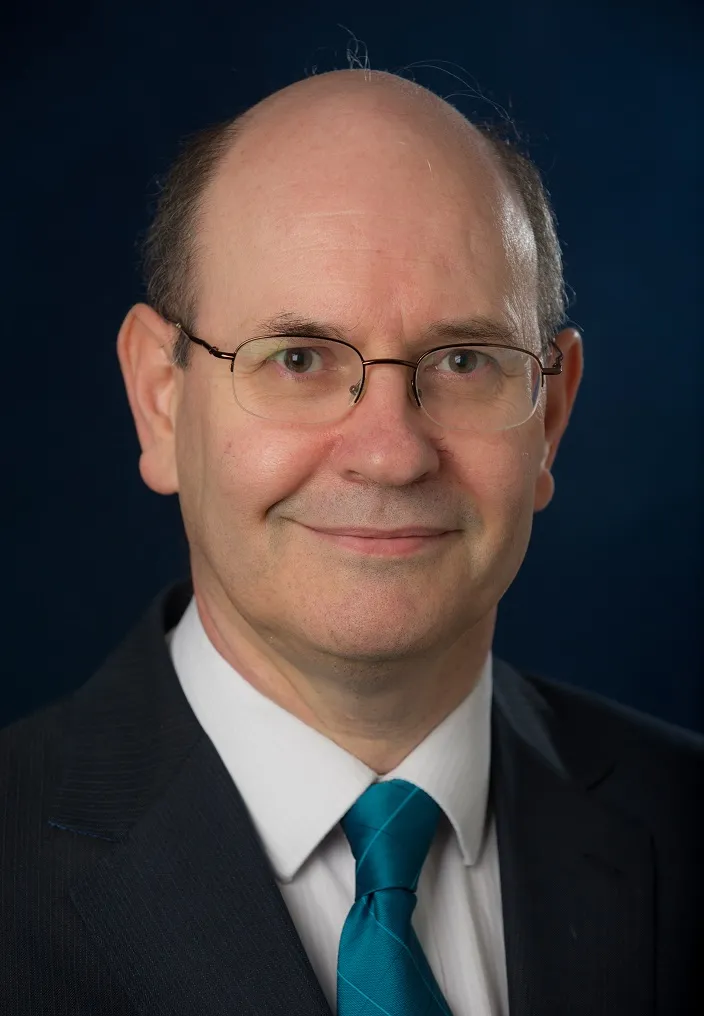
I became Professor of Interfacial Science & Engineering in Edinburgh in 2020 (and was Director of Chemical Engineering from 2020 to 2024) after eight years at the University of Northumbria at Newcastle where I was first Executive Dean of the Faculty of Engineering & Environment and then Pro Vice-Chancellor (REF). Prior to that I spent twenty two years as an academic at Nottingham Trent University where I was a Professor and Head of the Research & Graduate School (Science & Technology) in the College of Arts & Science and formerly Head of Physics & Mathematics. In my earlier career I held a Royal Society European Fellowship at the University of Paris VI (Pierre et Marie Curie) and both gained a PhD in Applied Mathematics and was awarded a BSc (Hons) First Class in Mathematical Physics by the University of Nottingham.
My research involves wetting, interfacial science and engineering and is undertaken as part of the Institute for Multiscale Thermofluids. It has attracted many funding awards including over twenty RCUK/EPSRC grants, mainly as Principal Investigator, and including both an EPSRC Platform Grant (awarded only to world-leading groups) and an EPSRC Centre for Doctoral Training. I have published over 250 refereed journal papers, which are cited over 1000 times annually (Google Scholar), and have been awarded seven patents. I am a Fellow of the Royal Society for Arts, Manufactures & Commerce (FRSA), a Fellow of the Higher Education Academic (FHEA), a Fellow of the Institute of Physics (F.Inst.P) and a Senior Member of the Institute of Electrical & Electronic Engineers (SMIEE). I am a member of the EPSRC Peer Review College and lead a UK Fluids Network Special Interest Group. I have previously been a Board Member of the Award Winning BIM Academy Enterprises Ltd, an Editorial Board member of Advances in Colloid & Interface Science and a UK Management Committee representative on COST Actions. I was a member of sub-panel 13 ("Electrical and Electronic Engineering, Metallurgy and Materials") for the UK Research Excellence Framework (REF2014) and I am Deputy Chair of sub-panel 9 ("Physics") for REF2029.
- BSc (Hons) First Class, University of Nottingham, 1983
- PhD University of Nottingham, 1986
- Fellow of the Royal Society of the Arts, Manufactures & Commerce (FRSA, 2017)
- Chartered Physicist (CPhys) and Fellow Institute of Physics (FInstP, 2002)
- Fellow of the Higher Education Academy (FHEA, 2007)
- Senior Member Institute of Electrical & Electronic Engineers (SMIEEE, 2002)
- Member of the International Society of Bionic Engineering (MISBE, 2019)
- Member of the Advisory Board for the Key Lab in Bionic Engineering, Jilin University, China (2019-2022)
- Year 1 Chemical Engineering Design 1 (Course Organiser)
- Year 3 Chemical Engineering Laboratories
- Year 4 Chemical Engineering Study Projects
- Year 5 Research Project and Industrial Project Supervisor
- MSc Research Project Supervisor
Areas of research include smart and advanced materials, functional surfaces, static and dynamic wetting of surfaces (theory and experiment) and acoustic waves (fundamentals and sensor applications). These are encompassed within three broad categories,
- Interfacial Science and Engineering
- Smart Materials and Surfaces
- Wetting, Dewetting and Droplet Friction
Applications include heat and mass transfer, evaporation and condensation, friction and drag reduction, and fluid dynamics and microfluidic systems.
- I am always open to enquiries to supervise PhDs (self-funded, via University or Other Scholarships or sponsored PhDs) or host visiting researchers. University-funded PhD positions are either advertised on FindaPhD or applications can be made for agreed projects which, if a student receives an offer, enables application for University Scholarships, e.g.
- EPSRC Doctoral Training Awards (UK, EU and Overseas Students)
- Edinburgh Global Research Scholarship (for high quality Overseas Students)
- Principal's Career Development PhD Scholarships (UK, EU and Overseas Students)
- Croucher Foundation Study Awards (Permanent Hong Kong Residents)
- The Royal Commission for the Exhibition of 1851 (Industry-based PhD)
- I lead the UK Fluids Network (UKFN) Special Interest group (SIG) in Droplet and Flow interactions with Bio-Inspired and Smart Surfaces.
- I have a strong belief in public understanding of research and have co-developed Natures Raincoats exhibition and website.
Mark Linne is an experimentalist who has worked in reacting flow-fields (sprays, combustion and fuel cells) and advanced flow-field measurement techniques (laser and x-ray based) since earning a PhD in Mechanical Engineering at Stanford University. He has worked as a laser development scientist at Spectra-Physics Inc. where he developed the first commercially available diode-pumped solid state lasers (now an ubiquitous technology, for which he was awarded 2 patents). He was a professor at the Colorado School of Mines (in the US), The University of Lund (in Sweden), Chalmers University (in Sweden) and now the University of Edinburgh. Throught his career Linne has been active in the development of fiberoptic-based absorptipn/fluorescence probes; short-pulse degenerate four-wave mixing (DFWM) and pump/probe absorption spectroscopy; novel gated-integration and phase sensitive detection imaging techniques; early particle image velocimetry and cavity-enhanced absorption techniques; time-gated ballistic imaging for sprays; and x-ray photoelectron spectroscopy for interfacial electrochemistry. Linne is currently working on short pulse coherent anti-Stokes Raman spectroscopy (CARS) in collaboration with Sandia Labs, and on novel approaches to thermodynamic state changes (trans-critical) in liquid/gas systems (e.g. fuel sprays). He has also served as a manager of Combustion Chemistry at Sandia National Labs' Combustion Research Facility and he was the Director of the Combustion Engine Research Center at Chalmers University. Linne is now the Chair of Combustion Engines in Edinburgh with the task to lead the development of a new lab that focuses on novel internal combustion engines for hybrid vehicles, as range extenders for electric cars, for heavy-duty Diesel engines, and marine engines. The lab has a specialty in direct-injected engines and so it also focuses on spray physics. A new Small Research Facility is under development. Linne is also the Head of the new Institute for Multiscale Thermofluids.
- PhD Mechanical Engineering, Stanford University, 1985
- BS Mechanical Engineering, University of Minnesota, 1975
- Course organizer for MECE09034 Thermofluids 3, a 20 credit class combining fluid mechanics (taught by Dr. Matthew Borg) and heat transfer (taught by Prof. Linne).
- Fellow of the Optical Society of America
- Member of the Combustion Institute (serving in various functions, now on the Finance Committee)
- Member of the Institute for Liquid Atomization and Spray Systems
Ignazio Maria Viola is Professor of Fluid Mechanics and Bioinspired Engineering at the School of Engineering of the University of Edinburgh; Distinguished Visiting Professor at Tsinghua University; Adjunct Professor at the Alma Mater Studiorum University of Bologna; and Fellow of the Royal Institution of Naval Architects (RINA).
He publishes in Nature, Nature Communication, eLife, Renewable Energy, Journal of Fluid Mechanics, Ocean Engineering, etc. For his publications, Viola was awarded two RINA Medals of Distinction and one Medal of Exceptional Merit, a Gold Rating for the Best Journal Article by the International Marine Energy Journal, as well as the Covid-19 Hero Medal of the School of Engineering of the U. of Edinburgh for significant contribution to solving Covid-19 challenges.
Overall Viola has contributed to securing research grants in the excess of £18M of which £6M were allocated to his institution and £7M as Principal Investigator. He leads an ERC Consolidator Grant fellowship DANDIDRONE (€2m, 101001499), an ARIA grant SEED (£0.5m), the EPSRC project MORPHING BLADES (£1m, EP/V009443/1), and several other grants funded by industry, the Royal Society, etc. Viola is Co-Investigator and Director of Responsible Research and Innovation of the Centre for Doctoral Training in Wind & Marine Energy Systems & Structures (£6m, EP/S023801/1).
He is the Functional Vice President Alt. of Knowledge Management of the Society of Naval Architects and Marine Engineers (SNAME), and a member of several Executive Committees, including the Group on Energy Research and Applications of the American Physical Society, the UK Fluids Network, the UK Robotics and Autonomous Systems Network, and he is a member of the Academic Board of the National Robotarium.
Viola is Editor-in-Chief of the Journal of Sailing Technology (SNAME), and Associate Editor of the Journal of Offshore Mechanics and Arctic Engineering (ASME), and the Journal of Ocean Engineering and Marine Energy (Springer). He is a member of the Executive Committee of the conference series ECCOMAS International Conference on Computational Methods in Marine Engineering (MARINE), and Innovation in High-Performance Sailing Yachts (Innov'Sail).
Curriculum Vitae
Research Group: VOILAb
- 2008, Doctor of Philosophy (PhD), Experimental and Numerical Aerodynamics of Sailing Yachts, Politecnico di Milano
- 2001, Master of Engineering, Naval Architecture, Università degli studi di Genova
CEng, Chartered Engineer Registered by the Engineering Council (UK), no. 584133 (2010) Dott. ing., Italian State Examination to practice as ‘Ingegnere’ (engineer) (2001) EUR ING, European Federation of National Engineering Associations, no. 31153 (2010) FRINA, Fellow of the Royal Institution of Naval Architects, no. 00174260 (member since 2009)
Editor-in-Chief, Journal of Sailing Technology, SNAME (2016-date) Associate Editor, Journal of Offshore Mechanics and Arctic Engineering, ASME (2023-date) Associate Editor, Journal of Ocean Engineering and Marine Energy, Springer (2023-date)
Functional Vice President Alt. of Knowledge Management, Society of Naval Arch. and Marine Eng. (2024-date) Executive Committee, Group on Energy Research and Applications, American Physical Society (2023-date) Executive Committee, UK Fluids Network (2020-date) Executive Committee, UK Robotics and Autonomous Systems Network (2024-date) Academic Board, National Robotarium (2024-date)
- Fluid Mechanics
- Marine Energy
- Naval Architecture
Aerodynamics and hydrodynamics, including
- Aerodynamics
- Biomechanics
- COVID Aerodynamics
- Sail Aerodynamics
- Wind and Tidal Energy
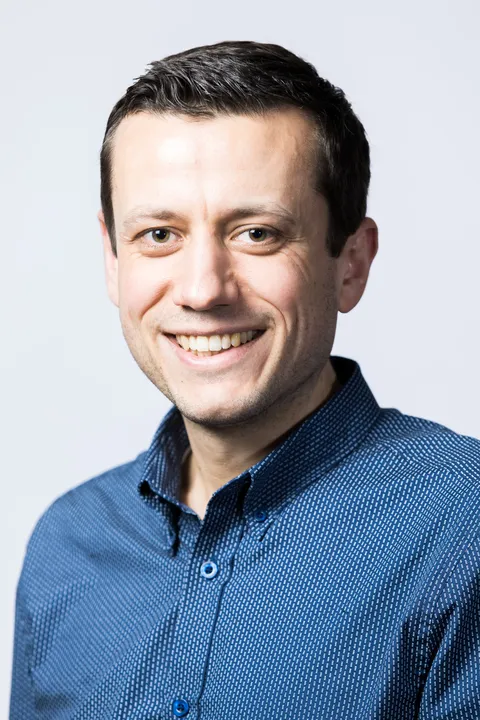
I am a Reader in Chemical Engineering within the Institute for Multiscale Thermofluids. My research interests include multiphase flows, phase changes, capillarity and wetting, and engineered surfaces.
If you are interested in becoming a PhD student or a postdoc in my group, please contact me via email.
PhD Physics, University of Barcelona
DEA Physics, University of Barcelona
Dip Chemical Engineering, National Autonomous University of Mexico
Member of the Institute of Physics
Fellow of the Higher Education Academy
Member of the EPSRC College of Reviewers
Member of the UK Consortium of Mesoscale Engineering Sciences
Undergraduate
- Process Dynamics and Control
- Chemical Engineering Research Projects
Postgraduate
- MSc Chemical Engineering Research Projects