
Image

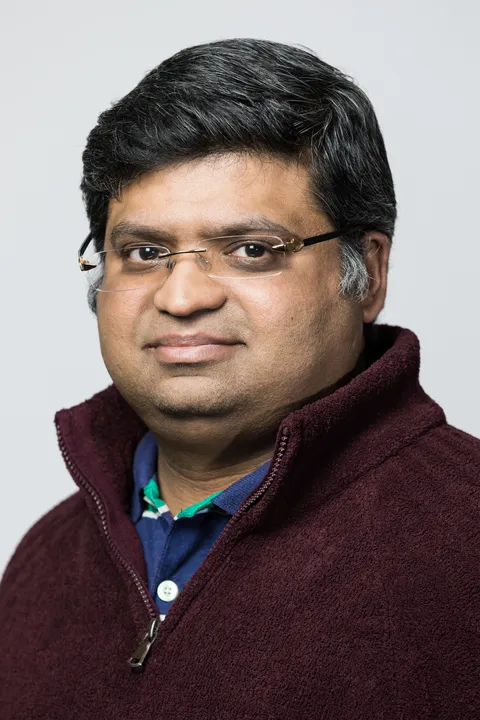
Dani is a Senior Lecturer in Chemical Engineering at the Institute for Multiscale Thermofluids (IMT) at the School of Engineering (SoE) at the University of Edinburgh (UoE) since August 2022 and prior to this, he was a Lecturer since December 2018. In addition, Dani holds a Visiting Associate Professor at WPI-I2CNER (World Premier International Research Center – International Institute for Carbon-Neutral Energy Research) at Kyushu University Japan since April 2019, from the São Carlos School of Engineering at the University of São Paulo in 2024, and a Fellowship of the Higher Education Academy (FHEA) since May 2021.
Prior to joining the University of Edinburgh Dani was part of the International Institute for Carbon-Neutral Energy Research (I2CNER) at Kyushu University in Japan where he spent 3 years as a Post-Doctoral Research Associate and further 2 years as Assistant Professor. During this time, he also served as Adjunct Assistant Professor at the University of Illinois at Urbana-Champaign (UIUC) in USA for 4 months. Before joining Kyushu University Dani completed PhD at the Institute for Materials and Processes (IMP) at the University of Edinburgh. Before joining the Institute of Materials and Processes (IMP), he carried out an internship at the Institute for Energy Systems (IES) of the UoE. Before joining the University of Edinburgh, Dani was an Undergraduate Research Assistant at AICIA (Andalusian Association for Research and Industrial Cooperation) and at the Chemical Engineering Department at The Higher Technical School of Engineering in Seville Spain where he obtained his 5-years Bachelor’s degree in Environmental and Industrial Chemical Engineering with one year completed at the Scuola di Ingegneria University of Bologna in Italy.
In addition, Dani acted as an Associate Editorship for the International Journal of Heat and Mass Transfer (Elsevier) between January 2021 and December 2023 and as Foreign Expert Visitor at the School of Environmental Science and Engineering, Huazhong University of Science and Technology, China in 2023.
5-year Bachelor/s in Environmental and Industrial Chemical Engineering (The Higher Technical School of Engineering, Seville, Spain 2009).
PhD Applied Physics of Droplet Phase-Change (Institute of Maerials and Processes, University of Edinburgh, 2013).
Postgraduate Certificate Academia in Practice PgCAP (University of Edinburgh, 2021)
PROFESSIONAL QUALIFICATIONS APPOINTMENTS:
Fellow of the Higher Education Academy (FHEA, 2021-current)
WPI-I2CNER Visiting Associate Professor at International Institute for Carbon-Neutral Energy Research and Kyushu University (Kyushu University Japan, 2019-current)
Foreign Visitor Professor/Programma de Professor Visitante do Exterior at São Carlos School of Engineering University of São Paulo (USP Brazil 2024)
Foreign Expert Visitor at School of Environmental Science and Engineering, Huazhong University of Science and Technology (HUST China, 2022)
Associate Editor for the International Journal of Heat and Mass Transfer (Elsevier, 2021-2023)
SOCIETIES MEMBERSHIPS:
Associate Member Institution of Chemical Engineers (AMIChemE, 2015)
Member of the Asociación de Científicos Españoles en Japón (ACE Japón, 2017)
Member of the American Physical Society (APS, 2016)
Member of the American Chemical Society (ACS, 2012)
Deputy Head of the Graduate School of Engineering - Progression Committee (University of Edinburgh, 2024-current)
Lead External Examiner to the Programme Assessment Board - MSc Engineering Management and MSc Renewable and Sustainable Energy Technologies in the Faculty of Science and Environment, Northumbria University (Northumbria University, 2026-current)
Course Organiser CEUO3 Chemical Engineering Unit Operations 3 CHEE09021 (University of Edinburgh, 2026-current)
Course Organiser AMNHT5 Advanced Micro-Nano-Scale Heat and Mass Transport 5 CHEE11034 (University of Edinburgh, 2026-current)
Academic Research Projects 5 CHEE11017 (University of Edinburgh, 2020-current)
Academic Industrial/Overseas Projects 5 CHEE11031 (University of Edinburgh, 2019-current)
Academic Study Project 4 CHEE10009 (University of Edinburgh, 2019-current)
FORMER ROLES:
School Postgraduate Progression Committee (SPPC) Representative for the Institute for Multiscale Thermofluids (University of Edinburgh, 2019-2024)
School Postgraduate Experience Committee (SPEC) Representative for the Institute for Multiscale Thermofluids (University of Edinburgh, 2019-2024)
Teaching Laboratory Manager for the Chemical Engineering Discipline (University of Edinburgh, 2020-2025)
Course Organiser CEL3 Chemical Engineering Laboratory 3 CHEE11028 (University of Edinburgh, 2019-2026)
Course Organiser Practical Skills in Chemical Engineering CHEE08018 (University of Edinburgh, 2021-2024)
Academic Design: Projects 4 CHEE10002 (University of Edinburgh, 2018-2020)
I am always open to enquire for supervision of self-funded and sponsored PhDs as well as hosting visiting researchers from all over the world.
Here are some useful links with some potential Scholarships:
School of Engineering University of Edinburgh:
https://registryservices.ed.ac.uk/student-funding/postgraduate/international/other-funding
Commonwealth PhD Scholarships for Low Income Countries:
Other issues on concerns please reach at d.orejon@ed.ac.uk
I am Conference Chair for PEE26, and looking forward to hosting colleagues from across the world in Edinburgh on 2nd and 3rd July 2026.
Visit our PEE26 conference website for further information.

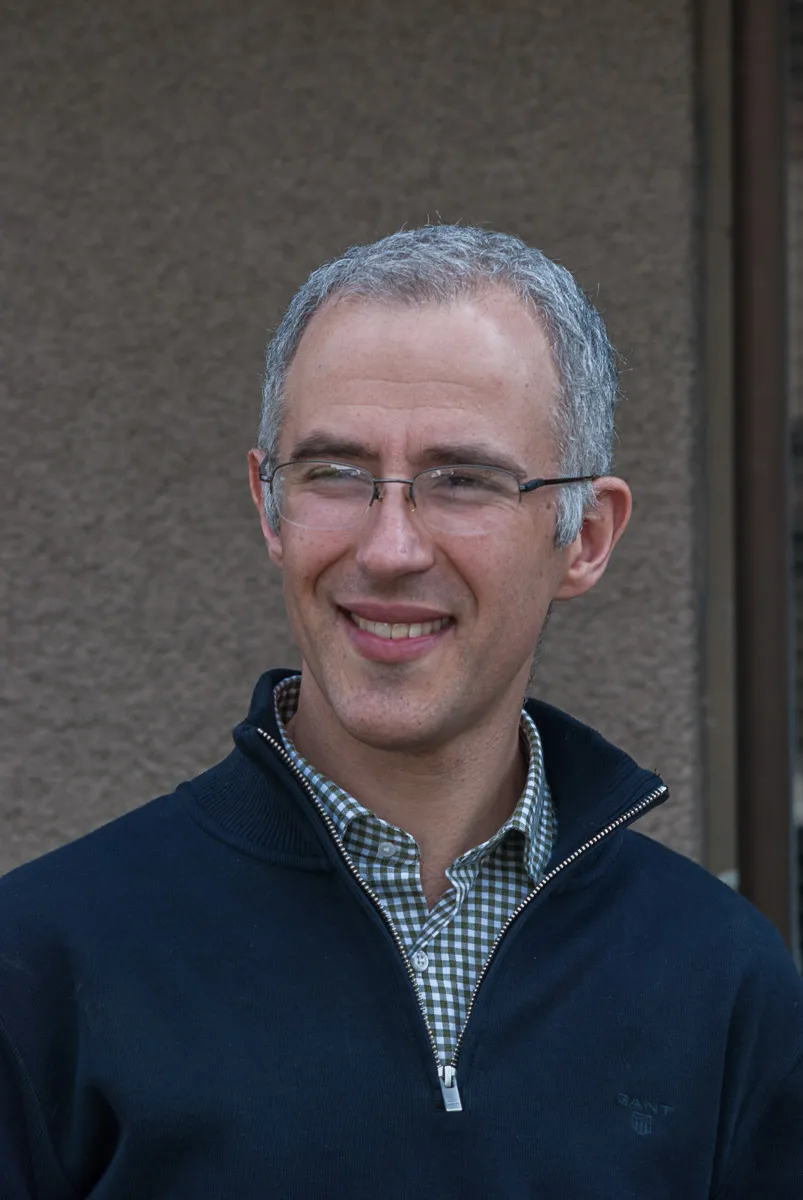
My work centres around the development of understanding and mathematical models for complex multiphase flow patterns to tackle various industrial problems like cleaning, oil-gas transport, slurry transport, distillation, absorption, thermal management of microdevices and biological problems such as cerebral temperature regulation and lung function.
PhD, Department of Chemical Engineering, Imperial College London, 2004
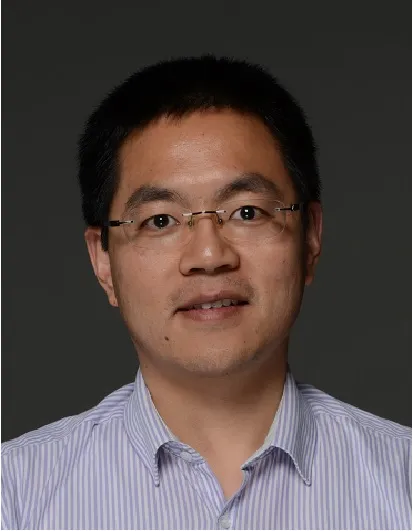
I joined the University of Edinburgh (UoE) in 2021 as a Senior Lecturer in Chemical Engineering. I studied chemical engineering at the Nanjing University of Technology, obtaining a BEng with Highest Distinction in 2003 and PhD in 2008. In the last year of my PhD, my first employment started at The University of Hong Kong (Department of Chemistry). The next position was at the Ludwig-Maximilians-Universität München (Department of Physics) from 2010 to 2013 a. Early 2013, I moved to the University of Liverpool (Department of Physics) and assisted to set up a new research group. Before I joined UoE, I had a four-month spell working in the National Graphene Institute, University of Manchester, and five-year experience as Lecturer in Chemical Engineering, Aston University.
2016 Postgraduate Certificate in Learning and Teaching for Higher Education in the UK. 2003-2008 Nanjing University of Technology (NJUT), PhD in Chemical Engineering. 1999-2003 NJUT, BEng (1st Honours) in Chemical Engineering.
IChemE, RSC, EPSRC Associate Peer Review College
Chemical Engineering Design 4 (CHEE10010) - Course Organiser
Supervising students' projects in various chemical engineering courses: Study Project 4, Research Project 5, etc.
1. Over 10 years’ expertise in nanomaterials, photocatalysis, greenhouse gas removal, reaction engineering, electrochemistry and physical chemistry. 2. Extensive practices on preparation and characterization of nanomaterials, design and evaluation of photocatalytic reactions/photoreactors, antimicrobial properties of nanomaterials. 3. Leading multidisciplinary projects involving both academic and industral resources, comprehensive collaboration and interpersonal skills in a team environment. 4. Skills in electron microscopy, time-resolved spectroscopy, thermal analysis, chromatography, atomic force microscopy, X-ray crystallography and synchrotron radiation spectroscopy
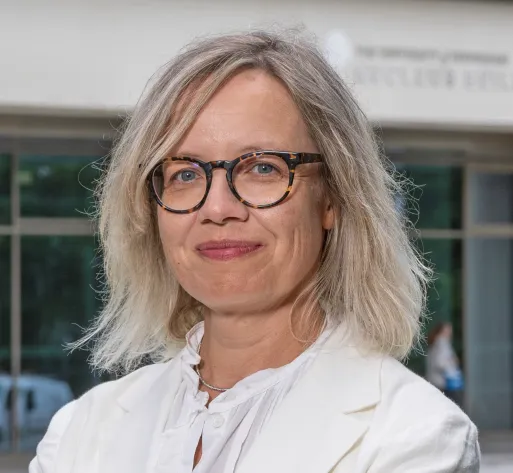
Maria Grazia De Angelis is a Full Professor of Chemical Engineering Principles at the University of Bologna and an Honorary Professorial Fellow at the University of Edinburgh (UK), where she leads the SusProm Group. Her research is dedicated to the design of products (biodegradable packaging, selective membranes) and sustainable processes (CO2 capture, water purification, wearable hemodialysis). She is currently engaged in integrating various theories, including AI, to enhance the capability of designing materials for separation.
She is the Chair of the Working Party on Thermodynamic and Transport Properties of the European Federation of Chemical Engineers (2022-2028). She was the Vice President of the European Membrane Society (2019-23). She is a co-author of more than 100 publications in international journals in the field of membrane science, thermodynamics, and computational material science (Google Scholar).
She has been a Researcher or Visiting Professor at
Go to the Group SusProM Website
Senior Fellow of the Higher Education Academy (SFHEA)
Associate Member of IChemE Member of AIDIC (Italian Association of Chemical Engineering) Member of European Membrane Society Member of AIChE
-Member of the Editorial Board of Membranes and Fluid Phase Equilibria
-Editor of the Special Issue "Fundamentals of Transport in Polymers and Membranes—Honorary Issue for Professor Giulio C. Sarti" 2022
-Editor of the Special Issue "Gas Transport in Glassy Polymers" 2020-2021
-Watch my webinar “Membranes for CO2 Capture: Thermodynamic aspects” given during the EFCE Spotlight Talks, December 3rd 2020. Organized by the European Federation of Chemical Engineers. -Host of the European Membrane Society Live Webinars Series, watch them on Youtube
Log jams - accumulations of floating wood in rivers - play a critical role in shaping fluvial landscapes, influencing flood dynamics, sediment transport, and aquatic ecosystems. Despite their ecological and hydraulic importance, we still lack a predictive, mechanistic understanding of how individual logs interact to form stable jams, how these structures resist or yield to flow, and how changes in geometry or hydrodynamic forcing drive transitions between clogging and release.
This project will address these questions using particle-based computational simulations of log jam formation and deformation under flow. You will develop and apply numerical tools to represent logs as interacting elongated particles within a fluid environment, capturing contact, friction, buoyancy, and hydrodynamic drag. By systematically varying log aspect ratio, size distribution, and flow conditions, you will identify the micro-mechanical origins of jam stability and quantify the conditions under which logs transition between mobile, jammed, and partially clogging states. Through this work, you will develop expertise in large-scale particle-based simulation, computational fluid dynamics, and the physics of granular and particulate systems.
You will learn to extract effective rheological and mechanical properties from microscale simulations, linking particle-scale processes to river-scale behaviour. The results will inform predictive models for log jam formation and stability, with implications for flood risk management, river restoration, and the design of nature-based engineering solutions.
This PhD project will be supervised by Dr Chris Ness (School of Engineering, University of Edinburgh) and will involve collaboration with academics from partner institutions.
Interested candidates are encouraged to contact the supervisor for more information (chris.ness@ed.ac.uk).
Website: https://christopherjness.github.io/
Contact: Dr Christopher John Ness(Chris.Ness@ed.ac.uk)
Minimum entry qualification- an Honours degree at 2:1 or above (or international equivalent) in a relevant science or engineering discipline, possibly supported by an MSc Degree
Further information on English language requirements for EU/Overseas applicants.
Applications are welcomed from self-funded students, or students who are applying for scholarships from the University of Edinburgh or elsewhere as well as self-funded students.
Funding may be available for an exceptional candidate. Link below for the further details.