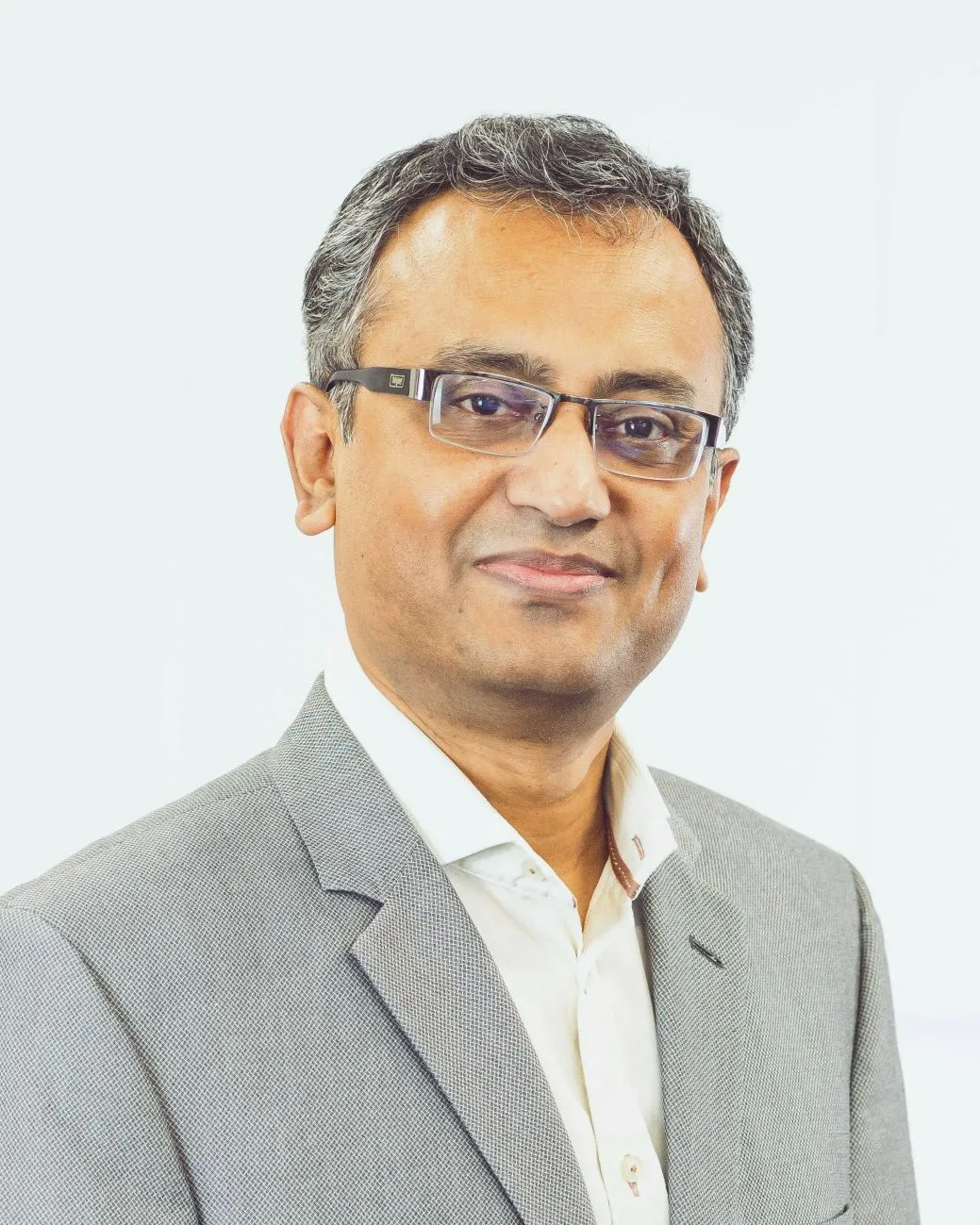
Energy Systems
- PhD in Mechanical Engineering, University of Waterloo, Canada, 2010 Dissertation: Transport Phenomena in Cathode Catalyst Layer of PEM Fuel Cells (Advisor: Prof Xianguo Li)
- MSc in Mechanical Engineering, University of Alberta, Canada, 2003 Dissertation: Electrostatic Double Layer Interactions in Confined and Many-Body Geometries (Advisor: Prof Subir Bhattacharjee)
- MSc in Mechanical Engineering, BUET, Bangladesh, 2001 Thesis: Elastic-Plastic Behaviour of a Circular Rod under Combined Torque and Tension (Supervisor: Prof Abu Rayhan Md. Ali)
- BSc (Hons) in Mechanical Engineering, BUET, Bangladesh, 1998 Thesis: Experimental and Theoretical Investigation of a Solar Water Heater (Supervisor: Prof Md. Imtiaz Hossain)
Editorships Associate Editor in Electrochemical Engineering, Frontiers in Chemical Engineering (2022–date) Associate Editor, Journal of Electrochemical Energy Conversion and Storage (2021–date) Associate Editor in Fuel Cells, Electrolyzers and Membrane Reactors, Frontiers in Energy Research (2020–date)
Guest Editor for the special issue: Multiphysics, Multiphase, and Multiscale Modeling and Characterization of Porous Media in Electrochemical Energy Systems, Frontiers in Energy Research (2023) Lead Guest Editor for the special issue: Battery Management in Electric Vehicles: Current Status and Future Trends, Batteries (2022–2023) Lead Guest Editor of a special issue on Advanced Energy Materials and Research, Energies (2020–2021)
Editorial Board Member for section Battery Performance, Ageing, Reliability and Safety, Batteries (2022–date) Editorial Board Member of Renewable and Sustainable Energy (2022–date) Editorial Board Member for section D1: Advanced Energy Materials, Energies (2019–2023) Editorial Board Member for section Inventions and Innovation in Energy and Thermal/Fluidic Science, Inventions (2018–date)
Advisory Board Member, Challenges, MDPI (2020–date)
- Thermodynamics 4
- Professional Issues for Mechanical Engineers 3
- Sustainable Energy Systems Dissertation
- Mechanical Engineering Project 4
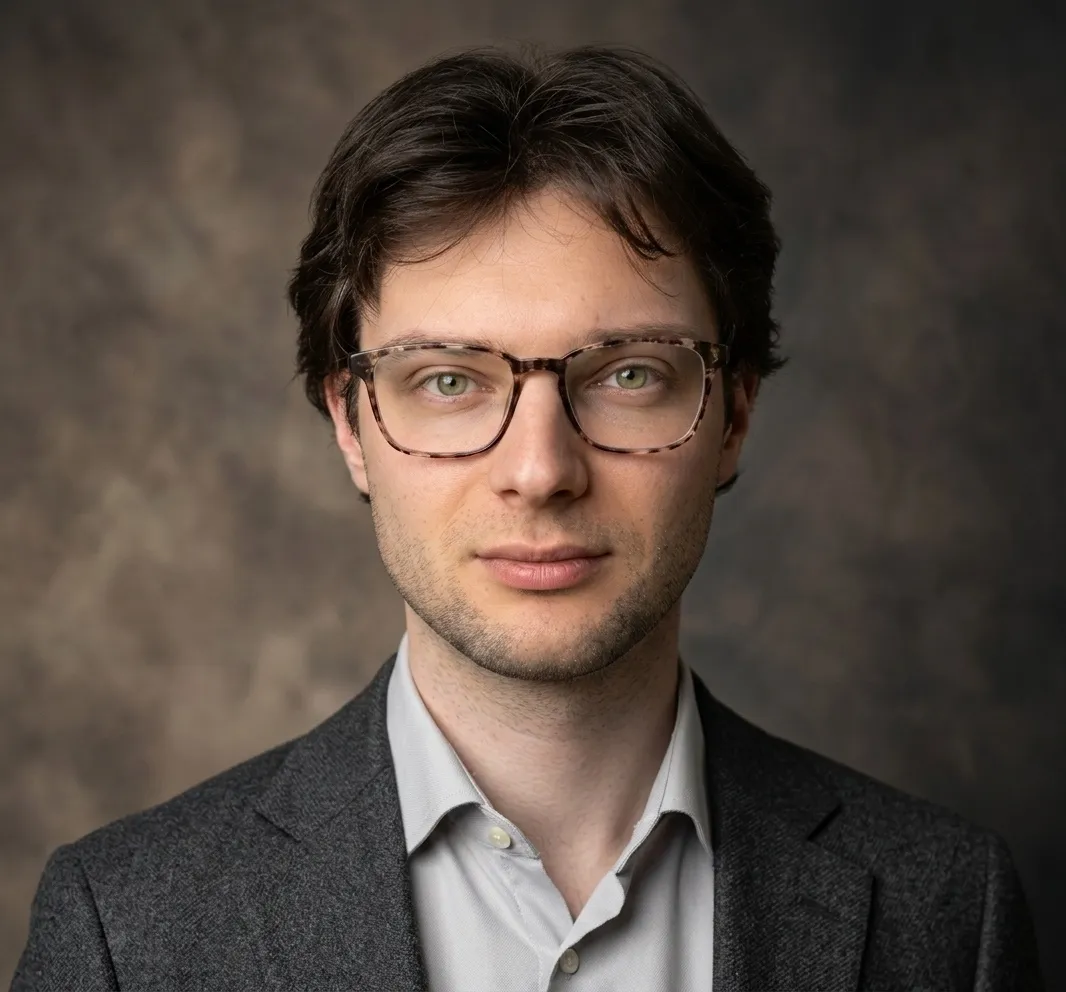
Max Malyi is a renewable energy engineer and PhD Candidate at the Institute for Energy Systems, School of Engineering, University of Edinburgh. His research is situated at the intersection of renewable energy, data science, and control engineering, with a primary focus on enhancing the reliability and operational lifetime of wind turbines.
His work involves developing data-driven, health-aware control strategies that balance power generation with component longevity, particularly for wind turbine electrical subsystems. This is achieved by applying advanced machine learning and natural language processing techniques to analyse large-scale operational data from SCADA systems and maintenance records. The insights from this analysis are then used to inform and validate physics-based aeroelastic simulations in environments like OpenFAST and Simulink.
Through an industrial studentship and active collaboration with industry partners, his research aims to deliver practical, cost-effective solutions that contribute to a more sustainable and resilient energy future.
- Doctor of Philosophy (PhD), Engineering, The University of Edinburgh (2023–Present)
- Master of Engineering (MEng), Wind Power Systems, North China Electric Power University (2017–2020)
- Bachelor of Engineering (BEng), Renewable Energy Systems, Dnipro University of Technology (2013–2017)
As a Teaching Assistant at the School of Engineering, I have contributed to the following courses as a tutor, marker, and/or lab demonstrator:
- Wind Energy
- Python Programming Skills for Engineers
- Professional Development for Engineers
- Power Systems
- Health-aware and multi-objective control for wind turbines
- Reliability and lifetime extension of wind turbine electrical subsystems
- Operational data analysis using SCADA and maintenance records
- Applications of machine learning and large language models in renewable energy
- Predictive maintenance and anomaly detection for wind farms
- Physics-based modelling and digital twins for wind energy systems
My doctoral research is supported by a studentship agreement with one of the leading wind farm operators in Europe. I actively collaborate with industry to ensure my work addresses real-world challenges in wind farm operation and maintenance.
Recent Work:
- Malyi, M., Shek, J., & Biscaya, A. (2025). Exploratory Semantic Reliability Analysis of Wind Turbine Maintenance Logs using Large Language Models. arXiv preprint arXiv:2509.22366.
- Malyi, M., Shek, J., McDonald, A., & Biscaya, A. (2025). A Comparative Benchmark of Large Language Models for Labelling Wind Turbine Maintenance Logs. IET Renewable Power Generation, 20, no. 1 (2026): e70212. https://doi.org/10.1049/rpg2.70212.
- Malyi, M., Shek, J., McDonald, A. (2025). Wind Turbine Reliability Analysis Using SCADA and Maintenance Data. In Solar and Wind Beyond Limits for Technology, Policy, and Practice – 5th Annual Solar and Wind Power Conference. pp. 185–192. Springer Nature. doi:10.1007/978-3-032-08953-3_18.
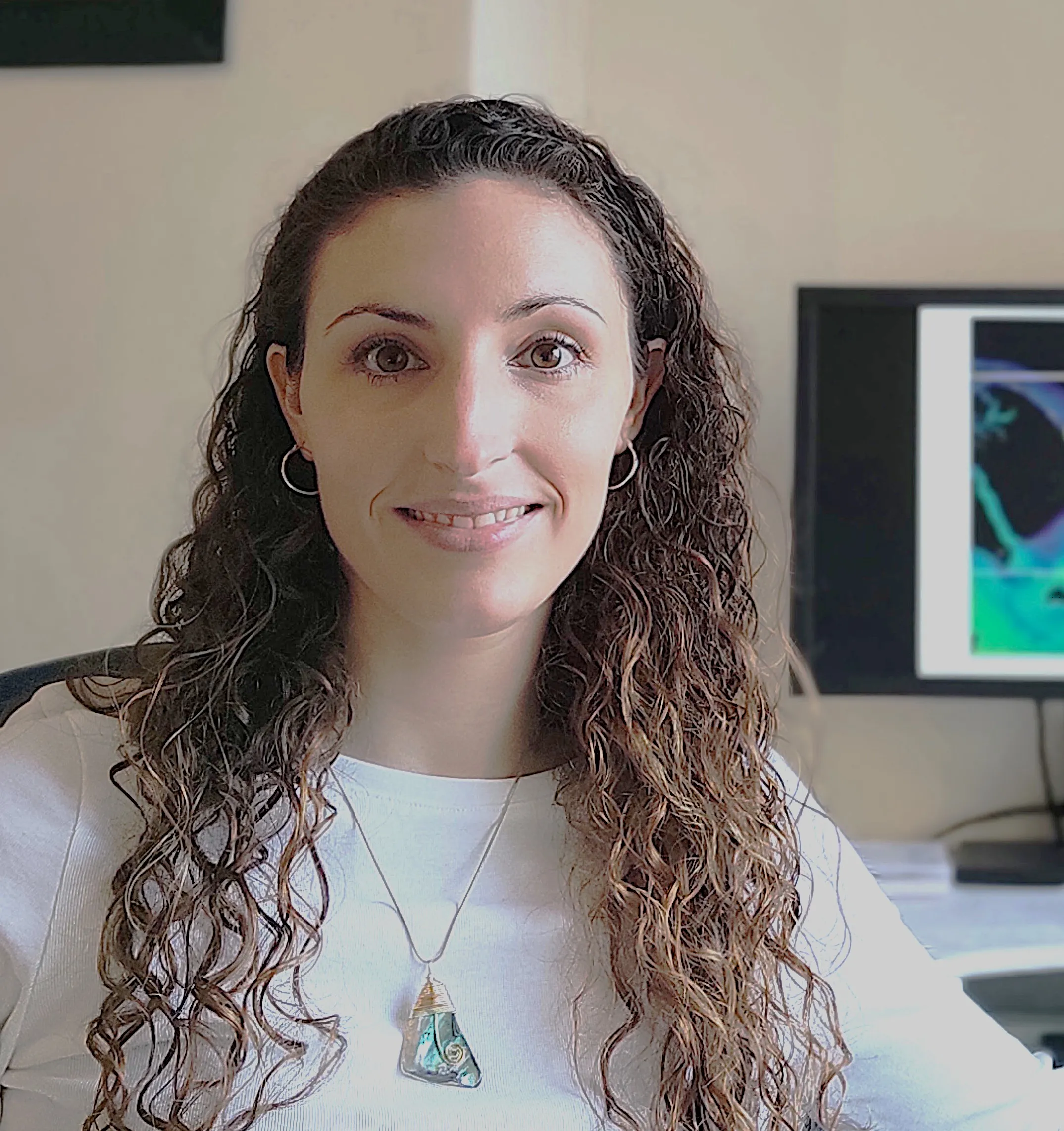
As a Senior Lecturer in Ocean Observation, I bridge the gap between space-borne technology and coastal resilience. My work leverages multi- and hyperspectral satellite imagery, in-situ data, and machine learning to decode the complex processes shaping our coastal environments. Beyond observation, I am dedicated to the Data for Good movement—applying satellite insights to drive down the costs of marine renewable energy and address the urgent intersection of climate change and social equity.
Research and impact
Pioneering coastal intelligence research
I lead the Coastal and Environmental Remote Sensing Group (CEReS) at the School of Engineering. Our mission is to redefine the role of engineering in a changing world by leveraging high-resolution remote sensing as a vehicle for equity. By bridging the gap between space-borne data and ground-level resilience, we advance the state-of-the-art in coastal oceanography and marine renewables. We operate on the principle that engineering is not neutral; we use satellite-derived intelligence to drive climate justice and ensure a just transition for the communities most affected by climate change.
Transforming engineering with climate justice
I am the Principal Investigator and Director of the Failure Modes of Engineering (FeME) Network Plus, a £2.2 million EPSRC-funded initiative (2025-2028). This project represents a shift in engineering paradigms, focusing on solutions for climate change and biodiversity loss through the lens of climate justice. We specifically investigate how engineering failures impact women, children, and underrepresented communities.
Get involved. We are actively seeking collaborators passionate about climate justice and engineering resilience: get in touch.
Strategic leadership
My current professional leadership roles focus on training the next generation of environmental scientists and engineers:
- SENSE CDT: Deputy Director for Training at the UK Space Agency and NERC Centre for Satellite Data in Environmental Science, SENSE.
- IDCORE CDT: Co-Investigator and Management Team member for the EPSRC and NERC Centre for Doctoral Training in Offshore Renewable Energy IDCORE.
- External academic leadership: External Examiner for BEng/MEng Civil Engineering and MEng Civil Engineering with Architectural Design degree programmes at the University of Southampton.
My journey
My career has evolved from foundational civil and environmental engineering toward pioneering ocean innovations that are data-driven and grounded in climate justice:
Foundations (2008-2014)
My story began in Spain at Universidad de Granada, where I earned an MEng in Civil & Environmental Engineering (Ingeniería Superior de Caminos, Canales y Puertos) (2008-2013) and an MSc in Environmental Hydraulics (2013-2014), specialising in aero-hydrodynamics and coastal structures.
Industrial research and PhD (2014-2017)
In 2014, I joined HR Wallingford (Oxford) as a Researcher, applying computational fluid dynamics to analyse storm impacts on breakwaters and wave energy converters. Supported by a prestigious Talentia Fellowship, I completed a joint PhD between the University of Edinburgh and Universidad de Granada (2015-2017).
Academic growth and innovation (2017-2021)
As a Postdoctoral Research Associate at the Policy and Innovation Group, I led work packages for two European Horizon 2020 projects totalling €26 million, optimising marine energy farms through advanced numerical modeling (2017–2018). In 2018, I was awarded a Chancellor’s Fellowship in Data-Driven Innovation, focusing on the untapped potential of satellite applications for the blue economy.
Expanding the vision (2022-present)
In 2022, I took a year of maternity leave to welcome my daughter to the world. I believe in the importance of visible career breaks and am an advocate for work-life balance in academia. I returned to my post in 2023 and was promoted to Senior Lecturer, where I continue to push the boundaries of how we observe and protect our oceans and coasts under a changing climate.
- PgCert (Postgraduate Certificate) in Academic Practice, PgCAP. University of Edinburgh, 2021 - 2022.
- PhD Energy Systems & Dynamics of Biogeochemical Flows. University of Edinburgh and University of Granada (Spain), 2015 - 2017.
- MSc Environmental Hydraulics. Universities of Granada, Malaga and Cordoba (Spain), 2013 - 2014.
- MEng Civil & Environmental Engineering (Ingenieria de Caminos, Canales y Puertos, 5 year degree). University of Granada (Spain), 2008 - 2013.
- CEng MICE, Chartered Engineer, Member of the Institution of Civil Engineers.
- FHEA, Fellow of the Higher Education Academy.
- Commercial Drone Pilot: A2 Certificate of Competency (A2CofC), and General Visual Line of Sights Certificate (GVC).
- Turing Fellow, The Alan Turing Institute, former member.
- MASTS (Marine Alliance for Science and Technology for Scotland). Former member of the Marine Energy Forum Steering Group.
- IMarEST (Institute for Marine Engineering, Science & Technology). Former student member.
At undergraduate level:
- Coastal Engineering (Course Organiser), 10 SCQF credits.
- Interdisciplinary Group Design Project (Course Organiser and Potable Water Supply Lead), 20 SCQF credits.
Past courses I have taught:
- At undergraduate level: Programming Skills for Engineers 2, 10 SCQF credits (2020-2022)
- At postgraduate level: SENSE CDT, Python code carpentry and Google Earth Engine workshop (40 taught hours) (2020-2024).
CEReS: Coastal and Environmental Remote Sensing Group
CEReS is an interdisciplinary research group where we translate high-resolution environmental data into resilient engineering strategies that prioritise both technical excellence and social equity. By bridging the gap between space-borne observations and ground-level engineering, we work to secure the future of our coastal environments and the communities that depend on them. Our research is operationalised across four pillars:
- Marine Renewable Energy: Democratising the blue economy by reducing costs and technical barriers to clean energy.
- Satellite Oceanography: Using globally accesible, low-cost data for resource-constrained regions to monitor environmental shifts.
- Coastal Engineering: Understanding resilient infrastructure and coastlines that protect communities.
- Engineering and Climate Justice: Investigating how engineering failure modes disproportionately impact underrepresented groups and developing systemic solutions for recovery.
Current members
Professional services staff
- Johanna Holtan, FeME Project Manager (2025-present).
- Pascale Watkins, FeME Administrative Support (2025-present), based at University of Glasgow.
- Jordan McInally, FeME Events Organiser (2025-present), based at University of Glasgow.
Postdoctoral researchers
- Dr Ashrika Sharma, Postdoctoral Research Associate in Human-Centred Engineering for Climate Resilience (2026-present).
PhD candidates
- Anneke Sperling, PhD, SENSE CDT. Topic: Do ocean currents stick together? 2023 - present. Co-supervised with National Oceanography Centre (Dr Alejandra Sanchez-Franks).
- Liam McAlister, EngD, IDCORE CDT. Topic: Offshore wind structures design sensitivity to metocean site conditions. 2024 - present. Co-supervised with University of Strathclyde, University of Exeter and SSE Renewables (Dr Alyona Naberezhnykh).
- Nishant Gaur, PhD. Topic: Hydro-climatological extremes in the context of climate change. 2024-present. Co-supervised with Prof. Lindsay Beevers.
- Jasmine Relf, PhD, E4 CDT. Topic: Towards a resilient coast. Developing a continuous coastal resilience indicator for monitoring and adaptation in a changing climate. 2025-present. Co-supervised with JBA Consulting (Dr Demetra Cristaudo).
Past members
Postdoctoral researchers
- Dr Simone Zen, Postdoctoral Research Associate. Topics:
- Assessment of the Omo river and delta using satellite data. 2019 - 2021.
- Supergen ORE Hub funded project Satellite Climate Observation for Offshore Renewable Energy Cost Reduction (SCORE). 2020 - 2021.
- Dr Segio Lopez-Dubon, Postdoctoral Marie Curie Fellow. Topic: Data-Driven Structural Testing for Tidal Energy. 2020 - 2025.
PhD candidates
- Dr Madjid Hadjal, PhD, Data Lab industrial. Topic: Automated classification of ocean colour remote sensing for environmental monitoring and legislative compliance. 2018 - 2022. Co-supervisor, student based in University of Strathclyde (main supervisor Dr David McKee) in collaboration with Marine Scotland.
- Dr Emma McAllister, PhD. Topic: High-resolution satellite remote sensing of the coastal morphology. 2019 - 2024. Co-supervised with BGS (Dr Alessandro Novellino and Dr Andres Payo-Garcia) and Cefas (Dr Tony Dolphin).
- Dr Solomon White, PhD, SENSE CDT. Topic: High-resolution multispectral estimation of sea surface salinity and temperature. 2020 - 2024. Co-supervised with Cefas (Dr Tiago Silva).
- Dr Penny Clarke, PhD, SENSE CDT. Topic: Using remote sensing tools to study ocean health and whale strandings. 2021 - 2025. Co-supervised with British Antarctic Survey (Dr Jennifer Jackson).
- Ed Holt, PhD, SENSE CDT. Topic: Investigating the potential for catastrophic collapse of Greenland's lake-terminating glacier margins. 2021 - 2025. Co-supervised with School of Geosciences (Prof. Peter Nienow).
- Dr Joe Marsh-Rossney, PhD (School of Physics and Astronomy), guest team member 2018-2021.
Undergraduate and Master's students
- Charlie Bancroft, BEng Civil and Environmental Engineering. Topic: A spatio-temporal optimisation framework for continuous operation of collocated offshore wind data centres in the North Sea. 2025-2026.
- Rory Elliott, MEng Civil and Environmental Engineering. Topic: Blown off course: optimisation of offshore wind LCOE in the era of Net-Zero pragmatism. 2025-2026.
- Valentina Gonzalez, MEng Civil and Environmental Engineering. Topic: Offshore solar resource assessment in the North Sea using remote sensing. 2024-2025.
- Samantha Waugh, MEng Civil and Environmental Engineering. Topic: Levelised Cost of Energy uncertainty estimation - A case study for offshore wind. 2024-2025.
- Melissa Cabrera Alfaro, MSc Geographical Information Science (School of Geosciences). Topic: The role of fishing refuge areas in the absorption of CO2. 2023-2024.
- Katie McWilliams, MEng Civil and Environmental Engineering. Topic: Sea Surface Salinity From Satellite Data, Machine Learning And Numerical Models. 2021 - 2022.
- Clementine Frere, MEng Civil and Environmental Engineering. Topic: Feasibility Study Of Coastsnap In The Edinburgh Shores. 2020-2021.
- Hubert Gurs, MEng Structural Engineering with Architecture. Topic: Feasibility Study Of Coastsnap In The Edinburgh Shores. 2020-2021.
- Nick Heaney, MEng Civil and Environmental Engineering. Topic: Coastsnap Assessment For Adaptation To Python. 2020-2021.
- Marcin Filinger, BEng Civil and Environmental Engineering. Topic: Flood risk assessment in Scotland using satellite data and numerical models. 2019-2020. Awarded Environmental Engineering thesis award.
- Simone Speltoni, Visiting student, MSc thesis. Topic: Modelling the interaction between marine energy converters and the coast (Collaboration with the University of Trento, Italy). Awarded best MSc thesis. 2019.
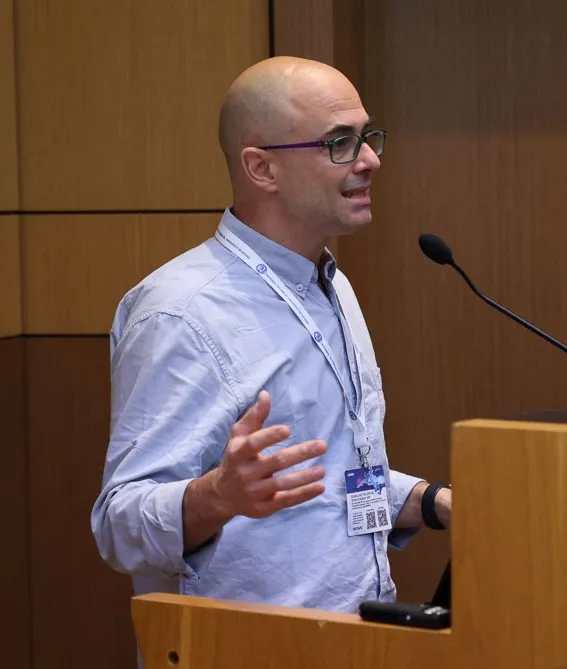
Ignazio Maria Viola is Professor of Fluid Mechanics and Bioinspired Engineering at the School of Engineering of the University of Edinburgh; Distinguished Visiting Professor at Tsinghua University; Adjunct Professor at the Alma Mater Studiorum University of Bologna; and Fellow of the Royal Institution of Naval Architects (RINA).
He publishes in Nature, Nature Communication, eLife, Renewable Energy, Journal of Fluid Mechanics, Ocean Engineering, etc. For his publications, Viola was awarded two RINA Medals of Distinction and one Medal of Exceptional Merit, a Gold Rating for the Best Journal Article by the International Marine Energy Journal, as well as the Covid-19 Hero Medal of the School of Engineering of the U. of Edinburgh for significant contribution to solving Covid-19 challenges.
Overall Viola has contributed to securing research grants in the excess of £18M of which £6M were allocated to his institution and £7M as Principal Investigator. He leads an ERC Consolidator Grant fellowship DANDIDRONE (€2m, 101001499), an ARIA grant SEED (£0.5m), the EPSRC project MORPHING BLADES (£1m, EP/V009443/1), and several other grants funded by industry, the Royal Society, etc. Viola is Co-Investigator and Director of Responsible Research and Innovation of the Centre for Doctoral Training in Wind & Marine Energy Systems & Structures (£6m, EP/S023801/1).
He is the Functional Vice President Alt. of Knowledge Management of the Society of Naval Architects and Marine Engineers (SNAME), and a member of several Executive Committees, including the Group on Energy Research and Applications of the American Physical Society, the UK Fluids Network, the UK Robotics and Autonomous Systems Network, and he is a member of the Academic Board of the National Robotarium.
Viola is Editor-in-Chief of the Journal of Sailing Technology (SNAME), and Associate Editor of the Journal of Offshore Mechanics and Arctic Engineering (ASME), and the Journal of Ocean Engineering and Marine Energy (Springer). He is a member of the Executive Committee of the conference series ECCOMAS International Conference on Computational Methods in Marine Engineering (MARINE), and Innovation in High-Performance Sailing Yachts (Innov'Sail).
Curriculum Vitae
Research Group: VOILAb
- 2008, Doctor of Philosophy (PhD), Experimental and Numerical Aerodynamics of Sailing Yachts, Politecnico di Milano
- 2001, Master of Engineering, Naval Architecture, Università degli studi di Genova
CEng, Chartered Engineer Registered by the Engineering Council (UK), no. 584133 (2010) Dott. ing., Italian State Examination to practice as ‘Ingegnere’ (engineer) (2001) EUR ING, European Federation of National Engineering Associations, no. 31153 (2010) FRINA, Fellow of the Royal Institution of Naval Architects, no. 00174260 (member since 2009)
Editor-in-Chief, Journal of Sailing Technology, SNAME (2016-date) Associate Editor, Journal of Offshore Mechanics and Arctic Engineering, ASME (2023-date) Associate Editor, Journal of Ocean Engineering and Marine Energy, Springer (2023-date)
Functional Vice President Alt. of Knowledge Management, Society of Naval Arch. and Marine Eng. (2024-date) Executive Committee, Group on Energy Research and Applications, American Physical Society (2023-date) Executive Committee, UK Fluids Network (2020-date) Executive Committee, UK Robotics and Autonomous Systems Network (2024-date) Academic Board, National Robotarium (2024-date)
- Fluid Mechanics
- Marine Energy
- Naval Architecture
Aerodynamics and hydrodynamics, including
- Aerodynamics
- Biomechanics
- COVID Aerodynamics
- Sail Aerodynamics
- Wind and Tidal Energy

