
Infrastructure and Environment

Reader and Director of Discipline
Simon.Smith@ed.ac.uk
+44(0)131 6507159
3.20 William Rankine Building
Civil and Environmental Engineering
Infrastructure and Environment
Image
Dr Simon Smith

I have been teaching at University of Edinburgh for nearly three decades and in that time have contributed project management and risk management material to the School of Mathematics and University of Edinburgh Business School. In recent years I have focussed solely on Civil and Environmental Engineering and cover the following topics:
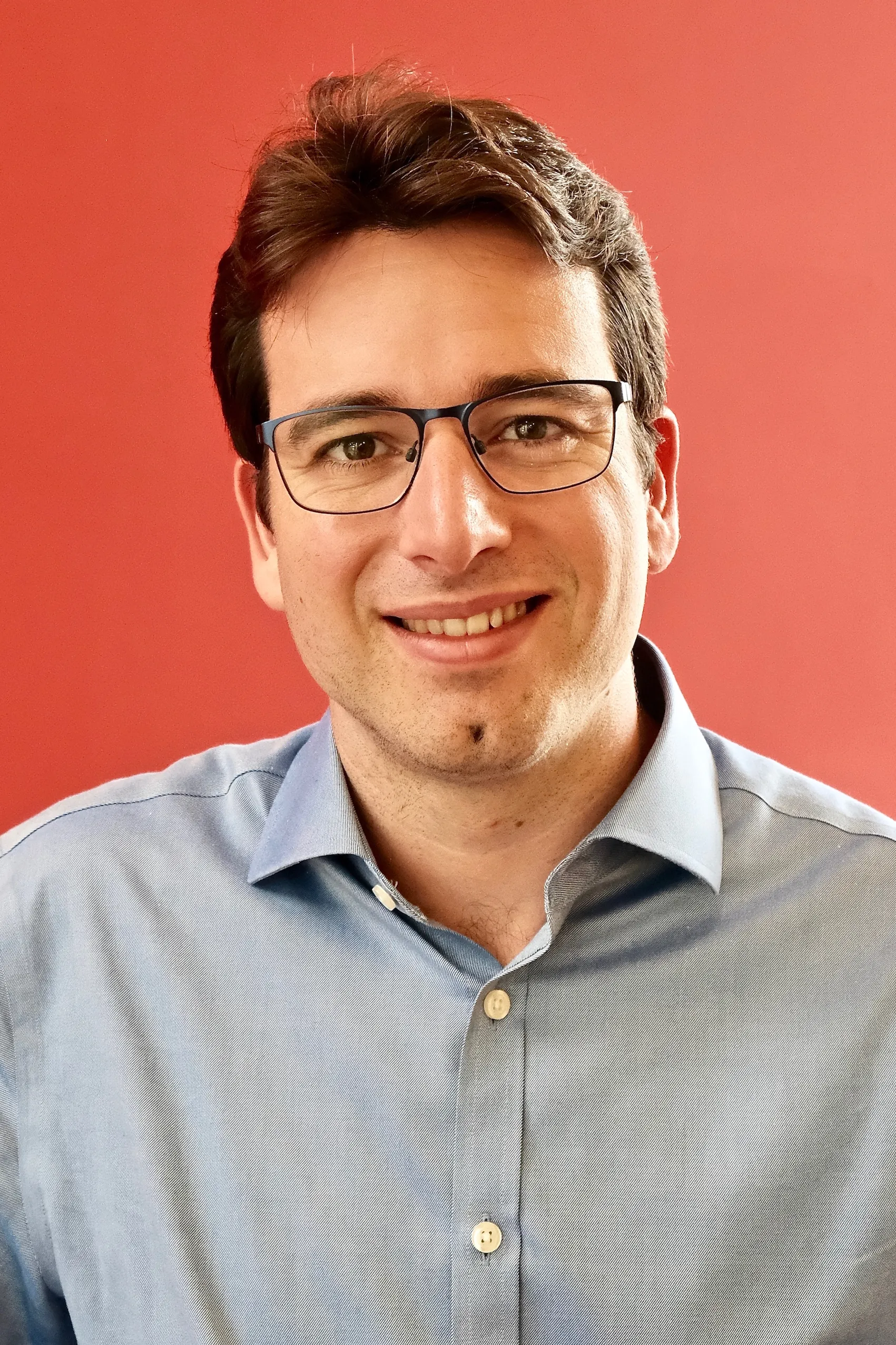
  • Civil Engineering Construction As a Construction Engineer by profession and past experience I am passionate about the physical delivery of civil engineering projects. I have been lucky enough to experience the tremendous satisfaction of literally getting ones hands dirty in the creation of large pieces of infrastructure. And I try to bring that to the classroom. This subject will from 2025 be delivered to our Second Year students (having been part of the third year for a long time) and contains two critical modules: Health and Safety in Construction (planning and undertaking construction with all hazards understood and managed); and Temporary Works (those parts of construction that allow the 'permanent' works to be built).
  • Engineering Project Management I am one of the few academics in this school who has real world experience of the delivery of Engineering projects; specifically the delivery of large infrastructure. Together with my colleague Dr Frédéric Bosché we cover this School wide course taken by both 4th & 5th year UG students and MSc students. The course considers the key aspects of how an engineering project - whether that be a very large infrastructure project or an IT project or a chemical engineering plant, for example - is taken through its lifecycle from conception to use and decommissioning.
  • Research Methods for Engineers Taught as a sister course to our UG Thesis and MSc Dissertation projects, this course considers not just 'how to' do a research project and write up its report (its Thesis or Dissertation - there are no real differences); but also the methodological aspects of doing robust research. I present my Three-Stage model of research: Framing; Doing; Making-sense, as well as considering the communication, dissemination, ethics and publishing aspects of engineering research.
  • Management of Construction Safety Risk
  • Construction Management
  • Earthworks and earthmoving control
  • Cyclic construction process management and estimation
  • Scheduling of in-situ concreting operations
Postgraduate
Yang.Cui@ed.ac.uk
Civil and Environmental Engineering
Infrastructure and Environment
Reader and Director of Impact
A.Angeloudis@ed.ac.uk
+44(0)131 6513418
1.06 Alexander Graham Bell Building
Civil and Environmental Engineering
Infrastructure and Environment
Image
Dr Athanasios Angeloudis

Athanasios is working on engineering fluid mechanics, incorporated within the Institute for Infrastructure and the Environment and leading research on hydro-environmental applications. Aside from the role of lecturer in Civil Engineering hydraulics, as an Industrial Innovation Research Fellow of the UK’s Natural Environment Research Council (NERC) he coordinates research activities on computational methods for marine and offshore renewable energy, working closely with industry and other research groups.

He is Chartered with the Technical Chamber of Greece and a member of the Institution of Civil Engineers. In addition, he is a member of NERC’s Peer Review College and serve as the Coordinator of the Edinburgh Fluid Dynamics Group.

His research and expertise spans across

  • Environmental fluid mechanics
  • Offshore renewable energy
  • Coastal processes
  • Numerical methods in engineering
  • Data analytics and optimisation methods
  • PhD in Hydro-environmental engineering (2014). Hydro-environmental Research Centre, Cardiff University.
  • MEng in Civil Engineering (2010). School of Engineering, Cardiff University.

  • CIVE10006 Hydraulic Engineering 4, University of Edinburgh (2019 - Now) - Course Organiser and Lecturer
  • CIVE09035 Water Engineering Transport and Treatment 3, University of Edinburgh (2020-Now) - Course Organiser and Lecturer
  • Environmental fluid mechanics
  • Coastal ocean modelling
  • Computational fluid dynamics
  • Marine renewable energy
  • Fluorescence spectroscopy
</div>
Senior Lecturer
Santiago@ed.ac.uk
1.15C Alexander Graham Bell Building
Chemical Engineering
Infrastructure and Environment
Materials and Processes
Image
Dr Santiago Romero-Vargas Castrillon
Student Support Co-ordinator
mburgos@exseed.ed.ac.uk
1.002 Engineering Forum
Civil and Environmental Engineering
Mechanical Engineering
Infrastructure and Environment
Energy Systems
IIE - Uncertainty quantification in hydro-environmental systems models
s1764937@sms.ed.ac.uk
G.8 John Muir
Civil and Environmental Engineering
Infrastructure and Environment
Professor
Tim.Stratford@ed.ac.uk
+44(0)131 6505722
3.27 William Rankine Building
Civil and Environmental Engineering
Infrastructure and Environment
Image
Prof Tim Stratford
  • PhD, The University of Cambridge, 2000
  • MEng, Jesus College, The University of Cambridge, 1996
  • MA(Cantab), Jesus College, The University of Cambridge

MIStructE, CEng

Advanced Composite Structures

Fibre Reinforced Polymers (FRPs) such as carbon, aramid and glass FRPs are being increasingly used in construction. These advanced composites can be used in combination with traditional construction materials, or to form structures in their own right. Of particular importance with FRP materials are the methods of forming joints.

Adhesively Bonded Joints

The structural use of FRPs usually involves adhesive joints. These might be between two pieces of FRP (eg: in an all-FRP bridge deck), or where the FRP is bonded to another material (eg: FRP strengthening of a metallic beam or FRP reinforcement inside concrete). These bonded connections require proper design, both mechanically and to ensure their durability.

Externally Bonded FRP Strengthening

Metallic, concrete and masonry structures can be strengthened by bonding FRP to their external surfaces. FRP can be used to strengthen a wide variety of structural elements (eg: bridge columns and decks and floor slabs). FRP is particularly beneficial where time or space constraints govern a strengthening scheme.

Concrete Reinforced using FRP

FRP materials can be used to reinforce structural concrete. They are most likely to be used for their corrosion restance (eg: marine environments) or near electromagnetically sensitive equipment. However, replacing ductile steel rebar with brittle FRP reinforcement requires traditional concrete design techniques to be revised.

Shear in Concrete with Brittle Reinforcement

Stability of Long Precast Concrete Beams

  • Experimental structures research
  • Structural response in fire
  • FRP composite materials for structural engineering
  • Externally bonded strengthening and repair using FRP
  • Shear in concrete with brittle (FRP) reinforcement
  • Structural Analysis and Design
Reader
f.bosche@ed.ac.uk
+44(0)131 6513525
3.18 William Rankine Building
Civil and Environmental Engineering
Infrastructure and Environment
Image
Dr Frederic Bosche

My name is Frédéric Bosché. Following a PhD in Civil Engineering at the University of Waterloo (Canada), I worked for 2 years as researcher in the Computer Vision Laboratory at ETH Zurich, before becoming Assistant Professor in Construction Informatics at Heriot-Watt University. In 2019, I joined the University of Edinburgh where I was first Senior Lecturer and now Reader in Construction Informatics. I teach on Engineering Project Management, Digital Construction and some Surveying. I also lead the CyberBuild Lab that delivers research and innovation in related areas.

  • Engineering Project Management
  • Digital Construction
  • Civil Engineering Construction and Surveying
  • Final Year Thesis Coordinator

My research interests are related to the development and application of new digital solutions to support project delivery and asset (including heritage) management (operation and maintenance), with current focus on: 

  • Acquisition and Processing of reality capture data to support construction and life cycle management (scan-to-BIM, scan-vs-BIM/DT)
  • XR technology, to support enhance on-site construction works.
  • OpenBIM, Linked Data and ICT for information management, principally in relation to the previous two areas.

Aside from our academic and industrial impact, our research projects in the CyberBuild Lab have also given my colleagues and I the opportunity and joy to engage in numerous public engagement activities from school career fairs to events at the Glasgow Science Museum and the Edinburgh International Science Festival.


Senior Lecturer
david.garcia@ed.ac.uk
+44(0)131 6517112
2.20 William Rankine Building
Mechanical Engineering
Infrastructure and Environment
Image
Dr David Garcia Cava
  • PgDip in Academic Practice, University of Strathclyde (UK), 2019
  • PhD in Mechanical Engineering , University of Strathclyde (UK), 2016
  • MSc in Advanced Structural Engineering, Edinburgh Napier University (UK), 2012
  • BEng in Mechanical Engineering, Technical University of Madrid (Spain), 2006
  • Chartered Engineer, MIMechE
  • IMechE - Member of the Edinburgh and South & East Scotland Committee
  • Fellow of The Higher Education Academy, FHEA
  • Structural Mechanics and Dynamics 3 - Laboratory (MECE09036)
  • Engineering Vibrations and Dynamics 5 (MECE11020)
  • Engineering Research Methods with Grand Challenge (PGEE11195)
  • Mechanical Engineering MEng Individual Project 5 (MECE11006)
  • BEng Mechanical Engineering Project 4 (MECE10008)
  • Structural dynamics
  • Engineering vibrations
  • Structural health monitoring
Professor
F.Teixeira-Dias@ed.ac.uk
+44(0)131 6506768
3.09 Alexander Graham Bell Building
Mechanical Engineering
Infrastructure and Environment
Image
Professor Filipe Teixeira-Dias

Mechanical Engineer and academic since 1993. Chair of Impulsive Dynamics and Head of Mechanical Engineering at The University of Edinburgh (UK). Author of over 250 technical/scientific and pedagogical publications, including more than 80 in international peer-reviewed journals.

Co-founder of the Light-Weight Armour for Defence & Security group (LWAG) and president of LWAG from 2008 to 2012. Director of Mechanical Engineering (School of Engineering, The University of Edinburgh) from 2021 to 2024. Member of the Institute for Infrastructure and Environment (IIE) and of the Centre for Science at Extreme Conditions (CSEC). Member of the Royal Photographic Society (RPS), Chartered Engineer (CEng) and Fellow of the Institute of Mechanical Engineers (FIMechE).

  • Hab, University of Aveiro (Portugal), 2009
  • PhD, University of Coimbra (Portugal), 2000
  • MSc, University of Coimbra (Portugal), 1995
  • MEng, University of Coimbra (Portugal), 1992
  • CEng FIMechE Fellow, Institution of Mechanical Engineers (IMechE)
  • Member, Royal Photographic Society (RPS)
  • Senior Chartered Engineer, Portuguese Institution of Mechanical Engineers
  • Mechanical Engineering 1 (MECE08015)
  • Dynamics 4 (MECE10002)
  • MEng Dissertations (MECE11006) and BEng Dissertations (MECE10008)
  • LaTeX, Scientific and Technical Writing for Engineers

Research interests focus on understanding the behaviour of materials and structures under impulsive and dynamic loads, and improving their response through better energy absorption mechanisms at different scales, in areas as diverse as the built environment, transport systems, aerospace structures and the human body. Research primarily combines numerical, experimental and analytical/theoretical approaches and methods in impulsive/structural dynamics; materials for energy absorption; protection and armour systems; sports impact and human bio-dynamics; crashworthiness; terminal ballistics, blast and shock wave dynamics, hypervelocity impact and extreme strain rates.

  • Impulsive and structural dynamics
  • Terminal ballistics and blast-waves
  • Structural impact and crashworthiness
  • Armour and protection systems
  • Computational Mechanics