Materials and Processes
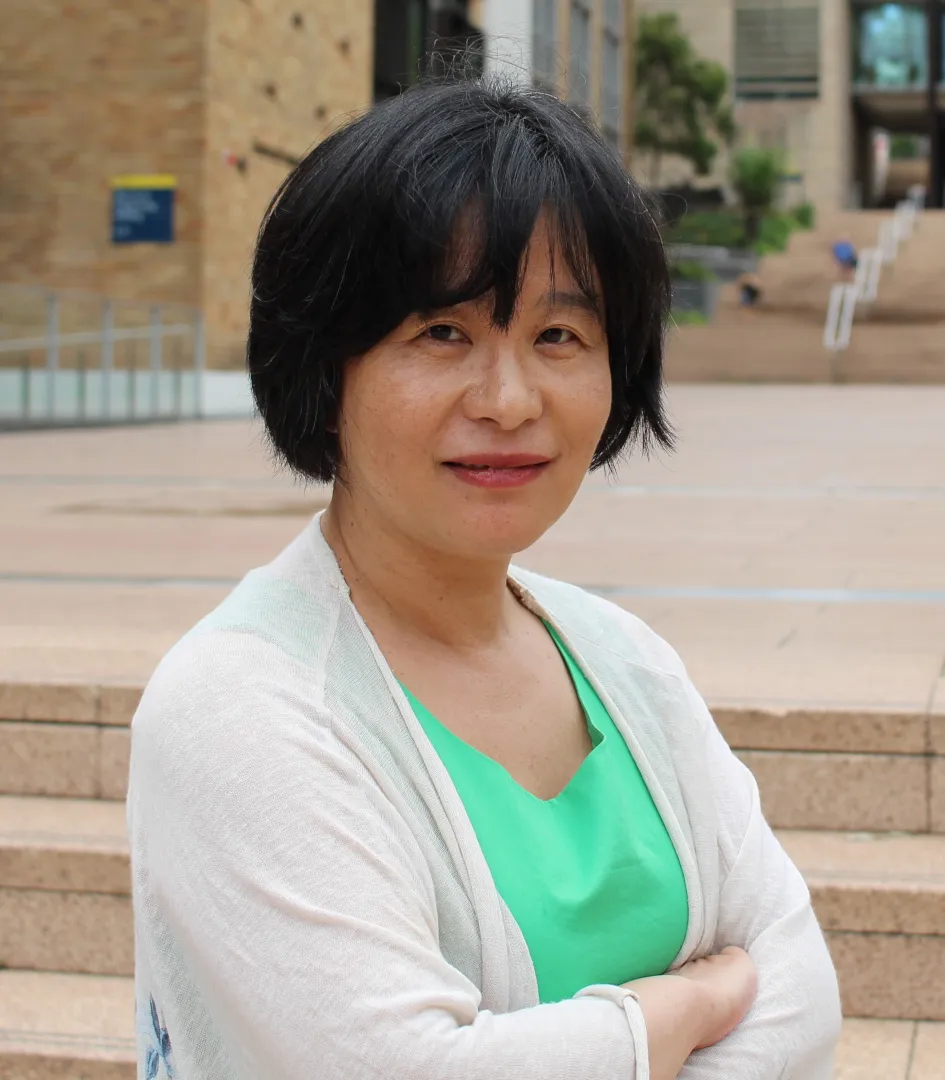
Professor Guangzhao Mao
Head of the School of Engineering | Chair Professor of Materials Engineering
Professor Guangzhao Mao is a leading innovator in nanotechnology and materials engineering, shaping the future of nanomedicine and advanced sensor systems. As Head of the School of Engineering at the University of Edinburgh, she spearheads cutting-edge research that bridges engineering and medicine, unlocking groundbreaking possibilities in drug delivery and nanoscale material applications.
Her pioneering research focuses on two transformative areas:
Electrocrystallization & Nanosensors. Her research unravels the fundamental processes of nucleation and crystal growth in electrodeposition, applying these insights to develop next-generation gas sensors. Her work enhances sensor scalability, with impactful applications in medical diagnostics, environmental monitoring, and industrial automation. Her breakthroughs in integrating nanosensors into larger systems are redefining their real-world potential.
Nanotechnology & Neuroscience. Merging nanotechnology with neuroscience, Mao’s team is developing revolutionary drug delivery systems targeting the central nervous system. Her protein-drug nanoconjugates offer a novel way to bypass the blood-brain barrier (BBB), a long-standing challenge in treating neurological disorders. This innovative approach has already shown promising results in enhancing respiratory function for spinal cord injury, with significant implications for neurodegenerative disease treatments. Her latest advancements include a microfluidic cell-based assay that accelerates drug screening and preclinical evaluations.
Global Recognition & Leadership
Before joining the University of Edinburgh, Professor Mao led as Head of the School of Chemical Engineering at UNSW Sydney, where she continues as an Adjunct Professor. Her global influence is reflected in prestigious accolades, including:✔ Fulbright Senior Scholarship✔ Visiting Professorship at the Max Planck Institute of Colloids and Interfaces✔ Fellow of the American Institute of Chemical Engineers (AIChE)✔ Career Award from the U.S. National Science Foundation
With an impressive track record of driving scientific innovation, Professor Mao continues to push the boundaries of chemical & materials engineering, shaping the next generation of engineering solutions with real-world impact.
B.Sc., Ph.D.
I am an EPSRC Fellow and Chair in Circular Chemical Engineering at the School of Engineering, The University of Edinburgh. My research background is in materials science, with particular focus on separation applications. I have been active in research on separation science since 2008. I am a graduate of Ngee Ann Polytechnic, Singapore, Flinders University, Australia, and The National University of Singapore in various courses ranging from Electronics and Computer Engineering to Nanotechnology to Chemical and Biomolecular Engineering. I have published more than 70 scientific research papers on the use of microporous materials as membranes, adsorbents and nanocomposites for resource recovery, carbon capture, desalination, organic solvent nanofiltration, and pervaporation. My research has been cited more than 7500 times, resulting in a h-index of 47. Since joining the University of Edinburgh, I have also worked on scaling up the production of novel materials via 3D printing and flow synthesis.
- Bachelor of Science in Nanotechnology (2nd Upper Class)
- Ph. D. in Chemical and Biomolecular Engineering
Course Organiser for Polymer Science and Engineering 5 (2019 - 2026)
Course Organiser for Polymers, Sustainability and Manufacturing 3 (2026 - present)
My group is interested in using materials science to achieve solutions that find applications in chemical engineering, particularly in separations.
We specialize in the design and synthesis of porous frameworks using cost-effective commercial materials. These nanomaterials are used for applications including metal recovery, hydrocarbon purification, energy storage, alcohol recovery and dehydration, and water purification. These materials can be deployed as adsorbents or as additives in polymer membranes.
Moving into a new era of membranes, we also use nanotechnology and additive manufacturing to fabricate elegant membrane structures to achieve ultrafast molecular separations that require minimal driving forces during operation.
Our aim is to see deployment of our research in the real-world. The research underpinning this thrust is scale-up production of materials including polymers and additives. We devise new techniques that are suitable for producing cutting-edge materials from the University of Edinburgh and our international collaborators.
- Polymer membrane separations
- Resource recovery and utilisation
- Scale-up production and application of porous frameworks
- Sustainable Chemical Separations
Join our research group
Interested in joining a young research group conducting cutting-edge research at a World Top 50 university? We are always looking for people who shar our passion for science and engineering. Please have a read of the 'Further Information' section below for any current vacancies and PhD projects currently available and contact Dr Tudela-Montes if you want to discuss any potential opportunities.
Bio
Applied Electrochemistry has always been at the core of Dr Ignacio Tudela-Montes' work since his early research days. Whether it was the development of novel sonoelectrochemical methods to remediate polluted drinking water, the manufacture of anode materials for electrochemical processes, the design and optimisation of electrochemical reactors for different applications or the development of novel tribological materials and the evaluation of their corrosion performance in non-conductive oils, Electrochemistry has always been an intrinsic part of his research career.
Dr Tudela-Montes started his research career in April 2007 as part of the former NDTESB Research Group (New Technological Developments in Electrochemistry: Sonoelectrochemistry and Bioelectrochemistry) under the direction of late Dr José González-García at the University of Alicante, Spain, where he was at the core of the research performed on the design and development of electrochemical and sonoelectrochemical processes for different applications.
In June 2011, Dr Tudela-Montes joined Daido Metal – European Technical Centre UK (ETC UK) as a Materials Researcher involved in a Knowledge Transfer Partnership (KTP) project between Coventry University and Daido Industrial Bearings Europe (UK subsidiary of Daido Metal) aiming at the development of novel materials for engine bearing applications. During the KTP he also started his PhD degree, fully sponsored by Daido Metal, which he completed in June 2015. After completing his PhD, he became Senior Materials Researcher at Daido Metal – ETC UK where he led the team responsible for the development of novel material solutions and manufacturing processes for engine bearing and other tribological applications ranging from crankshaft bearings for the automotive industry to large bearings for industrial, power generation and marine engines.
Since July 2018, Dr Tudela-Montes leads research in the area of Electrochemical Engineering as part of the Institute for Materials and Processes within the School of Engineering at the University of Edinburgh. He is also founding lecturer of Electrochemical Engineering within Chemical Engineering, actively driving forward educational and mentoring activities for Chemical Engineering students within the School of Engineering.
PhD in area of Functional Materials - Coventry University (2015) Thesis: Novel Ultrasound-assisted electrodeposited Nickel-based coatings for bearing applications
BEng in Chemical Engineering (equivalent) - University of Alicante (2008)
Royal Society of Chemistry Member - MRSC
Institution of Chemical Engineers Associate Member - AMIChemE
The Electrochemical Society Member
Chemical Engineering (BEng and MEng): - Electrochemical Engineering 5 (CHEE11028) - Course organiser
Advanced Chemical Engineering (MSc): - Electrochemical Engineering MSc (PGEE11177) - Course organiser
Postgraduate Students
Current opportunities - PhD project: Fabrication of electromechanically active electrodes for miniaturised electrochemical devices (self-funded, information about scholarship opportunities below). - PhD project: Ammonia-based ionic liquids for chemical conversion of CO2 (self-funded, information about scholarship opportunities below). - PhD project: Electrochemical preparation of electrocatalysts for the electrochemical conversion of CO2 (self-funded, information about potential scholarship opportunities below).
We are always looking for outstanding prospective students who are interested in conducting a PhD project in our research areas of interest. Self-funded students are welcome to contact Dr Tudela-Montes and discuss potential PhD project topics (information on entry requiremenets, fees and costs is available here). Outstanding applicants with a very strong academic background can also consider applying for one of the several scholarships that may be available for funding PhD studies (please see list with examples below). Exceptional candidates may also be considered for full PhD scholarships from the School of Engineering. - Principal's Career Development PhD Scholarships - Carnegie PhD Scholarships - Perfect Storms: Leverhulme Doctoral Scholarships - Edinburgh Global Research Scholarship (for high quality overseas students only) - China Scholarships Council/University of Edinburgh Scholarships (for Chinese nationals/residents only)
Interational students are also encourage to explore applying for scholarships to conduct PhD studies abroad from their national and regional goverments. Please find below some examples: - CONICYT | Becas de Doctorado - Becas Chile (for Chilean nationals/residents only) - CONACYT | Becas de posgrado en el Extranjero (for Mexican nationals only) - SSMS Scholarchips (for candidates from Punjab/Pakistan only) - La Caixa - Becas para Estudios de Posgrado en Europa (for Spanish nationals only)