
Image
I am an academic and university teacher at the School of Engineering, University of Edinburgh. My expertise lies in structural engineering, sustainability, and advanced technologies with a strong focus on resilience and innovation in civil infrastructure. Throughout my academic career, I have contributed significantly to both teaching and research, leading projects that address contemporary engineering challenges using experimental and computational methodologies. My current research initiatives involve the integration of AI-driven methods for structural health monitoring, sustainable construction materials, and innovative structural solutions aimed at enhancing infrastructure sustainability and resilience.
PgCAP, Academic Practice, University of Edinburgh, UK (2025)
Associate Professorship (Docentlik) by the Interuniversity Council of Turkey (ÜAK) 2013
Associate Professorship by Ministry of Education, Albania (2013)
Ph.D. in Structural Engineering, University Putra Malaysia, Malaysia (2008)
M.Sc. in Structural Engineering, University Putra Malaysia, Malaysia (2002)
B.Sc. in Civil Engineering, University of Gaziantep, Turkey (1998)
Chartered Civil Engineer (CEng), Institution of Civil Engineers (ICE)
Member of the Union of Chambers of Engineers and Architects of Turkey, Chamber of Civil Engineers.
Conceptual Design and Sustainability for Civil Engineers (CDSCE3)
Engineering Principles 1
Behaviour and Design of Structures 2
Prior Academic Teaching Roles
Reinforced Concrete Fundamentals (5) Structural Analysis (5) Structural Mechanics (5) Reinforced Concrete Structures (5) Bridge Engineering (3) Structural Design II (3) Solid Mechanics (4)
Graduate Courses:
Behavior of RC Members and Structures (4)Bridge Assessment (3) Advanced Reinforced Concrete Design (4) Advanced Structural Design (4)
*Number in brackets indicates the number of times the course has been taught.
My research involves experimental and numerical investigations of reinforced concrete structures, earthquake-resistant buildings, and historical masonry structures. I have extensive expertise in the performance assessment of composite precast slab structures, unreinforced masonry buildings, and historical structures under static and dynamic loads. Additionally, I focus on developing innovative composite precast lightweight slabs, advanced assessment and repair techniques for reinforced concrete (RC) buildings and bridges, and masonry structures. My current projects include strengthening techniques for unreinforced masonry structures and studying the effects of anchorage on the axial strength of fiber-reinforced polymer confined rectangular columns. Additionally, my recent research involves bridge inspection using Retrieval-Augmented Generation (RAG) and knowledge graphs for structural health monitoring, as well as the development of sustainable low-carbon bricks utilizing water-based polymeric binders and recycled aggregates.
Sam is currently the Programme Director for the MSc in Digital Design and Manufacture, as well as Deputy Director of Students for all PGT students in the School of Engineering.
He is course organiser for two courses:
and supervisesr BEng, MEng and MSc projects.
I joined the University of Edinburgh (UoE) in 2021 as a Senior Lecturer in Chemical Engineering. I studied chemical engineering at the Nanjing University of Technology, obtaining a BEng with Highest Distinction in 2003 and PhD in 2008. In the last year of my PhD, my first employment started at The University of Hong Kong (Department of Chemistry). The next position was at the Ludwig-Maximilians-Universität München (Department of Physics) from 2010 to 2013 a. Early 2013, I moved to the University of Liverpool (Department of Physics) and assisted to set up a new research group. Before I joined UoE, I had a four-month spell working in the National Graphene Institute, University of Manchester, and five-year experience as Lecturer in Chemical Engineering, Aston University.
2016 Postgraduate Certificate in Learning and Teaching for Higher Education in the UK. 2003-2008 Nanjing University of Technology (NJUT), PhD in Chemical Engineering. 1999-2003 NJUT, BEng (1st Honours) in Chemical Engineering.
IChemE, RSC, EPSRC Associate Peer Review College
Chemical Engineering Design 4 (CHEE10010) - Course Organiser
Supervising students' projects in various chemical engineering courses: Study Project 4, Research Project 5, etc.
1. Over 10 years’ expertise in nanomaterials, photocatalysis, greenhouse gas removal, reaction engineering, electrochemistry and physical chemistry. 2. Extensive practices on preparation and characterization of nanomaterials, design and evaluation of photocatalytic reactions/photoreactors, antimicrobial properties of nanomaterials. 3. Leading multidisciplinary projects involving both academic and industral resources, comprehensive collaboration and interpersonal skills in a team environment. 4. Skills in electron microscopy, time-resolved spectroscopy, thermal analysis, chromatography, atomic force microscopy, X-ray crystallography and synchrotron radiation spectroscopy
Professor in the Institute for Energy Systems and Mechanical Engineering Discipline, School of Engineering, University of Edinburgh. Models and designs powertrains and generators for offshore wind turbines.
PhD in "Structural analysis of low speed, high torque electrical generators for direct drive renewable energy converters" from Edinburgh (2004-2008). This started me looking at the integrated electrical-magnetic-mechanical modelling and design of large electrical machines for offshore renewable energy.
During my PhD, I started work on a double-sided air-cored permanent magnet machine concept called "C-Gen". Ultimately this lead to a formation and spin-out of a company called NGenTec, where as a founder I worked as Chief Engineer, helping to develop linear, radial-flux and axial-flux variants.
In 2012, I returned to academia, as a lecturer in Wind Turbine Technology in the Department of Electronic and Electrical Engineer at the University of Strathclyde. Based in the EPSRC CDT in Wind Energy Systems, over the following years I was promoted to Senior Lecturer and then Reader in Wind Turbine Technology. During those years I developed interests in wind turbine powertrain modelling, design, optimisation, reliability and condition monitoring, always asking what technology will give the lowest cost of energy for offshore renewables.
In 2021, I rejoined Edinburgh, where I work in Electrical Power Conversion group as applied to Wind Energy and Offshore Renewable Energy.
My career publications can be found here (please scroll down to the very bottom to see the ones that no one has read) and my EPSRC-funded projects are here (email me for the long list of those that didn't get funded).
PhD, University of Edinburgh, 2008
MEng (Hons) in Integrated Electrical & Mechanical Engineering, University of Durham, 2004
Member of the Institution for Engineering Technology (IET), CEng
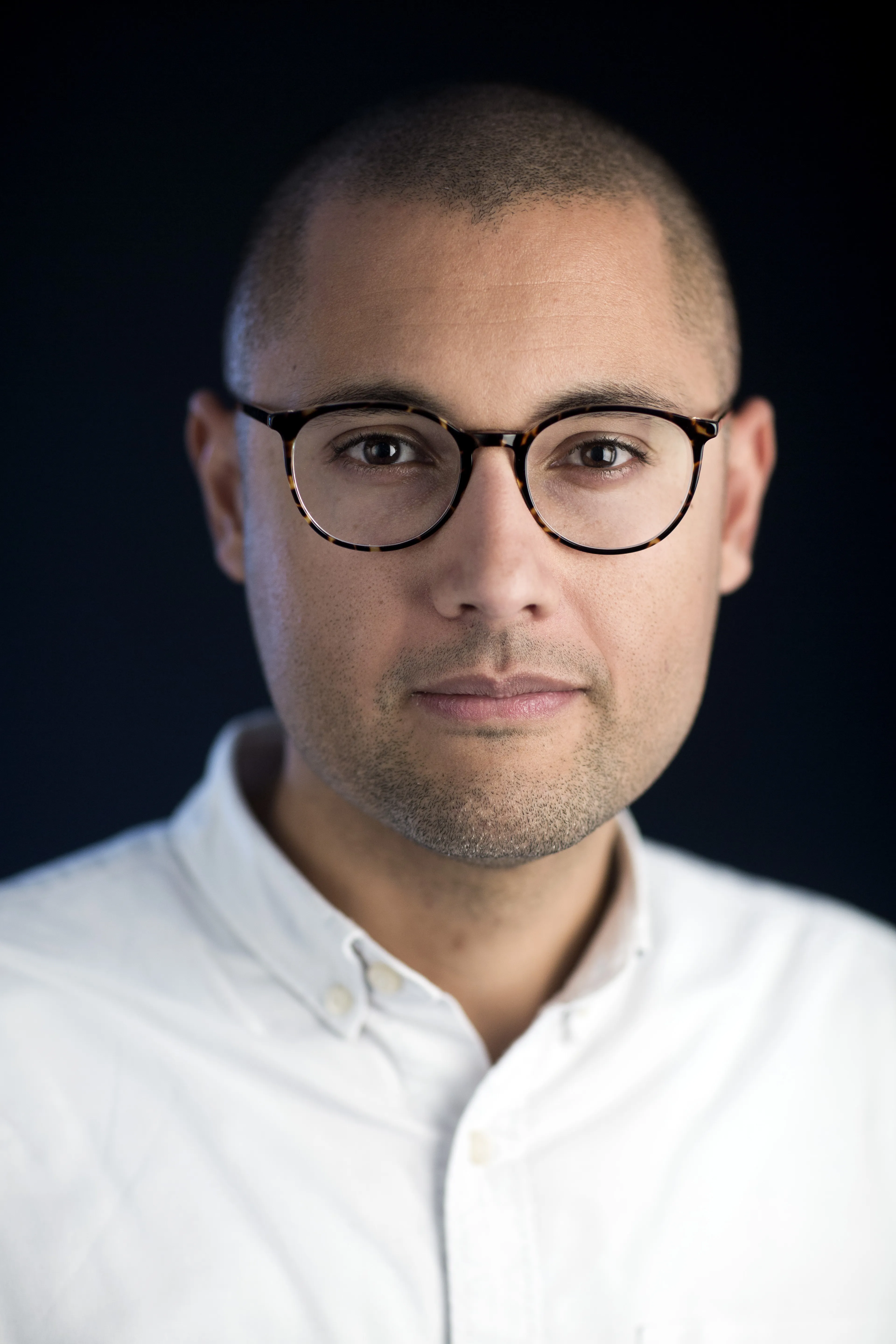
Dr Dias obtained his bachelor’s in physics at the State University of São Paulo, Brazil. Four years later, he commenced a MSc in theoretical physics from his alma mater. In 2012, he obtained his PhD degree from the University of Massachusetts, USA, where he researched on the mechanics of origami structures and growth mechanisms. Dr Dias has worked as a researcher on a broad range of topics in structural engineering and applied mathematics at Brown University School of Engineering (USA), Aalto University (Finland), and the Nordic Institute for Theoretical Physics at KTH (Sweden). Before joining the University of Edinburgh, Dr Dias was an Associate Professor of mechanical engineering at Aarhus University in Denmark, where he lead his research group 'Mechanical Metamaterials and Soft Matter’.