
Image
I am an EPSRC Fellow and Chair in Circular Chemical Engineering at the School of Engineering, The University of Edinburgh. My research background is in materials science, with particular focus on separation applications. I have been active in research on separation science since 2008. I am a graduate of Ngee Ann Polytechnic, Singapore, Flinders University, Australia, and The National University of Singapore in various courses ranging from Electronics and Computer Engineering to Nanotechnology to Chemical and Biomolecular Engineering. I have published more than 70 scientific research papers on the use of microporous materials as membranes, adsorbents and nanocomposites for resource recovery, carbon capture, desalination, organic solvent nanofiltration, and pervaporation. My research has been cited more than 7500 times, resulting in a h-index of 47. Since joining the University of Edinburgh, I have also worked on scaling up the production of novel materials via 3D printing and flow synthesis.
Course Organiser for Polymer Science and Engineering 5 (2019 - 2026)
Course Organiser for Polymers, Sustainability and Manufacturing 3 (2026 - present)
My group is interested in using materials science to achieve solutions that find applications in chemical engineering, particularly in separations.
We specialize in the design and synthesis of porous frameworks using cost-effective commercial materials. These nanomaterials are used for applications including metal recovery, hydrocarbon purification, energy storage, alcohol recovery and dehydration, and water purification. These materials can be deployed as adsorbents or as additives in polymer membranes.
Moving into a new era of membranes, we also use nanotechnology and additive manufacturing to fabricate elegant membrane structures to achieve ultrafast molecular separations that require minimal driving forces during operation.
Our aim is to see deployment of our research in the real-world. The research underpinning this thrust is scale-up production of materials including polymers and additives. We devise new techniques that are suitable for producing cutting-edge materials from the University of Edinburgh and our international collaborators.
Dr Chang Liu received the B.Sc. degree in automation from Tianjin University, China, in 2010, and the Ph.D. degree in testing, measurement technology and instrument in Beihang University, China, in 2016. From April 2016 to January 2018, he was a postdoctoral researcher in the department of air pollution and environmental technology, Empa-Swiss Federal Laboratories for Materials Science and Technology (ETH Domain), Dübendorf, Switzerland. He is now a Senior Lecturer in the Agile Tomography Group at the School of Engineering, University of Edinburgh.
Dr Liu’s current research interests include laser spectroscopy, laser imaging, data-driven imaging techniques and their applications to reacting flow-fields diagnostics and environmental monitoring. His expertise is in design of near/mid infrared LAS sensing systems, and development of high-sensitivity and data-driven laser imaging methodologies. It covers fundamental spectroscopic modeling, inverse problem solving, machine learning, hardware acceleration, signal processing and embedded system. In collaboration with worldwide industrial and academic partners, Dr Liu and his team focus on providing cutting-edge laser-based sensing solutions for various challenging problems in both the industry and academia.
Ph.D. scholarships
Information on funding opportunities and tuition fees can be found here.
Postdoctoral Research Associate (PDRA)
I am an Electrical Engineer interested in the fitting electromagnetic data to their respective models in the context of tomographic image reconstruction and model parameter estimation. I was educated in the UK and held research positions at School of Maths at the Univeristy of Manchester, the Lab for Information and Decision Systems at MIT and the Energy, Environment and Water Research Centre of the Cyprus Institute. In Edinburgh I lead the Agile Tomography Group that specialises in low-frequency electromagnetic simulation and tomographic image reconstruction, as well as chemical species tomography from spectroscopic measurements of light in the near infrared regime.
My research is in the realm of applied inverse problems and this usually entails, in some proportion: mathematical modelling, signal processing, statistical estimation and optimisation algorithms. As of 2016 I am also a faculty fellow at newly established Alan Turing Institute, which perhaps also qualifies me as a data scientist. My research is relevant to applications of electromagnetic imaging in geophysical exploration, industrial process tomography, biomedical imaging and non-destructive testing of materials and structures. In particular, I am interested in computational approaches suitable for large-scale pde models for static and low-frequency electromagnetic fields and algorithms that process these models along with measurements in the quest to image the electromagnetic properties of a domain of interest.
Nick Polydorides
(Office: 2.10 Alexander Graham Bell)
I am a member of IEEE Signal Processing and SIAM Imaging societies.
I am involved at the teaching of Engineering Mathematics 2A which involves mostly Laplace and Fourier series solutions of ordinary differential equations, which are essential elements of signal processing and understanding physical phenomena such as the propagation of sound, heat diffusion etc. I also take great pleasure from teaching the vector calculus and integration course in Engineering Mathematics 2B as it provides a good deal of insight to may of the physical phenomena us engineers need to understand. As for a teaching philosophy, I see myself standing in between the knowledge and the students, and although I cannot take the one to the other, I see my role as trying to make the distance look smaller.
Other than electromagnetics I have developed an interest in fluid-structure interaction models. This typically leads to a cluster of mechnical inverse problems relevant to the offshore energy exploration with towed arrays.
I am constantly looking to hire talented students who want to pursue a PhD because they want to make an impact to a certain application. If you have a numerate background and an appropriate course average from your BEng, BSc or MSc then I would like to hear from you at the email address above. Opportunities may also arise in the context of the Alan Turing Institute if your proposed theme falls within the so-called 'data-centric engineering'.
Since 2012, I have held a Personal Chair in Electrical Generation Systems at the University of Edinburgh, having been appointed as a lecturer in 2004. In 2023 I was awarded a Royal Academy of Engineering Chair in Emerging Technologies to investigate new high power density high temperature superconducting machines for net-zero energy and transport applications. From 2014 to 2018, I led a group of 26 academics as Head of the Institute for Energy Systems, and I am now co-leading Energy@Edinburgh, a cross university community of 200+ academics and researchers focussing on energy systems. I have supported 25 PhD students to successful graduation as principal supervisor, and supervised 18 PDRAs. My PhDs and PDRAs continue to work in electrical power engineering in both academia and industry.
My research focusses on electrical generators for renewable energy converters, and the development of hybrid energy systems integrating renewables and energy storage for on and off-grid use. Since 1997 I have been awarded £13m in grant funding, 75% as PI, from various sources: Royal Academy of Engineering, EPSRC, Innovate UK, The Carbon Trust, Scottish Enterprise, Wave Energy Scotland, Scottish Government, EU FP6, FP7, H2020 and ERDF, as well as direct industrial funding. As well as being part of consortia in EU grants working with eg. TU Delft, NTNU, Cork University, RWTH Aachen, Tecnalia, Fraunhofer Wind, I have also led consortia – eg. EPSRC EDRIVE (£1m)– 2 universities and 4 industrial partners; Wave Energy Scotland Project Neptune (£2.5m) – 2 universities and 7 industrial partners. Between 2010 and 2016 I led a Scottish Knowledge Exchange network, RENEW-NET, with 5 academic partners securing £1m of funding from Scottish Enterprise, Scottish Gov and ERDF, providing technical support in electrical machines and power electronics to over 100 SMEs, with 30 receiving detailed support securing jobs, new contracts and further grant funding based on our support.
I work very closely with industry, and in some cases my team has designed and built C-GEN generators for use in pre-commercial devices: eg. Mocean Energy – 10kW generator installed in their Blue-X wave device tested at sea in 2021/22; Swift Energy – 16kW generator for vertical axis wind turbine; Ladco – 6 kW generator for wind turbine tested at Arbroath; Hydrokinetic Power Generation – 25 kW generator for a tidal device to be tested in Bordeaux in 2023
My research has been widely published in top ranked journals such as IEEE, IET, IMechE and IoP. To date I have 258 journal and conference publications, and my h-index is 38 with 6294 citations, 2887 since 2017 (Google Scholar). As well as papers I co-edited the book “Electrical Drives for Direct Drive Renewable Energy Systems” (Woodhead Publishing with Prof Henk Polinder at TU Delft, and have been awarded 3 patents. Most of my articles are in top ranked journals published by IEEE, IMechE, IET and IoP. In 2006 I was awarded the Donald Julius Groen Prize by the IMechE with my former PhD student Dr. Nick Baker, now a Reader at Newcastle University. My PhD student’s work was recognised with best conference paper prizes at the IEEE IEMDC Conference in 2010. In 2017 I was co-author on a paper awarded the Thomas L Fagan Jr RAMS award for the best paper at the Reliability & Maintainability Symposium held in Florida. I was part of team of 7 partners in an EU FP7 project led by NaREC (now the Offshore Renewable Energy Catapult) entitled SNAPPER involving the design and system modelling of a novel linear generator for wave energy won the Engineer Magazine Innovation Award Marine Category in 2012, and was a finalist in the IET Innovation Awards in 2012.
In 2009 I spun out NGenTec Ltd to commercialise the C-GEN technology for offshore wind, originally funded by Scottish Enterprise with £0.5m. NGenTec raised £7m from private and public sources leading to employment of 20 staff. In 2013 the university re-purchased the IP to enable me to develop C-GEN for a wider range of renewable energy applications. Since then we have sold pre-commercial demonstrators to Mocean Energy, Swift Energy, HydroKinetic Power Generation, and are undertaking design studies for other companies in, USA, Australia, Ireland, Sweden and Norway. More details on the C-GEN technology can be found at www.cgen.eng.ed.ac.uk.
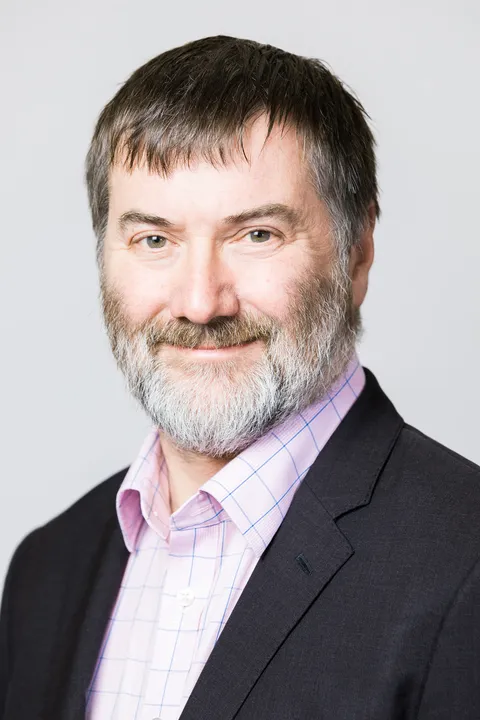
David was awarded a personal chair in Computational Fluid Dynamics by the Court of the University of Edinburgh in June 2009, following his appointment as a Reader in the Institute for Energy Systems in April 2006. He is currently the Director of Diversity & Inclusion in the School of Engineering and, since July 2011 has been Director of the Industrial Doctoral Centre for Offshore Renewable Energy (IDCORE). Previously he was the Schools Director of Discipline for Engineering Mathematics, Director of Research and the Head of the Engineering Graduate School. He joined IES from Manchester Metropolitan University (MMU) where he was Reader in Scientific Computation in the Department of Computing and Mathematics. He joined MMU as lecturer in Mathematics (specialising in Numerical Analysis) following the completion of his PhD in 1992.
David is currently Research Director of the UK Centre for Marine Energy Research (EP/P008682/1, EP/M014738/1 & EP/I027912/1), a £5.3M, interdisciplinary, challenge led, collaborative research programme funded under the RCUK SuperGen programme that coordinates the research work of more than 100 academic and research staff across 25 UK Universities in both the wave and tidal energy sectors.
David is Director of the Industrial Doctoral Centre for Offshore Renewable Energy (EP/J500847/1), a £6.5M CDT that is training 66 EngD students from 2012-2022. IDCORE is funded by the ETI and the RCUK Energy programme and is run by a consortium of the Universities of Edinburgh, Exeter and Strathclyde, together with the Scottish Association for Marine Science and HR-Wallingford. It will be succeeded by the recently announced Industrial CDT in Offshore Renewable Energy (EP/S023933/1), funded by EPSRC and NERC, which will train an additional 50 EngD students.
He is an active member of RealTide (H2020-727689) project. He was part of the management teams for the WETFEET (H2020-641334), PolyWEC (FP7-309139), MARINA Platform (FP7-241402) and TROPOS (FP7-288192). He coordinated EquiMar (FP7-213380), a 22-partner project that developed protocols for the equitable evaluation of offshore renewable devices.
He was one of three investigators who secured £6M funding from the EPSRC to design build FloWave the worlds first, circular, combined wave and current test basin. He is presently the facility Director and recently led a submission to EPSRC’s Statements of Need for Medium Scale Research Facilities to bring together facilities in Edinburgh, Glasgow and Plymouth to form the National Renewable Energy Laboratory.
Since 1990, he has raised over £3M in research funding for his own University.
David is a member of the Mechanical Engineering discipline and is the Course Organiser for Computational Fluid Dynamics 5 and teaches on Partial Differential Equations 3.
He is also the Course Organiser for Engineering Mathematics 2A - teaching mathematical methods for the solution of higher order Ordinary Differential Equations and introducing Partial Differential Equations
David also teaches on the IDCORE programme and on the CDT in Wind and Marine Energy Systems.

I am an academic in composite materials technology with a particular interest in the development of lightweight structures to reduce the carbon footprint of transport industries such as aerospace and automotive. My current research line focuses on digital design of materials and the accelerated development of composite products with improved impact performance. I have interest in emerging manufacturing technologies such as 3D printing, automated fibre placement and low-cost compression moulding. My strategy is based on a coupled multiscale experimental and numerical approach to determine the role of the microstructure in the catastrophic failure of a component. Multiscale numerical techniques are also employed for design purposes, tailoring microstructural features such as fibre orientation and volume, to enhance ductility and strength.
Sean is Professor of Future Construction and Director of Centre for Future Infrastructure, within the School of Engineering at the University of Edinburgh. He joined the University in June, 2020. He is a Fellow of the Institute of Acoustics, Fellow of the RSA and is an Honorary Fellow of RIAS.
From 1988 to 1992 he studied at Heriot-Watt University (BSc Building Economics & QS) and worked with Costain civil engineering on the Newport Bypass and Conwy submerged tunnel project. In 1992 he commenced an EPSRC funded PhD investigating complex vibration analysis for timber frame buildings using statistical energy analysis. The complex mathematical models were then applied to other structures and he took up a research associate post for 3 years jointly funded by EPSRC and Defence Evaluation Research Agency (DERA) investigating sound and vibration in rotary and fixed wing aircraft. Between 1994-99 he was an invited guest scientist at the government construction research laboratories in Canada (NRC), Italy (IENGF) and Germany (PTB). During his time in Italy and Germany he also led research into medical acoustics and the potential positive impact of sound and vibration stimuli on respiratory-cardio function for preterm infants, published in International Journal of Prenatal & Neonatal Medicine. In 2001 he joined RMP Acoustics and Napier University and was deputy director of the Building Performance Centre.
In 2002-04 he led the technical development of robust details for sound insulation for Part E of the building regulations, a complex project involving the design and construction of 1,400 new homes over 9 months with innovative acoustic engineering solutions. This led to a white paper before the UK Parliament published by Office of the Deputy Prime Minister. The designs, termed robust details for Part E regulations, have now been utilised in over 1 million UK homes and led to significant improvement in sound insulation and quality of life for home occupants.
From 2010 to 2020 he was Director of the Institute for Sustainable Construction managing 5 research centres involving offsite construction, energy, timber engineering, wood science technologies and noise & vibration. He was a founding member and led the UK consortia for the EU Cost Action (TU0901) involving 32 countries investigating future harmonisation of standards related to ISO 717. In 2009-2013 he led the Low Carbon Building Technologies Gateway applied research team, supporting with his colleagues over 200 new construction products and systems. He led the government review of the Scottish Offsite construction sector in 2012 and initiated the 11 universities partnership with industry to form the Construction Scotland Innovation Centre (CSIC). He led the £6M Housing, Construction & Infrastructure (HCI) Skills Gateway for Edinburgh & SE Scotland City Region Deal to support inclusive growth and future skills for construction, engineering and infrastructure. He has been an advisor to CEN and ISO committees and formed research networks with 40+ countries.
Key awards and nominations for the positive impact of applied research for industry, society and the environment include: Queens Anniversary Prize 2015, Queens Anniversary Prize 2009, Hon Fellowship of Royal Incorporation of Architects in Scotland, UK CIAT Centre of Excellence, Shortlisted for UK KTP of the Year 2013, First Proof of Concept for Construction (Scottish Enterprise) and over 40 project awards or nominations for industry joint projects including nominations for Housebuilding Product of the Year 2010, 2011, 2013.
His PhD supervision projects have included complex sound transmission in buildings, new refugee shelter designs and approaches, offsite construction, NDT of forest products to maximise engineering outcomes, design of new storm surge protection schemes developing the DAMMS framework and new resilient hanger solutions. His current research fields include resilience and infrastructure for coastal protection, large scale modular infrastructure approaches and ‘Horizon Net-Zero Carbon’.
He has led and co-invented 17 patented innovative construction products involving a range of companies including solutions for brownfield site substructure solutions, energy efficiency, structural enhancement for timber engineered systems and acoustic performance.
In 2018 he chaired the Scottish government working group on Future New Housing Construction Skills with the government report published in 2019 and recommendations were adopted in Programme for Government 2020. In 2020 he also contributed to the Scottish Construction Recovery Plan.
He currently serves on the Timber & Forest Industries Leadership Group (ILG), Construction Scotland (ILG) Skills Group, CSIC Innovation Champion and serves on a range of external committees and boards involved in innovation, construction regulatory compliance, housing, infrastructure and skills.
Published outputs and knowledge transfer activities include: 5 books involving sound insulation in structures, housing, technical standards and guidance documents; 9 government reports for 7 different UK/Scottish government departments, over 80 presentations to industry and government bodies, over 70 journal and invited conference publications.
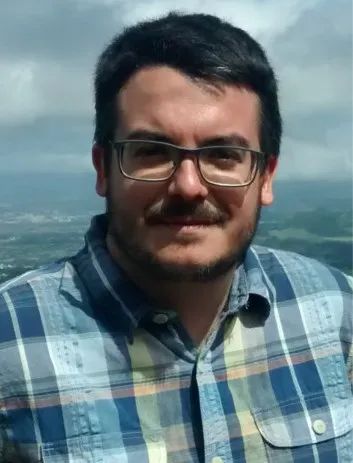
Interested in joining a young research group conducting cutting-edge research at a World Top 50 university? We are always looking for people who shar our passion for science and engineering. Please have a read of the 'Further Information' section below for any current vacancies and PhD projects currently available and contact Dr Tudela-Montes if you want to discuss any potential opportunities.
Applied Electrochemistry has always been at the core of Dr Ignacio Tudela-Montes' work since his early research days. Whether it was the development of novel sonoelectrochemical methods to remediate polluted drinking water, the manufacture of anode materials for electrochemical processes, the design and optimisation of electrochemical reactors for different applications or the development of novel tribological materials and the evaluation of their corrosion performance in non-conductive oils, Electrochemistry has always been an intrinsic part of his research career.
Dr Tudela-Montes started his research career in April 2007 as part of the former NDTESB Research Group (New Technological Developments in Electrochemistry: Sonoelectrochemistry and Bioelectrochemistry) under the direction of late Dr José González-García at the University of Alicante, Spain, where he was at the core of the research performed on the design and development of electrochemical and sonoelectrochemical processes for different applications.
In June 2011, Dr Tudela-Montes joined Daido Metal – European Technical Centre UK (ETC UK) as a Materials Researcher involved in a Knowledge Transfer Partnership (KTP) project between Coventry University and Daido Industrial Bearings Europe (UK subsidiary of Daido Metal) aiming at the development of novel materials for engine bearing applications. During the KTP he also started his PhD degree, fully sponsored by Daido Metal, which he completed in June 2015. After completing his PhD, he became Senior Materials Researcher at Daido Metal – ETC UK where he led the team responsible for the development of novel material solutions and manufacturing processes for engine bearing and other tribological applications ranging from crankshaft bearings for the automotive industry to large bearings for industrial, power generation and marine engines.
Since July 2018, Dr Tudela-Montes leads research in the area of Electrochemical Engineering as part of the Institute for Materials and Processes within the School of Engineering at the University of Edinburgh. He is also founding lecturer of Electrochemical Engineering within Chemical Engineering, actively driving forward educational and mentoring activities for Chemical Engineering students within the School of Engineering.
PhD in area of Functional Materials - Coventry University (2015) Thesis: Novel Ultrasound-assisted electrodeposited Nickel-based coatings for bearing applications
BEng in Chemical Engineering (equivalent) - University of Alicante (2008)
Royal Society of Chemistry Member - MRSC
Institution of Chemical Engineers Associate Member - AMIChemE
The Electrochemical Society Member
Chemical Engineering (BEng and MEng): - Electrochemical Engineering 5 (CHEE11028) - Course organiser
Advanced Chemical Engineering (MSc): - Electrochemical Engineering MSc (PGEE11177) - Course organiser
Current opportunities - PhD project: Fabrication of electromechanically active electrodes for miniaturised electrochemical devices (self-funded, information about scholarship opportunities below). - PhD project: Ammonia-based ionic liquids for chemical conversion of CO2 (self-funded, information about scholarship opportunities below). - PhD project: Electrochemical preparation of electrocatalysts for the electrochemical conversion of CO2 (self-funded, information about potential scholarship opportunities below).
We are always looking for outstanding prospective students who are interested in conducting a PhD project in our research areas of interest. Self-funded students are welcome to contact Dr Tudela-Montes and discuss potential PhD project topics (information on entry requiremenets, fees and costs is available here). Outstanding applicants with a very strong academic background can also consider applying for one of the several scholarships that may be available for funding PhD studies (please see list with examples below). Exceptional candidates may also be considered for full PhD scholarships from the School of Engineering. - Principal's Career Development PhD Scholarships - Carnegie PhD Scholarships - Perfect Storms: Leverhulme Doctoral Scholarships - Edinburgh Global Research Scholarship (for high quality overseas students only) - China Scholarships Council/University of Edinburgh Scholarships (for Chinese nationals/residents only)
Interational students are also encourage to explore applying for scholarships to conduct PhD studies abroad from their national and regional goverments. Please find below some examples: - CONICYT | Becas de Doctorado - Becas Chile (for Chilean nationals/residents only) - CONACYT | Becas de posgrado en el Extranjero (for Mexican nationals only) - SSMS Scholarchips (for candidates from Punjab/Pakistan only) - La Caixa - Becas para Estudios de Posgrado en Europa (for Spanish nationals only)
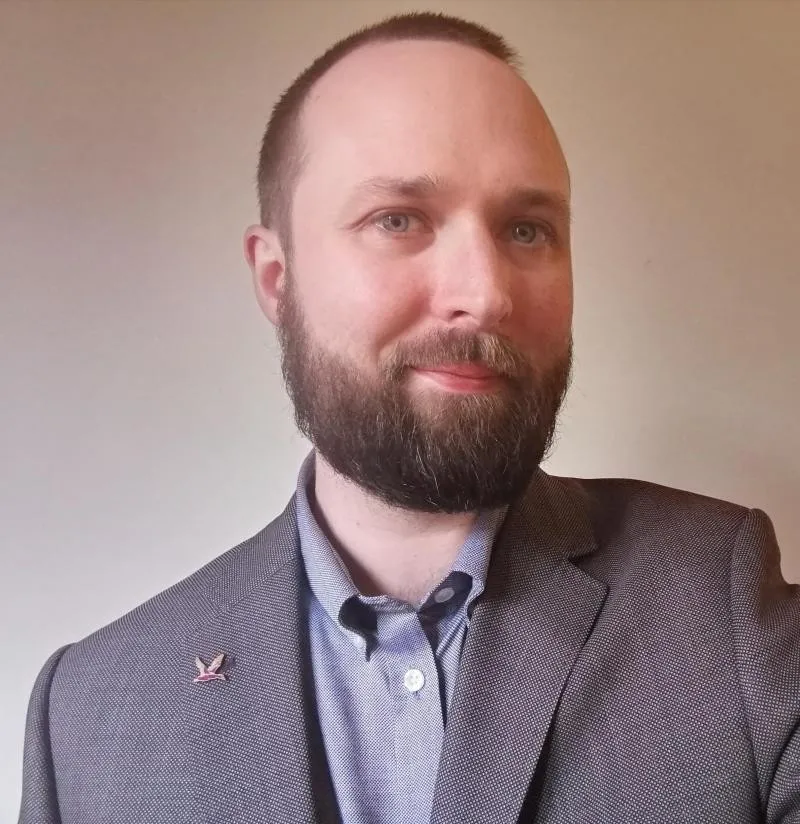
I completed my PhD in 2016 under the supervision of Prof. Tim Green in the Control & Power research group, Imperial College London, with a thesis titled 'Power Converter Design for HVDC Applications', for which I was awarded the departmental Eryl Cadwaladr Davies Prize for best doctoral thesis submitted in the academic year.
I have 28 published research papers (12 of which in IEEE Journals, 1 in an IET Journal, and three of which are co-authored with industry partners) on various topics relating to HVDC converters, such as optimised design of modular converter topologies, design of modular converters to enable short-term dynamic overload capabilities, power-loss and thermal modelling of semiconductor devices, hybrid converter topologies using mixed semiconductor technologies (IGBT and thyristor), and the design of converters with integrated energy storage. My paper to the 2018 IEEE Transactions on Power Delivery HVDC special issue was awarded the best paper award for the issue and also included as one of three papers on the journals 'papers received favourable reviews' list that year.
PhD - Electrical Engineering - Imperial College London - 2016
BEng (Hons) First Class - Electrical Engineering - University College Dublin - 2012
Member of IEEE and CIGRE