Image
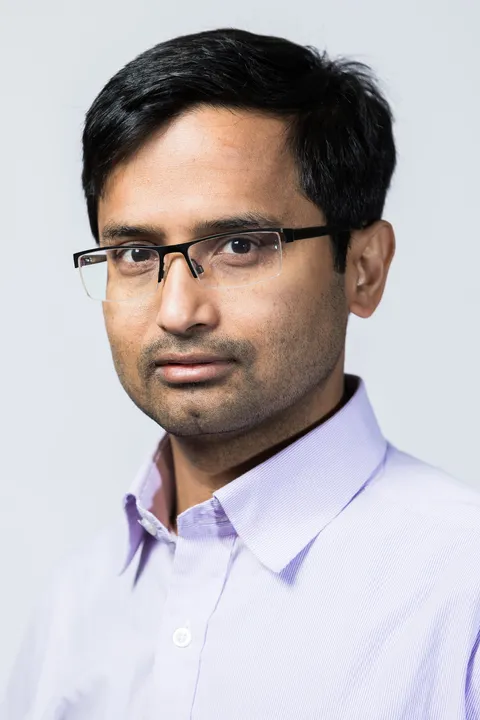
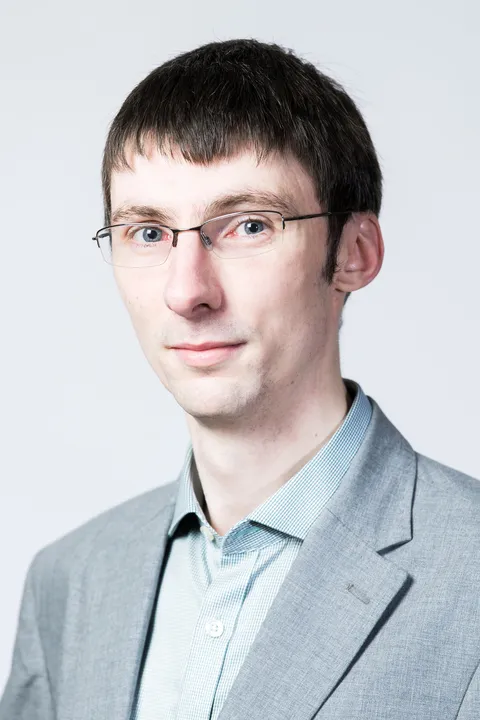
Srinjoy Mitra received his B.S. degree in physics and electronics from Calcutta, India and his M.Tech. degree from the Indian Institute of Technology, Bombay, India. After spending a short time in the electronics industry (in India and Japan), he received his Ph.D. from the Institute of Neuroinformatics, ETH Zurich in 2004. Between 2008 and 2010 he worked as a post-doctoral researcher at Johns Hopkins University, Baltimore, USA.
He then joined the medical electronics team at IMEC, Belgium and worked there as a senior scientist until early 2016. At IMEC, he took up leadership roles in various industrial and publicly funded projects primarily related to ambulatory medical devices (EEG, ECG etc.). He led multiple projects on neural implants for central and peripheral nervous systems. Prof Mitra returned to academia as a Lecturer at the University of Glasgow. In 2017 he moved to the Integrated Micro and Nano Systems, University of Edinburgh.
Prof Mitra has two parallel research tracks.
His technological research interests are in low-power sensor interfaces, medical/neural electronics, neuromorphic systems. Dr Mitra is the Program Director for the MSc in Sensors and Imaging System. He is also a founding member of Edinburgh Neuroprosthetics Lab.
He is also deeply interested in technological innovation, its global implications, and its pedagogy. This includes a critical analysis of the relentless growth of digital technologies and their impact on the planet and people, both historically and in the future. He was the convenor of the Decolonisation Working Group in the College of Science and Engineering. Read recent papers on these topics here [1],[2],[3],[4],[5],[6].


Head of the School of Engineering | Chair Professor of Materials Engineering
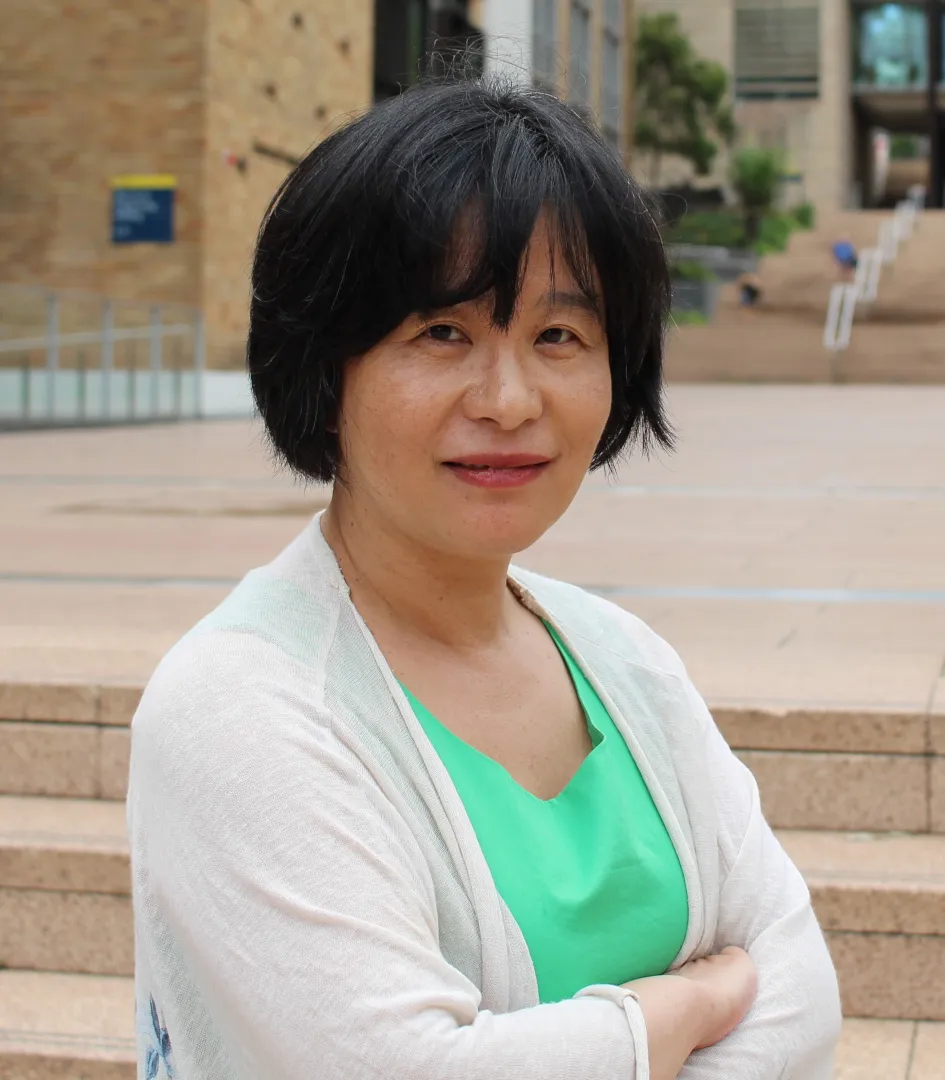
Professor Guangzhao Mao is a leading innovator in nanotechnology and materials engineering, shaping the future of nanomedicine and advanced sensor systems. As Head of the School of Engineering at the University of Edinburgh, she spearheads cutting-edge research that bridges engineering and medicine, unlocking groundbreaking possibilities in drug delivery and nanoscale material applications.
Her pioneering research focuses on two transformative areas:
Electrocrystallization & Nanosensors. Her research unravels the fundamental processes of nucleation and crystal growth in electrodeposition, applying these insights to develop next-generation gas sensors. Her work enhances sensor scalability, with impactful applications in medical diagnostics, environmental monitoring, and industrial automation. Her breakthroughs in integrating nanosensors into larger systems are redefining their real-world potential.
Nanotechnology & Neuroscience. Merging nanotechnology with neuroscience, Mao’s team is developing revolutionary drug delivery systems targeting the central nervous system. Her protein-drug nanoconjugates offer a novel way to bypass the blood-brain barrier (BBB), a long-standing challenge in treating neurological disorders. This innovative approach has already shown promising results in enhancing respiratory function for spinal cord injury, with significant implications for neurodegenerative disease treatments. Her latest advancements include a microfluidic cell-based assay that accelerates drug screening and preclinical evaluations.
Before joining the University of Edinburgh, Professor Mao led as Head of the School of Chemical Engineering at UNSW Sydney, where she continues as an Adjunct Professor. Her global influence is reflected in prestigious accolades, including:✔ Fulbright Senior Scholarship✔ Visiting Professorship at the Max Planck Institute of Colloids and Interfaces✔ Fellow of the American Institute of Chemical Engineers (AIChE)✔ Career Award from the U.S. National Science Foundation
With an impressive track record of driving scientific innovation, Professor Mao continues to push the boundaries of chemical & materials engineering, shaping the next generation of engineering solutions with real-world impact.
B.Sc., Ph.D.
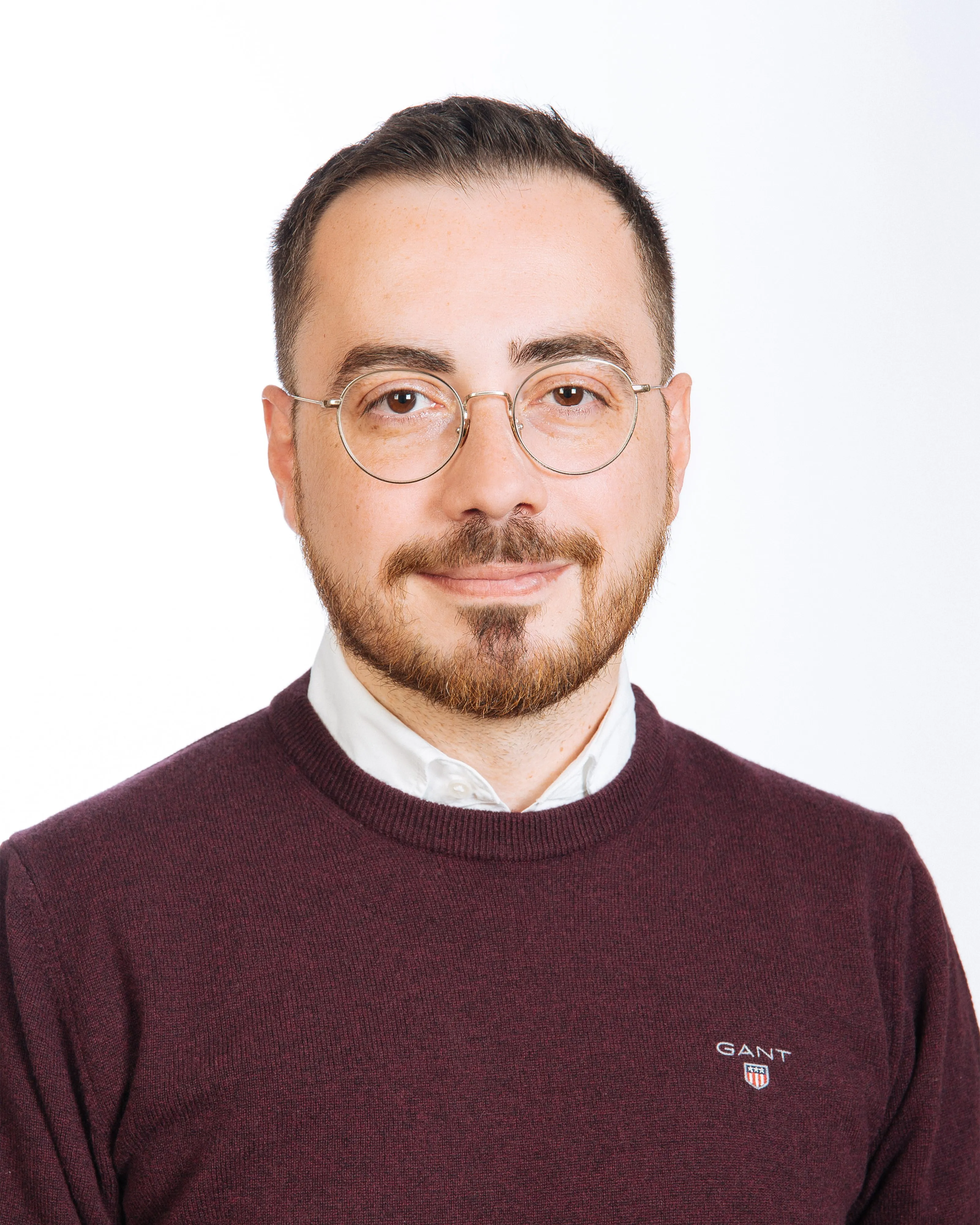
Dr Pavlos Tafidis is a Lecturer in Transport (Systems) Engineering at The School of Engineering, The University of Edinburgh. His work integrates various disciplines, enhancing his comprehensive approach to transport planning and engineering. He led the "BikeHood" project, supported by the Science Foundation of Ireland, which focused on developing Ireland's first cycling neighborhood. This initiative actively engaged communities in the design process, utilizing advanced technologies such as digital twins and virtual reality.
He has been involved in numerous national and international research projects that concentrate on smart and sustainable mobility, including the "REALLOCATE" project, supported by the Horizon 2020 framework, and "CISMOB", funded by Interreg Europe. His current research is dedicated to empowering citizens by developing accessible and inclusive mobility solutions. Through his work, he aims to provide equitable transport infrastructure that enhances urban livability and ensures sustainability for all.
PhD in Transport Engineering | Hasselt University (2022)
M.Sc in Transport Planning | Aristotle University of Thessaloniki (2015)
M.Eng in Transportation | Aristotle University of Thessaloniki (2013)
Member of the Technical Chamber of Greece
Member of the Association of Transportation Engineers of Greece
(CIVE10033) Transport Engineering 3
Role: Course Organizer
Programme: BEng/MEng Civil Engineering | School of Engineering
Years: 2024–present
(EFIE11345) Transport and Society
Role: Course Organizer
Programme: MSc Future Infrastructure, Sustainability and Climate Change | Edinburgh Future Institute
Years: 2024–present
(PGEE11263) Multi-Scale Energy Demand
Role: Lecturer
Programme: MSc Sustainable Energy Systems | School of Engineering
Years: 2024–present
My research focuses on the simulation of systems of granular materials. This has broad applicability including in both the chemical engineering (pneumatic conveyors, silos, granulators) and civil engineering (dams, sand element tests) disciplines. My research also includes improving the fidelity and performance of the simulation tools, in particular of the discrete element method (DEM).
Granular materials are ubiquitous. Around three-quarters of the raw materials used in industry are in a particulate form. Lots of economically significant, and safety-related, problems remain in handling these materials. Another example of a granular material is the soil beneath our feet; understanding the behaviour of the constituent particles has implications for ensuring the safety of structures.
The use of simulation tools such as DEM to study huge particulate systems has become increasingly viable as computational power has become cheaper. A major advantage of simulations is the ready availability of information which is difficult, if not impossible, to measure experimentally such as the forces acting on each individual particle at tiny time intervals. However, physical experiments remain essential to supplement the simulations, e.g., for calibration of model parameters and validation of any implemented model.
Research Profiles
I welcome enquiries from any prospective student with the appropriate engineering/science background who is interested in undertaking a PhD. Note that unless a project is advertised which specifies that funding is available, PhD funding would need to be secured in advance through a scholarship, sponsorship of the PhD, e.g., by industry, or self-funding.

Dr Julianna Panidi is a Chancellor’s Fellow/Lecturer in n Climate and Environmental Sustainability at the Institute for Integrated Micro and Nano Systems at the School of Engineering. Before she was an EPSRC David Clarke Fellow in the Department of Chemistry at Imperial College London. She is a Fellow of the 2024 European Talent Academy and a Fellow of the Higher Education Academy, and she has been a Mental Health First Aider for over 9 years.
Julianna obtained her PhD in 2020 from Imperial College London, Department of Physics, part of the Plastic Electronics CDT. Additionally, she holds an MRes in Physics and Nanomaterials (2015) from the University of Pierre and Marie Currie in Paris, France. In 2014, she completed her BSc in Materials Science at the University of Patras in Greece.
Accepting PhD applications.
Her research focuses on developing high-performing and eco-friendly solution-processed electronics, such as thin film transistors, sensors, and solar cells. She has studied methods to enhance the optoelectronic properties of the materials and the devices. During her DCF fellowship, she was focusing on sustainable solution-processed solar cells, primarily focusing on materials, methods, and solvents used during manufacturing.
Visit the Sustainable Printable Electronics Research Group website website