
Image
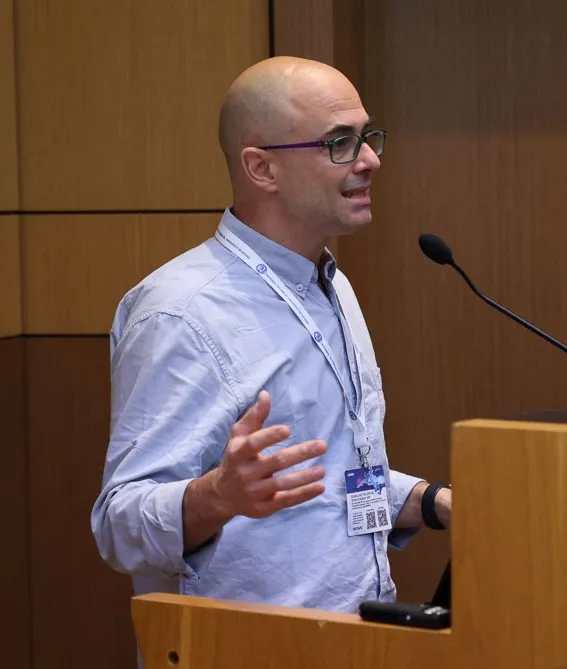
Ignazio Maria Viola is Professor of Fluid Mechanics and Bioinspired Engineering at the School of Engineering of the University of Edinburgh; Distinguished Visiting Professor at Tsinghua University; Adjunct Professor at the Alma Mater Studiorum University of Bologna; and Fellow of the Royal Institution of Naval Architects (RINA).
He publishes in Nature, Nature Communication, eLife, Renewable Energy, Journal of Fluid Mechanics, Ocean Engineering, etc. For his publications, Viola was awarded two RINA Medals of Distinction and one Medal of Exceptional Merit, a Gold Rating for the Best Journal Article by the International Marine Energy Journal, as well as the Covid-19 Hero Medal of the School of Engineering of the U. of Edinburgh for significant contribution to solving Covid-19 challenges.
Overall Viola has contributed to securing research grants in the excess of £18M of which £6M were allocated to his institution and £7M as Principal Investigator. He leads an ERC Consolidator Grant fellowship DANDIDRONE (€2m, 101001499), an ARIA grant SEED (£0.5m), the EPSRC project MORPHING BLADES (£1m, EP/V009443/1), and several other grants funded by industry, the Royal Society, etc. Viola is Co-Investigator and Director of Responsible Research and Innovation of the Centre for Doctoral Training in Wind & Marine Energy Systems & Structures (£6m, EP/S023801/1).
He is the Functional Vice President Alt. of Knowledge Management of the Society of Naval Architects and Marine Engineers (SNAME), and a member of several Executive Committees, including the Group on Energy Research and Applications of the American Physical Society, the UK Fluids Network, the UK Robotics and Autonomous Systems Network, and he is a member of the Academic Board of the National Robotarium.
Viola is Editor-in-Chief of the Journal of Sailing Technology (SNAME), and Associate Editor of the Journal of Offshore Mechanics and Arctic Engineering (ASME), and the Journal of Ocean Engineering and Marine Energy (Springer). He is a member of the Executive Committee of the conference series ECCOMAS International Conference on Computational Methods in Marine Engineering (MARINE), and Innovation in High-Performance Sailing Yachts (Innov'Sail).
CEng, Chartered Engineer Registered by the Engineering Council (UK), no. 584133 (2010) Dott. ing., Italian State Examination to practice as ‘Ingegnere’ (engineer) (2001) EUR ING, European Federation of National Engineering Associations, no. 31153 (2010) FRINA, Fellow of the Royal Institution of Naval Architects, no. 00174260 (member since 2009)
Editor-in-Chief, Journal of Sailing Technology, SNAME (2016-date) Associate Editor, Journal of Offshore Mechanics and Arctic Engineering, ASME (2023-date) Associate Editor, Journal of Ocean Engineering and Marine Energy, Springer (2023-date)
Functional Vice President Alt. of Knowledge Management, Society of Naval Arch. and Marine Eng. (2024-date) Executive Committee, Group on Energy Research and Applications, American Physical Society (2023-date) Executive Committee, UK Fluids Network (2020-date) Executive Committee, UK Robotics and Autonomous Systems Network (2024-date) Academic Board, National Robotarium (2024-date)
Aerodynamics and hydrodynamics, including

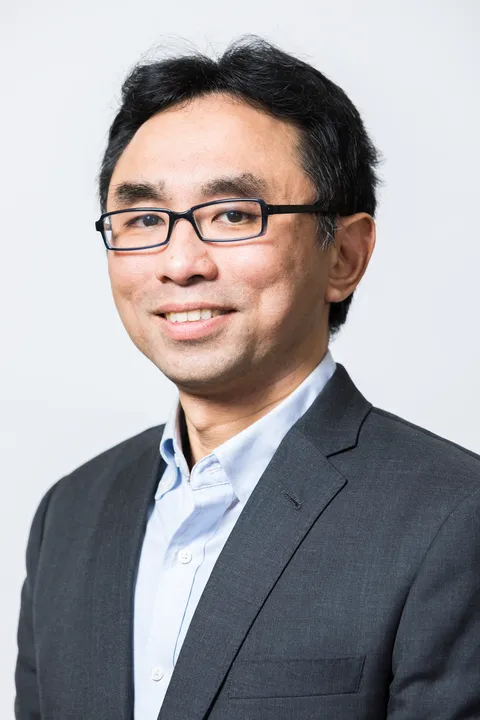
I am a Senior Lecturer in Civil Engineering. I spent years working as researcher, engineer and university academic in Malaysia and Japan before joining Edinburgh. I have amassed good experience in research and application in the fields of structures and construction materials, with specific focuses in structural repair and retrofit, low carbon cementitious materials, condition monitoring and non-destructive evaluation of structures.
BEng(Hons) in Civil Engieering (Universiti Sains Malaysia) MEngSc in Concrete Materials (Universiti Malaya) PhD in Civil Engineering (Osaka University)
Accepting PhD projects.
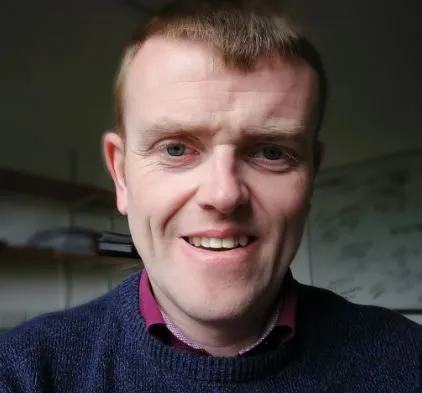
Dr. Edward McCarthy FHEA is Senior Lecturer in Composites Design and Testing at the University of Edinburgh and Lead of the FASTBLADE Fatigue Test Facility, Port of Rosyth, UK. He is University of Edinburgh Principal Investigator of Horizon 2020 project MAXBLADE, featuring a consortium of ten partners across the EU and UK led by tidal energy company, Orbital Marine Power. This project aims to consolidate the next generation of floating tidal stream energy generators, increasing power yield and reducing levelised cost of energy to levels more competitive with conventional energy sources. He is also Co-investigator in projects COTIDE and Morphing Blade, both of which are also focused on engineering research underpinning tidal energy development.
Previously he has led CAMREG Flexifund project Tideflex, studying the implementation of passively adaptive or morphing trailing edge sections on tidal blades for improved energy harvesting performance, and has also led the Oil, Gas and Innovation Centre (OGIC) project CompClamp looking at the use of composite material in novel deep sea clamping applications.
He was lead of EU project Powderblade focused on development of epoxy resin technology for deployment in offshore wind blades in partnership with Suzlon Energy and Eirecomposites Teo, Ireland. He was also Co-Investigator of Wave Energy Scotland project Rotohybrid in 2017-18 examining the deployment of rotomoulded thermoplastic structures in wave energy devices, and characterised novel elastomer-fabric materials for Elasto, a project examining the use of elastomeric diaphragm technologies for wave energy generation.
His research includes investigating strategies for impact-damage reduction in laminated composites (PhD graduate, Dr. Evanthia Pappa), development of submarine composite joint designs (PhD graduate, Dr. James Davidson), and properties of thick section composites (PhD candidate, Mr. James Quinn). He is also supervising a PhD project (PhD student, Mr. Michael O'Sullivan) in the use of fluid-structure interaction modeling to improve the design of marine structures subject to complex sea loading.
He is interested in all aspects of composite testing, with specific personal expertise in fibre fragmentation problems under uniaxial loading. Having a chemical engineering background, he is also involved in polymerisation and polymer characterisation: the synthesis of ionomer scaffolds by ring opening polymerisation for ultimate deployment in grafting of biological tissue, and reactive injection moulding of thermoplastics as a cost-effective alternative to resin transfer moulding CIMComp Synergy Project with University of Nottingham, 2022-23).
Prior to his present post, he was Project Leader of the Innovate UK-funded Concept Integration Project (‘Wings of the Future’) at the National Composite Certification and Evaluation Facility (NCCEF) at the University of Manchester. This project was focused on detection and benchmarking of barely visible impact damage in aerospace preimpregnated carbon fibre reinforced epoxy composites.
Between 2010 and 2013, he was Guest Researcher at the Polymer Division of the National Institute of Standards and Technology in the United States, researching novel polymer nanocomposites and the micromechanics of continuous-fibre polymer composites at the fibre-matrix interface level.
In 2009, he worked on a polymer composite fire modelling project at University of Bolton, and developed extensive industrial experience in elastomer formulation and characterisation at Perlast Ltd, Blackburn, UK, (2007-2009) and in gas plant process design at Costain Ltd., Manchester, UK (1998-1999).
Notes
PhD Chemical Engineering, Newcastle University, 2007
M.Res Process Intensification, Newcastle University, 2002
B.Eng (Hons) Chemical and Process Engineering, Newcastle University, 2000
Fellow, The Higher Education Academy (FHEA).
Member, Society for the Advancement of Material and Process Engineering (SAMPE UK).
Currently, Dr. McCarthy teaches Computational Methods and Modelling 3 in Semester 1, 2017-present, in addition to Advanced Composites Material 5 in Semester 2, 2017-present.
PUBLICATIONS
Revealing the interface in polymer nanocomposites M Zammarano, PH Maupin, LP Sung, JW Gilman, ED McCarthy, YS Kim, ... ACS Nano 5 (4), 3391-3399, 2011
Flame retarded poly (lactic acid) using POSS-modified cellulose. 2. Effects of intumescing flame retardant formulations on polymer degradation and composite physical properties DM Fox, M Novy, K Brown, M Zammarano, RH Harris, M Murariu, ... Polymer Degradation and Stability 106, 54-62, 2014
Application of an intensified narrow channel reactor to the aqueous phase precipitation of barium sulphate ED McCarthy, WAE Dunk, KVK Boodhoo Journal of Colloid and Interface science 305 (1), 72-87, 2007
Fiber-reinforced epoxy composites exposed to high temperature environments. Part II: modeling mechanical property degradation E Kandare, BK Kandola, ED McCarthy, P Myler, G Edwards, Y Jifeng, ... Journal of Composite Materials 45 (14), 1511-1521, 2011
Modelling flaming combustion in glass fibre-reinforced composite laminates ED McCarthy, BK Kandola, G Edwards, P Myler, J Yuan, YC Wang, ... Journal of Composite Materials 47 (19), 2371-2384, 2013
The fiber break evolution process in a 2-D epoxy/glass multi-fiber array ED McCarthy, JH Kim, NA Heckert, SD Leigh, JW Gilman, GA Holmes Composites Science and Technology 121, 73-81, 2015
Formation of extended ionomeric network by bulk polymerization of l, d-lactide with layered-double-hydroxide ED McCarthy, M Zammarano, DM Fox, RC Nieuwendaal, YS Kim, ... Polymer 54 (1), 90-101, 2013
Investigation of factors affecting the thermal expansion of perfluoroelastomer seal materials E McCarthy Sealing Technology 2008 (12), 7-10, 2008
Characterization of green poly (lactic acid)-layered double hydroxide system having both linear and crosslinked polymer structure ED McCarthy, JW Gilman, M Zammarano, YS Kim, PH Maupin Polym Prepr 52, 42, 2011
Detection of impact damage in carbon fibre composites using an electromagnetic sensor Z Li, AD Haigh, MN Saleh, ED McCarthy, C Soutis, AAP Gibson, R Sloan Research in Nondestructive Evaluation, http://dx.doi.org/10.1080/09349847.2016., 2016
The Break Evolution Process in Composite Microcomposites Gale A. Holmes, Edward D. McCarthy, N. Alan Heckert, Stefan D. Leigh, Jae H ... Composites at Lake Louise-2015, 2015
Determination of Interfacial Shear Strength in Epoxy/Glass Composites by Multi-Fiber Fragmentation Test (MFFT) ED McCarthy, JH Kim, NA Heckert, SD Leigh, GA Holmes, JW Gilman
RESONANCE ENERGY TRANSFER AS A TOOL FOR PROBING INTERFACE FORMATION IN NANOCOMPOSITES M Zammarano, ED McCarthy, DM Fox, PH Maupin, LP Sung, YS Kim 44th International Symposium on Macromolecules (MACRO 2012), 2012
Use of Förster Resonance Energy Transfer (FRET) as a New Characterization Method for the Interface in Sustainable Nanocomposites JW Gilman, M Zammarano, PH Maupin, LP Sung, E McCarthy, YS Kim, ... Meeting Abstracts, 244-244, 2012
Rheology of novel poly (L, D-lactic acid (PLDLA) nanocomposite formed from in situ bulk polymerization of L, D-lactide by stearate layered double hydroxide ED McCarthy, DM Fox, GA Holmes, M Zammarano, PH Maupin, ... ABSTRACTS OF PAPERS OF THE AMERICAN CHEMICAL SOCIETY 243, 2012
Studies of cellulose fibers in polymer nanocomposites: Probes of interface formation PH Maupin, M Zammarano, LP Sung, ED McCarthy, YS Kim, DM Fox, ... ABSTRACTS OF PAPERS OF THE AMERICAN CHEMICAL SOCIETY 243, 2012
Chapter 14: Application of Modeling and Simulation in Predicting Fire Behavior in Fiber-Reinforced Composites ED McCarthy, BK Kandola Modeling and Simulation in Fibrous Materials: Techniques and Applications 1 ..., 2012
Extent and Quality of Interface in Cellulose-PE Nanocomposites M Zammarano, PH Maupin, LP Sung, JW Gilman, ED McCarthy, YS Kim, ...
Extent and quality of interface in Cellulose-PE nanocomposites using FRET JW Gilman, M Zammarano, PH Maupin, LP Sung, ED McCarthy, YS Kim, ... ABSTRACTS OF PAPERS OF THE AMERICAN CHEMICAL SOCIETY 242

Currently,
In the past,
Member of IAS(International Adsorption Society), KIChE, AIChE and IChemE.
Currently, I am teaching
In the past, I had taught
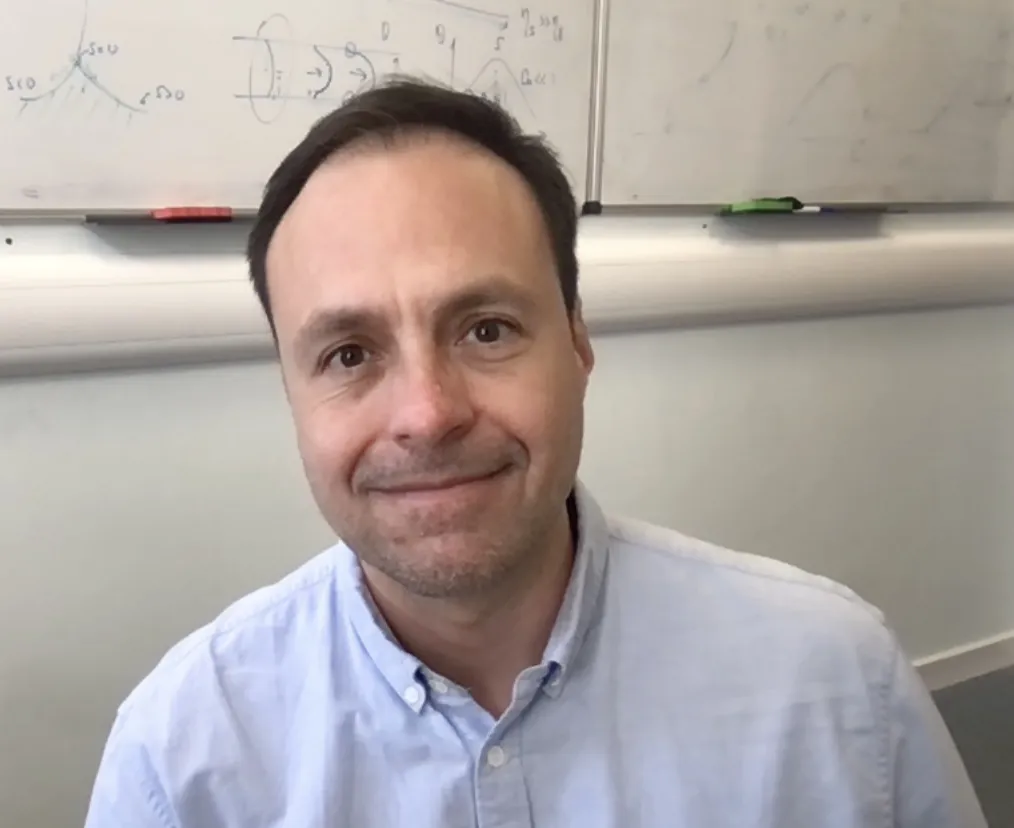
I am a Reader in Chemical Engineering within the Institute for Multiscale Thermofluids. My research interests include multiphase flows, phase changes, capillarity and wetting, and engineered surfaces.
If you are interested in becoming a PhD student or a postdoc in my group, please contact me via email.
PhD Physics, University of Barcelona
DEA Physics, University of Barcelona
Dip Chemical Engineering, National Autonomous University of Mexico
Member of the Institute of Physics
Fellow of the Higher Education Academy
Member of the EPSRC College of Reviewers
Member of the UK Consortium of Mesoscale Engineering Sciences
Undergraduate
Postgraduate

Eleonora Ricci joined the University of Edinburgh as a Lecturer in 2023. Previously, she was a Marie Skłodowska-Curie postdoctoral fellow at the National Centre for Scientific Research “Demokritos”, Athens, Greece. In 2021 she was a postdoctoral researcher and Adjunct Professor of Molecular Simulation Fundamentals at the university of Bologna. She obtained a PhD in Chemical Engineering from the University of Bologna, Italy (2020).
Fellowship of the Higher Education Academy (FHEA), 2026
Course Organiser for the following subjects:
Co-Lecturer for Programming Skills for Engineers
Multi-scale and multi-method modeling strategies, combining molecular, thermodynamic, and data-driven techniques to develop innovative materials for the energy transition, including polymeric and nanocomposite membranes for gas separation, electrochemical devices, and hydrogen transport and storage.
</p>

I am a Reader in Mechanical Engineering at The University of Edinburgh, UK. My activities and interests are in the fields of biomimetic design, mechanical metamaterials, comparative biomechanics, and composites engineering.
Fellowships:
Fellowship of the Institution of Mechanical Engineers, UK (Elected 2020)
Fellowship of the Royal Society of Biology, UK (Elected 2019)
Senior Fellowship: Marie Curie Very-Experienced Researcher (IAPP/MER), The University of Edinburgh, UK (2016-2018)
Fellowship of the Institute of Materials, Minerals and Mining, UK (Elected 2015)
Other Appointments:
Adjunct Professor in the Faculty of Biology, Universitas Gadjah Mada, Indonesia
Adjunct Professor of Composite Materials and Biostructures, AAU, Finland
Chair: Institute of Materials, Minerals and Mining - Natural Materials Group
Committee Member: Institute of Mechanical Engineers - Edinburgh and SE Scotland
2017: Professional Certificate: Innovation and Technology - Massachusetts Institute of Technology, USA
2013: Docent, Habilitation - Abo Akademi University, FINLAND
2004: Doctor of Philosophy: The reinforcement of timber for structural applications and repair - University of Bath, UK
2000: Bachelor of Engineering (Honours): Materials Science and Engineering - University of Bath, UK
Fellow: Institution of Mechanical Engineers, UK
Fellow: Royal Society of Biology, UK
Fellow: Institute of Materials, Minerals and Mining, UK
Board Member: Institute of Materials, Minerals and Mining, UK - Natural Materials Association
Chartered Engineer: Engineering Council, UK
Member: Suomendosenttiliito (Association for Adjunct Professors in Finland)
Mechanical Engineering Group Project 4
Sustainable Energy Design Project 3
Mechanical Engineering Design 2A
BEng Theses (Year 4)
Group Projects (Year 4)
MSc Theses (Year 5)

Ian Underwood carried out pioneering research and development in the field of liquid crystal microdisplays between 1983 and 1999.
His early career achievements were recognized by:
In the late 1990's he contributed to the formation of Micropix Technologies (now Forth Dimension Displays) and consulted with them to design their first generation product line.
He is a co-founder of MicroEmissive Displays (MED) founded in 1998 and co-inventor of its P-OLED microdisplay technology. He served as Product Development Director, Director of Strategic Marketing then CTO.
MED's distinctions include:
MED raised in excess of 40M GBP Sterling and at its peak employed around 70 staff. MED went into administration in late 2008, an early victim of the global financial crisis, shortly after beginning to ship product for its first major order.
In 2005, while with MED, Ian was appointed in absentia to the Chair of Electronic Displays at The University of Edinburgh.
Recent personal recognition includes:
In late 2007 he took up the Chair, becoming Head of the Institute for Integrated Micro and Nano Systems (IMNS) while remaining part-time at MED as Chief Scientific Adviser.
Until recently he sat on the Council of the Scottish Optoelectronics Association and the Steering Committee of ADRIA (Europe's Network in Advanced Displays).
He is known worldwide as an authority on microdisplay technology, systems and applications and is co-author of a recently released book entitled Introduction to Microdisplays (Wiley, 2006).
In late 2008 he was appointed to the Scottish Science Advisory Council the body that offers strategic advice on science and related matters to the Scottish Government.
Today he is employed by the University of Edinburgh for four days per week, seeking gainful employment on the fifth day as adviser, consultant, or non-executive director with pre-spin-out technology projects and early stage technology companies.
He is an Associate Editor of the Journal of the SID and sits on the technical program committee of the International Solid State Circuits Conference, the International Displays Research Conference and the Society for Information Display's Annual International Symposium.
In recent years he has made invited presentations and tutorials on microdisplays and related topics at major conferences and events throughout the world including:
Contact Ian by email at i.underwood@ed.ac.uk.