Image
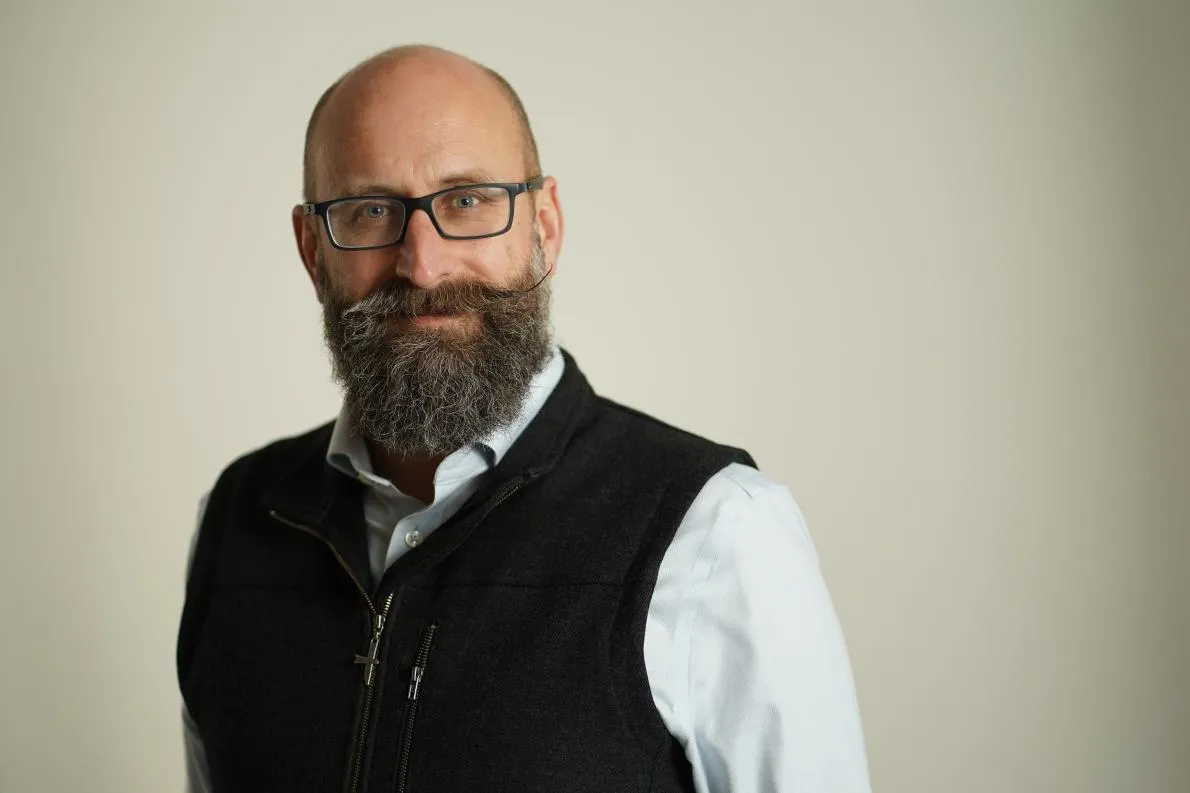
Prof Timothy Drysdale is the Chair of Technology Enhanced Science Education and Director of Strategic Digital Education in the School of Engineering. He is also seconded part-time to the University's Curriculum Transformation Project focusing on digital innovation for experiential learning.
His main research activity is in Engineering Education (Key Research Area 10 for the School), where he leads the Remote Laboratories group.
He and his team have developed an entirely new infrastructure and approach for operating online remote laboratories on traditional campuses (practable.io), winning international awards from the Global Online Laboratories Consortium (Remote Experiment Award 2024) and the Association for Learning Technology / Jisc Award for Digital Transformation in 2023.
Remote laboratories allow students to access real equipment, in real-time, from almost any location. The aesthetically-pleasing experiments are installed in the foyers of buildings, giving the campus a science-museum feel, with every square metre of foyer space saving 150 square metres of teaching laboratory space.
Practable.io experiments, infrastructure, and expertise are available via subscription, purchase, or consultancy through Edinburgh Innovations (contact Tim in the first instance).
Prior to 2018, he was a Senior Lecturer in Engineering at the Open University, where he was the founding director and lead developer of the £3M openEngineering Laboratory, their first large-scale real-time remote laboratory, which attracted awards has attracted educational awards from the Queen's Anniversary Prize (2024), Times Higher Education (Outstanding Digital Innovation, 2017), The Guardian (Teaching Excellence, 2018), Global Online Labs Consortium (Remote Experiment Award, 2018), and National Instruments (Engineering Impact Award for Education in Europe, Middle East, Asia Region 2018, and the overall Global Award in 2019).
His discipline background is in electronics and electromagnetics, including terahertz metamaterial design, surface wave antennas for cubesats and orbital angular momentum radio links. He is Associate Editor of the IET journal Microwave Antennas and Propagation.
Tim's Remote Laboratories Group provides remote experiments used on engineering courses ranging from 1st-5th year and up to 450 students in size.
Teaching Matters Blog:
Appearances in the School News:
Athanasios is working on engineering fluid mechanics, incorporated within the Institute for Infrastructure and the Environment and leading research on hydro-environmental applications. Aside from the role of lecturer in Civil Engineering hydraulics, as an Industrial Innovation Research Fellow of the UK’s Natural Environment Research Council (NERC) he coordinates research activities on computational methods for marine and offshore renewable energy, working closely with industry and other research groups.
He is Chartered with the Technical Chamber of Greece and a member of the Institution of Civil Engineers. In addition, he is a member of NERC’s Peer Review College and serve as the Coordinator of the Edinburgh Fluid Dynamics Group.
His research and expertise spans across
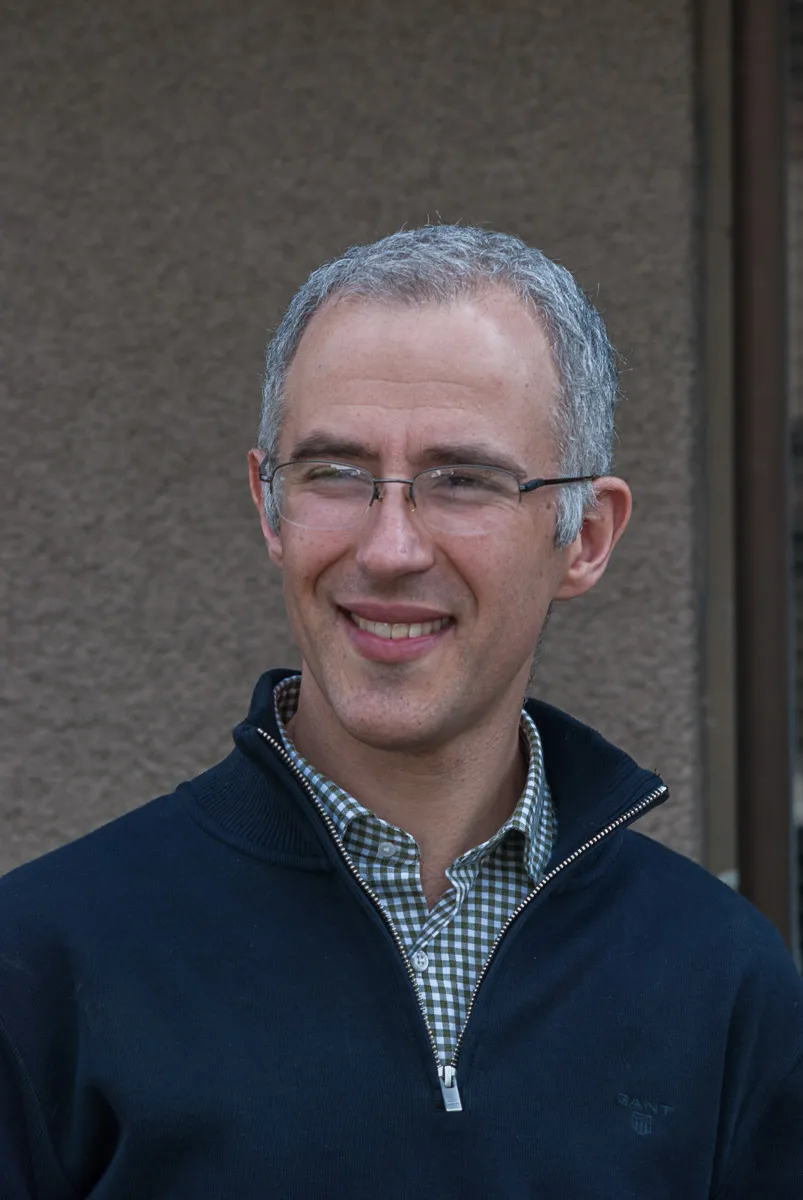
I am a Senior Lecturer in Mechanical Engineering at the University of Edinburgh. I am a computational engineering scientist exploring nanoscale interfacial phenomena using simulation, with a particular focus on phase change, droplet dynamics, and heat transfer at solid–liquid interfaces. My research combines molecular dynamics (including machine-learning interatomic potentials) with continuum modelling and multiscale coupling methods to connect atomistic physics to engineering-scale behaviour. A recurring theme is understanding how nanoscale mechanisms govern macroscopic outcomes: how droplets move (and sometimes jump), how surfaces clean themselves, how ice nucleates, and how heat is transported across interfaces. 
I lead an £1.3M UKRI/ERC-funded research grant (NANO-COOL) investigating nanoscale mechanisms of phase change and their implications for thermal control, and I am a group leader within the multiscale flow (mfX) research group (with Duncan and Livio), where we develop multiscale methods and high-performance computing software for complex flow and transport problems.
I am actively involved in academic service and research leadership within the School and the wider University. I currently serve as Postdoctoral Researcher (PDRA) Champion for the School of Engineering, a role focused on improving postdoctoral support, career development, and research culture. In this capacity, I have contributed to the design and implementation of postdoctoral induction and professional development initiatives aligned with the Concordat to Support the Career Development of Researchers.
PhD, University of Melbourne (2017)
MSc, University of California, Davis (2012)
My research sits at the interface of molecular simulation, multiscale modelling, and thermal-fluid engineering, including:
Selected public coverage:
Further information on my research and publications can be found on mypersonal website, as well as the mfX group website.
Working with me / joining the group.I welcome enquiries from prospective PhD students, postdoctoral researchers, and visitors who are excited by multiscale simulation and want to work across molecular dynamics, continuum modelling, and HPC. If you contact me, the most helpful first email includes (i) a short CV, (ii) a paragraph on your interests and relevant technical skills (e.g., MD/CFD/programming), and (iii) a note on funding status/timelines. See group website on details on existing opportunities.
Collaboration.I’m always happy to discuss collaborations that need careful physics at interfaces (phase change, nucleation, interfacial heat transfer) and/or robust simulation workflows. For broader group work and joint opportunities, mfX is a good entry point
Gary is a Reader in Surfaces and Wetting at the School of Engineering at the University of Edinburgh. He earned a BSc in 2005 and a PhD from Nottingham Trent University in 2009. Prior to joining the University of Edinburgh, he worked in industrial research at the Hewlett-Packard Display Research Lab and later served as an anniversary research fellow at Northumbria University, Newcastle. At Edinburgh, he is involved in and leads experimental research and development within the Wetting, Interfacial Science and Engineering group in the Institute of Multiscale Thermofluids.
General Engineering 1: Course Organiser
Chemical Engineering Design 1: Co-Course Organiser
Electrical and Electronic Engineering 1: Co-Course Organiser
Gary's research focuses on the applications of surface coatings, and he designs and builds experiments and instrumentation to produce and understand the adhesion and friction of droplets on surfaces. He has conducted experimental research into surface coatings and their various applications. The coatings he has developed can be used in many applications, including heat and mass transfer and anti-fouling.
As part of the WISE group, Gary collaborates with theoreticians to develop instrumentation and experiments to test and understand solid-liquid interfaces. His experimental research has led to multiple publications in high-ranking journals, with over 50 peer-reviewed articles in journals such as Langmuir, Nature Communications, Soft Matter, and the Journal of Fluid Mechanics.
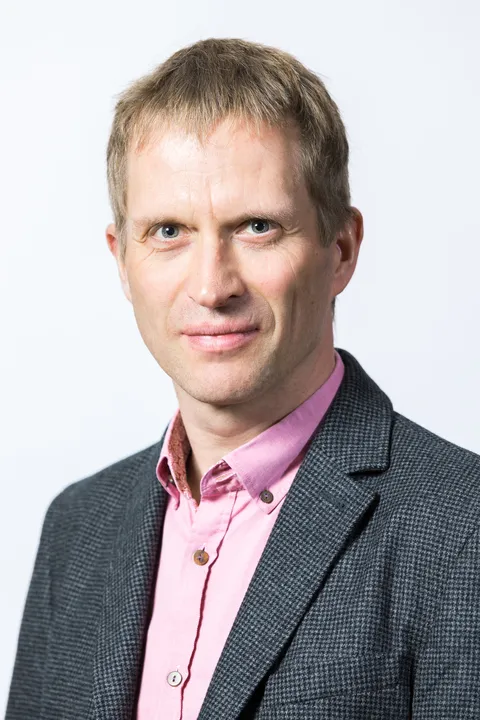
MIStructE, CEng
Fibre Reinforced Polymers (FRPs) such as carbon, aramid and glass FRPs are being increasingly used in construction. These advanced composites can be used in combination with traditional construction materials, or to form structures in their own right. Of particular importance with FRP materials are the methods of forming joints.
The structural use of FRPs usually involves adhesive joints. These might be between two pieces of FRP (eg: in an all-FRP bridge deck), or where the FRP is bonded to another material (eg: FRP strengthening of a metallic beam or FRP reinforcement inside concrete). These bonded connections require proper design, both mechanically and to ensure their durability.
Metallic, concrete and masonry structures can be strengthened by bonding FRP to their external surfaces. FRP can be used to strengthen a wide variety of structural elements (eg: bridge columns and decks and floor slabs). FRP is particularly beneficial where time or space constraints govern a strengthening scheme.
FRP materials can be used to reinforce structural concrete. They are most likely to be used for their corrosion restance (eg: marine environments) or near electromagnetically sensitive equipment. However, replacing ductile steel rebar with brittle FRP reinforcement requires traditional concrete design techniques to be revised.
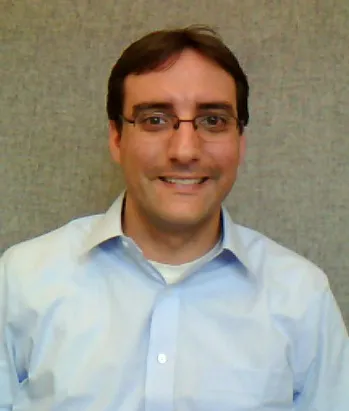
My name is Frédéric Bosché. Following a PhD in Civil Engineering at the University of Waterloo (Canada), I worked for 2 years as researcher in the Computer Vision Laboratory at ETH Zurich, before becoming Assistant Professor in Construction Informatics at Heriot-Watt University. In 2019, I joined the University of Edinburgh where I was first Senior Lecturer and now Reader in Construction Informatics. I teach on Engineering Project Management, Digital Construction and some Surveying. I also lead the CyberBuild Lab that delivers research and innovation in related areas.
My research interests are related to the development and application of new digital solutions to support project delivery and asset (including heritage) management (operation and maintenance), with current focus on:
Aside from our academic and industrial impact, our research projects in the CyberBuild Lab have also given my colleagues and I the opportunity and joy to engage in numerous public engagement activities from school career fairs to events at the Glasgow Science Museum and the Edinburgh International Science Festival.
Mechanical Engineer and academic since 1993. Chair of Impulsive Dynamics and Head of Mechanical Engineering at The University of Edinburgh (UK). Author of over 250 technical/scientific and pedagogical publications, including more than 80 in international peer-reviewed journals.
Co-founder of the Light-Weight Armour for Defence & Security group (LWAG) and president of LWAG from 2008 to 2012. Director of Mechanical Engineering (School of Engineering, The University of Edinburgh) from 2021 to 2024. Member of the Institute for Infrastructure and Environment (IIE) and of the Centre for Science at Extreme Conditions (CSEC). Member of the Royal Photographic Society (RPS), Chartered Engineer (CEng) and Fellow of the Institute of Mechanical Engineers (FIMechE).
Research interests focus on understanding the behaviour of materials and structures under impulsive and dynamic loads, and improving their response through better energy absorption mechanisms at different scales, in areas as diverse as the built environment, transport systems, aerospace structures and the human body. Research primarily combines numerical, experimental and analytical/theoretical approaches and methods in impulsive/structural dynamics; materials for energy absorption; protection and armour systems; sports impact and human bio-dynamics; crashworthiness; terminal ballistics, blast and shock wave dynamics, hypervelocity impact and extreme strain rates.